
Udeesha Tomar
AVP - Strategy and Solutions
Leading procurement research solutions across chemicals, materials, and food & beverages, with expertise in price forecasting and market analytics.
Last Updated: October, 2026

Trusted by 200+ Clients
The report provides detailed analysis essential for establishing a cadmium nitrate production plant. It encompasses all critical aspects necessary for cadmium nitrate production, including the cost of cadmium nitrate production, cadmium nitrate plant cost, cadmium nitrate production costs, and the overall cadmium nitrate production plant cost. Additionally, the study covers specific expenditures associated with setting up and operating a cadmium nitrate production plant. These encompass production processes, raw material requirements, utility requirements, infrastructure needs, machinery and technology requirements, manpower requirements, packaging requirements, transportation requirements, and more.
Cadmium nitrate is the cadmium salt of nitric acid, with the formula Cd(NO3)2. It is usually sold as the tetrahydrate, a colorless, deliquescent, crystalline solid that dissolves very readily in water. It provides a soluble form of cadmium for use in batteries, semiconductors, pigments, glass, and laboratory research. However, it is highly toxic and a known carcinogen, so its production, sale, and use require strict controls. As a result, demand remains limited to specialized applications where handling and use are carefully monitored.
Demand for cadmium nitrate mainly comes from nickel-cadmium batteries, semiconductor production, and research. Battery makers use cadmium nitrate solutions to add cadmium to sintered plaque electrodes. Researchers use it as a source of cadmium when making quantum dots, thin films, and nanocrystals such as cadmium sulfide and cadmium selenide. Glass and ceramic manufacturers have also used it to add color to glass and porcelain. Its older use in photographic flash powder has mostly ended. Laboratories, universities, and testing labs buy small packs as reagents, catalyst precursors, and cadmium standards.
Cadmium nitrate is made using cadmium metal or cadmium oxide. Since cadmium is mainly recovered during zinc refining, its supply depends on how much zinc refineries produce. China and South Korea account for a large share of cadmium production, which can make sourcing difficult in some regions. Changes in cadmium prices also affect purchasing costs and manufacturers' profit margins. Kazakhstan, Russia, Mexico, Peru, Australia, and the Netherlands produce smaller amounts of refined cadmium. A cadmium nitrate demand and supply analysis must weigh cadmium supply, nitric acid cost, purity grade, battery and semiconductor demand, and strict toxic substance rules.
Cadmium nitrate has the formula Cd(NO3)2 and a molar mass of 236.42 g/mol in anhydrous form, under CAS 10325-94-7. The tetrahydrate, Cd(NO3)2·4H2O, has a molar mass of 308.48 g/mol and CAS 10022-68-1. The anhydrous salt has a density of about 3.6 g/cm3 and melts at about 360 degree Celsius. The tetrahydrate has a density of about 2.45 g/cm3 and melts at about 59.5 degree Celsius. Water dissolves about 109.7 g per 100 mL at 0 degree Celsius, rising to about 320.9 g at 59.5 degree Celsius. Cadmium nitrate also dissolves in acids, ammonia, alcohol, ether, and acetone. When strongly heated, it breaks down into cadmium oxide and nitrogen oxides. Its EC number is 233-710-6. It has low solubility in methanol, at around 5 g per liter.
Cadmium nitrate is sold mainly as the tetrahydrate in reagent and high-purity grades. Common grades include 98.5% minimum, 99.997% on a trace metals basis, and 99.999% on a metals basis. The tetrahydrate contains about 36.4% cadmium by weight. Buyers check cadmium assay, trace metals, insoluble matter, chloride, sulfate, iron, and lead.
Cadmium nitrate grades are split by purity, form, and documentation. Packs range from 100 g and 500 g bottles for labs to sealed drums for industrial buyers. High-purity grades support semiconductor and quantum dot applications, while technical grades support battery and ceramic uses.
Nickel-cadmium batteries form the traditional industrial outlet for cadmium nitrate. In sintered plaque electrode making, cadmium nitrate baths of about 2 to 5 molar cadmium soak porous nickel plaques at about 85 degree Celsius up to boiling. Electrolysis then reduces nitrate inside the pores, raises the local pH, and deposits cadmium hydroxide as the active material. In one patented bath, chloride made up 50 to 90% of the anions, the pH ran at about 1.5 to 3.5, and nitrite helped hold the pH steady. Nickel-cadmium batteries remain the main use of cadmium overall. Consumer batteries have shifted to lithium chemistries, but many industrial batteries still use nickel-cadmium for its toughness and long life.
Semiconductors and nanomaterials are another area of demand for cadmium nitrate. Researchers and manufacturers use it as a soluble cadmium source to make cadmium sulfide, cadmium selenide, and cadmium telluride. Cadmium selenide quantum dots are used in displays and medical imaging, and researchers are studying their use in batteries and supercapacitors. Cadmium telluride thin films are used in solar panels, while cadmium zinc telluride is used in radiation detectors. Purity matters most here, since trace iron, copper, lead, and zinc change optical and electronic behavior.
The remaining demand comes from glass, ceramics, and laboratory use. Glass and porcelain makers have used cadmium nitrate to produce different colors, but the use of cadmium pigments is now heavily restricted. Laboratories also use it as a reagent, a cadmium reference standard, and a starting material for making catalysts. Older uses in photographic flash powder have ended. Each of these uses now faces pressure from safer substitutes, stricter labeling, and customer phase-out programs.
Regulation forms the largest risk for cadmium nitrate. Cadmium and its compounds are carcinogenic, mutagenic, and toxic to reproduction. In the EU, cadmium content is limited to 0.01% in plastics, most paints, brazing fillers, and jewelry. The same limit applies to each homogeneous material in electrical and electronic products. Cadmium plating is also banned in many types of equipment. Each new restriction shrinks the market for cadmium compounds.
Demand for cadmium nitrate faces competition from alternative materials. Lithium-ion batteries have replaced nickel-cadmium batteries in many applications, while zinc-nickel coatings are used instead of cadmium plating. Cerium sulfide is an alternative to cadmium pigments, and barium-based stabilizers are replacing cadmium in PVC. Display makers are also using cadmium-free quantum dots, such as indium phosphide. Growing demand for cadmium telluride solar panels supports cadmium metal demand, but this does not always lead to higher demand for cadmium nitrate. A US government consortium also continues work on cadmium telluride cell efficiency, which supports long-term cadmium demand in solar.
Cadmium nitrate production carries its own risks because cadmium is very toxic. Cadmium nitrate is toxic if swallowed, fatal if inhaled, and harmful in contact with skin. Its rat oral LD50 is about 300 mg per kg. The OSHA limit is only 0.005 mg per cubic meter as cadmium over eight hours, and its immediately dangerous level is about 9 mg per cubic meter. Target organs include kidneys and bones. Dissolving cadmium in nitric acid also releases nitrogen oxide fumes. Spills, dust, and wastewater can contaminate soil and water for long periods.
The cadmium nitrate production process runs from cadmium metal or oxide receipt through nitric acid dissolution, fume scrubbing, filtration, evaporation, crystallization, drying, and packing.
Cadmium nitrate production starts with cadmium metal or cadmium oxide, usually from zinc refineries. Some plants also use cadmium hydroxide, cadmium carbonate, or recycled cadmium oxide. The cadmium feed goes into a closed glass-lined or stainless-steel reactor with nitric acid. Metal dissolves with release of nitrogen oxides, while oxide, hydroxide, or carbonate dissolve more quietly. Fumes pass through condensers, caustic scrubbers, and high-efficiency filters before release.
In the next stage, the solution is filtered to remove insoluble matter. For high-purity grades, plants may adjust pH, remove lead and iron, and polish the solution through fine filters. The clear solution is evaporated under reduced pressure, then cooled to crystallize the tetrahydrate. Crystals are separated in a closed centrifuge or filter. They are dried at low temperature, since the tetrahydrate melts near 59.5 degree Celsius, and packed in sealed containers.
Stoichiometry sets the material balance. One kilogram of tetrahydrate holds about 0.364 kg of cadmium. From metal, it needs about 0.55 to 0.82 kg of nitric acid on a 100% basis, depending on whether nitric oxide or nitrogen dioxide forms. From cadmium oxide, it needs about 0.42 kg of oxide and 0.41 kg of nitric acid. Safety systems, purification, waste treatment, and scale drive the cadmium nitrate production cost more than the metal itself.
According to a cadmium nitrate production plant report, cadmium nitrate production cost depends less on cadmium than on safety and purification. Cadmium accounts for a relatively small share of raw material costs. However, fluctuations in cadmium prices can still affect procurement expenses and overall production costs, influencing manufacturers' profit margins. Nitric acid, water, power, and packaging add modest amounts. Raw materials are therefore a small share of the selling price of high-purity grades. The real costs depend on containment, testing, and waste handling. That makes cadmium nitrate unusual, since the metal is cheap but every gram must be tracked, contained, and accounted for.
Safety and environmental controls set the largest cost layer. Plants need closed reactors, negative-pressure rooms, local exhaust, high-efficiency filters, and protective equipment. Workers need medical surveillance, including blood and urine cadmium tests. Wastewater must be treated to very low cadmium levels before discharge. Solid waste with cadmium, including filters, gloves, sludges, and off-spec product, goes to licensed hazardous waste sites or back to refiners.
Purity, production volume, and transport costs also affect the overall cost. High-purity grades require pure cadmium, removal of trace metals, and ICP-MS testing before release. Since production batches are small, labor, testing, equipment depreciation, and other fixed costs add more to the cost per kilogram. Special packaging, transport requirements for toxic and oxidizing materials, and export controls add further expenses. Insurance and liability costs are also high because cadmium is a carcinogenic substance.
Raw material sourcing for cadmium nitrate centers on cadmium metal and cadmium oxide. Cadmium is recovered from zinc refining, so supply follows zinc output rather than cadmium demand. China, Korea, Canada, Japan, Kazakhstan, Russia, and Mexico refine most of the world's cadmium. In the US, cadmium comes as a by-product of a Tennessee zinc smelter, with output of about 200 tons last year. High-purity cadmium of 5N to 7N comes from specialist refiners.
Nitric acid is a commodity input from ammonia oxidation plants in China, Europe, India, and the US. Electronic or reagent-grade acid, low in iron, lead, and chloride, is needed for high-purity products. Deionized water, caustic soda, and lime support scrubbing and wastewater treatment.
Cadmium nitrate manufacturers buy cadmium under contracts linked to published cadmium prices. Contracts set purity, form, volume, and hazardous goods handling. Incoming cadmium is checked for assay, trace metals, form, and moisture. Buying cadmium oxide instead of metal avoids most nitrogen oxide fumes during dissolution. Recycled cadmium from nickel-cadmium batteries and solar panel scrap adds supply. In US trade, unwrought cadmium, cadmium oxide, and cadmium scrap enter duty-free, while cadmium sulfide and cadmium pigments carry a 3.1% duty.
Cadmium nitrate manufacture raises some of the most serious toxic substance concerns in the chemical industry. Plants use closed reactors, gloveboxes, local exhaust ventilation, and high-efficiency filters to keep cadmium out of the air. Nitrogen oxide fumes from dissolution go through caustic scrubbers. Wastewater is treated by precipitation with lime or sulfide to remove cadmium. Cadmium sludges and residues go to licensed hazardous waste sites or back to refiners for recovery. Recycling of cadmium from batteries and solar panels reduces mining and waste.
Cadmium nitrate regulation follows its hazards. It carries danger labels for acute toxicity, cancer, genetic damage, reproductive harm, organ damage, and very high aquatic toxicity. It ships as a toxic and oxidizing substance under UN 3087 or UN 2570. The OSHA limit is 0.005 mg per cubic meter as cadmium, and NIOSH treats cadmium as a potential occupational carcinogen. In the EU, cadmium compounds face REACH restrictions and RoHS limits of 0.01% in electronics. California requires cancer warnings on products containing it. Most catalog grades are sold for research use only, with full safety data sheets, hazard labels, and restricted shipping.
A cadmium nitrate plant is a small, high-containment inorganic unit, often inside a site that makes other cadmium or semiconductor compounds. Plant investment starts with secure storage for cadmium metal and oxide and acid-resistant tanks for nitric acid. The plant requires closed glass-lined or stainless-steel reactors with condensers and caustic scrubbers. Filters, vacuum evaporators, crystallizers, and closed centrifuges follow. Low-temperature dryers, gloveboxes, and sealed packing stations complete the production area. Negative-pressure rooms, high-efficiency filters, change rooms, and wastewater treatment add large containment costs. The QC lab needs ICP-MS or ICP-OES and titration.
Cadmium nitrate operating cost is led by safety, labor, and waste treatment rather than cadmium. Cadmium, nitric acid, deionized water, caustic soda, lime, filters, and packaging follow. Fixed costs cover chemists, operators, QC analysts, safety and medical staff, environmental monitoring, and insurance. The cadmium nitrate plant setup cost depends on capacity, purity range, containment level, and site integration. Cost per kilogram comes down to batch size, utilization, waste handling, and grade mix.
A suitable site for cadmium nitrate production would be near a cadmium refinery or within an existing facility licensed to handle hazardous chemicals. China, South Korea, Japan, Canada, Germany, and the US have cadmium and semiconductor compound production clusters. The plant needs permits for hazardous waste, air emissions, and wastewater treatment, along with regular health checks for workers. Cadmium projects also face scrutiny from local communities, regulators, insurers, and customers. Using an existing site with the required permits can speed up approvals. Access to licensed waste disposal facilities and cadmium recyclers is also important, as all waste residues must be tracked during disposal.
Before setting up a cadmium nitrate plant, manufacturers need to decide whether demand is high enough to support a dedicated production line. Most producers make it in small batches alongside other compounds, such as cadmium oxide, cadmium chloride, and cadmium telluride. Cadmium refiners can use their own raw materials to keep feedstock costs low, while semiconductor compound manufacturers can supply cadmium nitrate to quantum dot and thin-film customers. The required purity level, ranging from technical grade to 5N, is another key decision. Manufacturers must also consider the risk of lower demand due to stricter regulations and the use of alternative materials.
China is the largest cadmium refiner, producing about 9,500 tons last year, and has many manufacturers of cadmium compounds. South Korea ranked second, with around 4,300 tons. Canada and Japan each refined about 1,300 tons. Canada and Germany also produce high-purity cadmium and cadmium telluride. In the US, cadmium is produced in Tennessee, and research chemical suppliers serve the market. Kazakhstan, Russia, Mexico, the Netherlands, Peru, and Australia also contribute to global cadmium refining.
Merck
Thermo Fisher Scientific
5N Plus
Korea Zinc
Nyrstar
Avantor
Cadmium Nitrate Production Cost Report
Choose What's Right for You
Pay Via



| Particulars | Details |
|---|---|
| Product Name | Cadmium Nitrate |
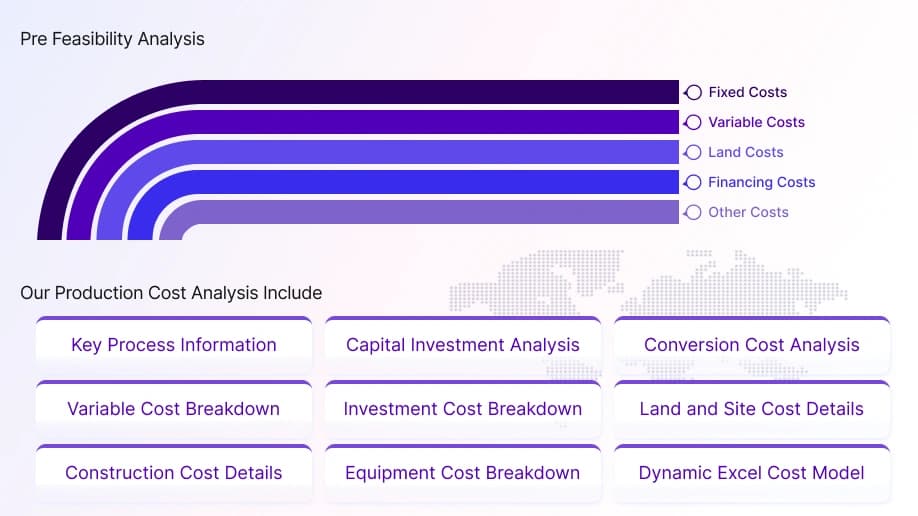
| Scope | Production Process: Process Flow, Material Flow, Material Balance Raw Material and Product Specifications: Raw Material Consumption, Product and Co-product Generation Land and Site Cost: Offsites/Civil Works, Equipment Cost, Auxiliary Equipment Costs, Contingency, Engineering and Consulting Charges, Working Capital Variable Cost: Raw Material, Utilities, Other Variable Costs Fixed Cost: Labor Requirements and Wages, Overhead Expenses, Maintenance Charges, Other Fixed Costs Financing Costs: Interest on Working Capital, Interest on Loans Other Costs: Depreciation Charges, General Sales and Admin Cost |
| Currency | US$ (Data can also be provided in the local currency) | Customization Scope | The report can be customized as per the requirement of the customer |
| Post-Sale Analysts Report | 10-12 weeks of post-purchase analyst support after report delivery for any queries from the deliverable |
| Delivery Format | PDF and Excel format through email (editable version in PPT/Word format of the report can be also provided on special request) |
At Procurement Resource, we focus on improving the should-cost of production for cadmium nitrate and map every stage of the route, from cadmium metal, oxide, hydroxide, or carbonate receipt through closed nitric acid dissolution, nitrogen oxide scrubbing, filtration, lead and iron removal for high-purity grades, vacuum evaporation, tetrahydrate crystallization, closed centrifuging, low-temperature drying & sealed packing. The cost model resolves each input separately, including cadmium metal or oxide by purity, nitric acid, deionized water, caustic soda, lime, filters, nitrogen, steam, power, containment and ventilation, medical surveillance, hazardous waste disposal, ICP-MS testing & packaging. We evaluate CAPEX and OPEX as cost per kilogram of technical, reagent, and 5N grades, isolating the cadmium share, the containment and safety share & the waste and testing share.
Alongside the cost build-up, the report identifies providers of closed reactors, nitrogen oxide scrubbers, crystallizers, enclosed centrifuges, gloveboxes, high-efficiency filtration, and cadmium wastewater treatment, and offers a supplier database for cadmium metal, cadmium oxide, high-purity cadmium & nitric acid. It sets out a feasible plant layout covering secure cadmium storage, acid storage, the closed reaction area, crystallization and drying, gloveboxes, packing, wastewater treatment & the QC laboratory. By modeling cadmium prices, purity grade, batch size, containment cost, waste handling & utilization, the analysis shows where the cash production cost of cadmium nitrate can be reduced. It supports decisions on integration with cadmium refining, product range across cadmium compounds, purity range & plant location at permitted hazardous chemical sites.
AVP - Strategy and Solutions
Leading procurement research solutions across chemicals, materials, and food & beverages, with expertise in price forecasting and market analytics.
Need more help?

Still Need Help?
Compare & Choose the Right Report Version for You
How to Order Your Report?