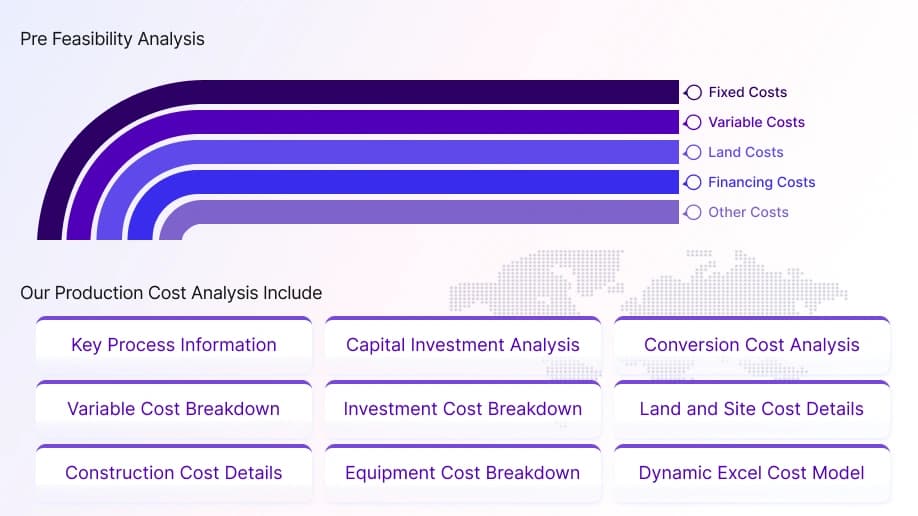
The report provides a detailed analysis essential for establishing a Chlorpropamide production plant. It encompasses all critical aspects necessary for Chlorpropamide production, including the cost of Chlorpropamide production, Chlorpropamide plant cost, Chlorpropamide production costs, and the overall Chlorpropamide production plant cost. Additionally, the study covers specific expenditures associated with setting up and operating a Chlorpropamide production plant. These encompass production processes, raw material requirements, utility requirements, infrastructure needs, machinery and technology requirements, manpower requirements, packaging requirements, transportation requirements, and more.
Chlorpropamide is used in the management of type 2 diabetes. This drug belongs to the class of sulfonylurea compounds. Its mode of action involves triggering an increased release of insulin from pancreatic tissue, which acts by promoting sugar storage by the body, thus reducing blood glucose. It also enhances peripheral glucose utilization and decreases hepatic gluconeogenesis. It is indicated for the treatment of high blood sugar levels in patients with type 2 diabetes mellitus. It does this in combination with diet and exercise to aid in controlling blood sugar levels. After oral intake, it is rapidly absorbed. It binds extensively to proteins and has an elimination half-life of about 36 hours.
The market of Chlorpropamide is driven by several key factors. Its function of increasing insulin release and lowering blood glucose levels makes it important in diabetes management. It is cost-effective compared to other medications, contributing to its growing demand in developing countries. Chlorpropamide is available in generic form from multiple manufacturers, which further contributes to its market. Also, its inclusion in essential medicines lists by organizations like the World Health Organization (WHO) makes it popular all over the globe. So, the changes in its demand in managing type 2 diabetes, its cost-effectiveness, availability, and its recognition by WHO influence industrial Chlorpropamide procurement in the market across the globe.
Raw Material for Chlorpropamide Production
According to the Chlorpropamide production plant project report, the key raw materials used in the production of Chlorpropamide include 4-chlorobenzene sulfonyl chloride-alkylamine.
Manufacturing Process of Chlorpropamide
The extensive Chlorpropamide production cost report consists of the following major industrial production process:
- From 4-chlorobenzene sulfonyl Chloride and Alkylamine: The production process of Chlorpropamide consists of several steps. First, 4-chlorobenzene sulfonyl chloride is reacted with an alkylamine, forming a sulfonamide intermediate. This intermediate goes through cyclization assisted by heat or a catalyst forming Chlorpropamide. The crude product is purified through crystallization or recrystallization and tested to meet pharmaceutical standards.
Chlorpropamide is a white crystalline solid. Its molecular formula is CHClNOS, and it has a molecular weight of 276.74 g/mol. Its density is around 1.630 g/cm³. Its melting point value ranges from 126 to 130 °C. It is almost insoluble in water but soluble in alcohol. It is sparsely soluble in chloroform and faintly soluble in methanol. Its pKa value is around 4.8. It has a log P value between 2.27 and 2.3, making it moderately hydrophobic. It has a topological polar surface area of 83.6 Ų. These physical and chemical properties contribute to its effectiveness in managing type 2 diabetes.