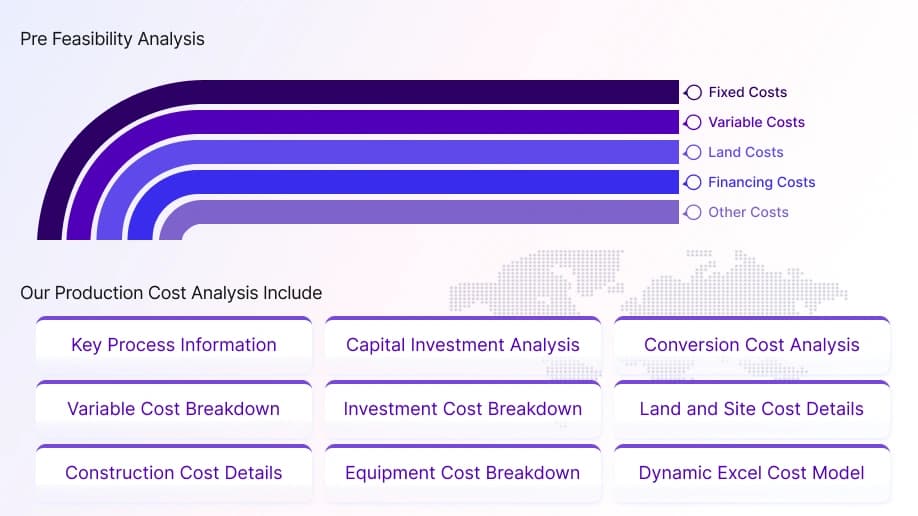
The report provides a detailed analysis essential for establishing a Dapoxetine Hydrochloride production plant. It encompasses all critical aspects necessary for Dapoxetine Hydrochloride production, including the cost of Dapoxetine Hydrochloride production, Dapoxetine Hydrochloride plant cost, Dapoxetine Hydrochloride production costs, and the overall Dapoxetine Hydrochloride production plant cost. Additionally, the study covers specific expenditures associated with setting up and operating a Dapoxetine Hydrochloride production plant. These encompass production processes, raw material requirements, utility requirements, infrastructure needs, machinery and technology requirements, manpower requirements, packaging requirements, transportation requirements, and more.
Dapoxetine Hydrochloride is an anti-PE drug to be taken by male patients who are suffering from premature ejaculation. It is a member of a group of medications called selective serotonin reuptake inhibitors (SSRIs). It inhibits the re-uptake of serotonin (the neurotransmitter associated with ejaculation control) in the brain. It assists to delays ejaculation and provide more control on the ejaculatory process with increasing serotonin levels. It can enhance overall sexual wellness because it is associated with the decreased psychological stress associated with PE and consequently, can treat it effectively.
The market for Dapoxetine Hydrochloride is driven by its usage as a selective serotonin reuptake inhibitor for the treatment of premature ejaculation, which significantly promotes its demand in the pharmaceutical and medical industries. The widespread occurrence of premature ejaculation in men is significantly increasing the demand for Dapoxetine Hydrochloride. It is the first oral medication specifically approved for the treatment of PE. Its unique on-demand dosing regimen, taken 1-3 hours before anticipated sexual activity, makes it a convenient option for many men, which contributes to its market adoption.
Additionally, it has been demonstrated to be generally well-tolerated, with mild to moderate adverse effects being the most common, which further amplifies its market appeal. Overall, industrial Dapoxetine Hydrochloride procurement is influenced by its usage in the pharmaceutical and medical industries, rising cases of premature ejaculation, approval for on-demand use, increasing healthcare awareness, and regulatory approvals.
Raw Material for Dapoxetine Hydrochloride Production
According to the Dapoxetine Hydrochloride production plant project report, the key raw material used in the production of Dapoxetine Hydrochloride includes (R)-(+)-3-chloro-1-phenyl-1-propanol.
Production Process of Dapoxetine Hydrochloride
The extensive Dapoxetine Hydrochloride production cost report consists of the following major industrial production process:
- Production from (R)-(+)-3-chloro-1-phenyl-1-propanol: The production process of Dapoxetine Hydrochloride starts with the reaction of the starting compound with 1-naphthol in the presence of aqueous sodium hydroxide in DMF to form an ether intermediate. The intermediate is treated with methane sulfonyl chloride and triethylamine with catalytic DMAP to activate the secondary alcohol. Furthermore, to this mixture, dimethylamine is added after the complete conversion to the corresponding mesylate. Finally, hydrochloride acid in ethyl acetate is added to the resultant mixture to produce Dapoxetine hydrochloride as the final product.
Dapoxetine Hydrochloride, commercially known as Priligy, is a white to slightly yellow powder having the molecular formula C21H24ClNO and a molecular weight of 341.9 g/mol. It has an estimated water solubility of 0.000837 mg/mL. It easily dissolves in methanol, propylene glycol, and organic solvents. It has a log P value of around 4.75. The value of its dissociation constant, pKa, is 8.96. It is a selective serotonin reuptake inhibitor used to treat premature ejaculation.