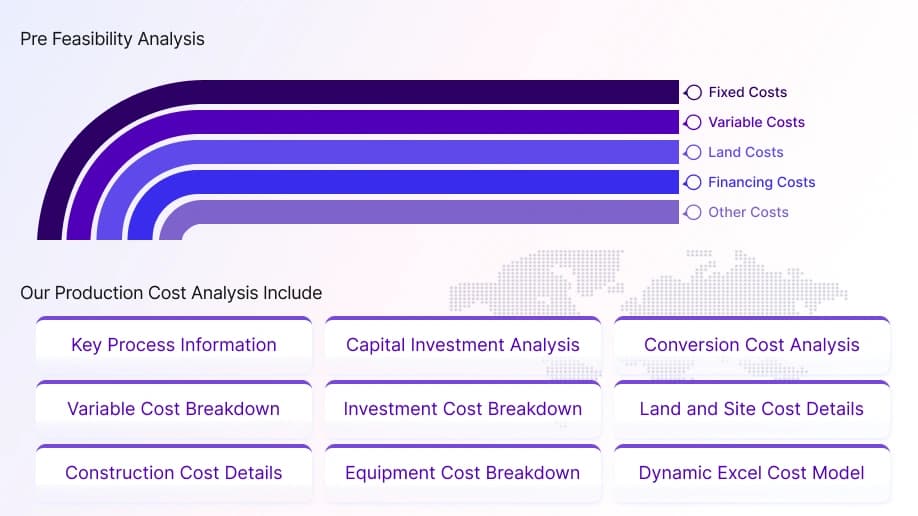
The report provides a detailed analysis essential for establishing a Dexlansoprazole production plant. It encompasses all critical aspects necessary for Dexlansoprazole production, including the cost of Dexlansoprazole production, Dexlansoprazole plant cost, Dexlansoprazole production costs, and the overall Dexlansoprazole production plant cost. Additionally, the study covers specific expenditures associated with setting up and operating a Dexlansoprazole production plant. These encompass production processes, raw material requirements, utility requirements, infrastructure needs, machinery and technology requirements, manpower requirements, packaging requirements, transportation requirements, and more.
Dexlansoprazole is a proton pump inhibitor for the management of gastroesophageal reflux diseases (GERD) and erosive esophagitis. It has unique dual-release characteristics, allowing it to attain double peaks of the drug concentration, which enhances its efficacy and duration of action compared with the earlier PPIs. It is indicated to treat and maintain healing of erosive esophagitis and for the relief of heartburn associated with symptomatic non-erosive GERD in adults and adolescents 12 years of age and older. Dexlansoprazole provides an effective reduction of gastric acid secretion through the mechanism of irreversible inhibition of certain enzymes in gastric parietal cells. It is effective in the management of acid-related disorders, especially in patients suffering from nocturnal reflux, and hence is extremely helpful in day-to-day clinical practice.
The market for Dexlansoprazole is driven by several key factors. Its use in gastroesophageal reflux diseases (GERD) and erosive esophagitis contributes to its increasing demand. Also, the increased rate of diagnosis and seeking treatment by patients leads to its growing popularity as an effective drug. Its dual-release mechanism enhances the efficiency and action duration of the drug, hence making it preferable to health professionals and consumers.
The increasing availability of over-the-counter preparations provides an ease of access for individuals to self-manage their symptoms without a prescription, which further drives market demand for Dexlansoprazole. Overall, industrial Dexlansoprazole procurement is influenced by its use in treating GERD, enhanced awareness, demand for effective treatments, and the appeal of Dexlansoprazole's dual-release mechanism, along with improved healthcare infrastructure, and the availability of over-the-counter options.
Raw Material for Dexlansoprazole Production
According to the Dexlansoprazole production plant project report, the key raw materials used in the production of Dexlansoprazole include Sulfide-Oxidizing Agents-Imidazole Derivatives.
Production Process of Dexlansoprazole
The detailed Dexlansoprazole production cost report consists of the following major industrial production process:
- From Sulfide, Oxidizing Agents, and Imidazole Derivatives: The industrial production process for Dexlansoprazole involves several steps. First, sulfide is converted into sulfoxide using an oxidizing agent like Davis oxaziridine. After this, the oxidized sulfoxide is coupled with an imidazole-containing fragment, forming the complete dexlansoprazole backbone, which is a must for its pharmacological activity.
Dexlansoprazole is a white to off-white crystalline powder. Its molecular formula is CHFNOS, and it has a molecular mass of 369.36 g/mol. It is soluble in organic solvents but its solubility in water depends upon pH. It shows high plasma protein binding (96-99%) and an apparent volume of distribution of about 40 L. It is mainly metabolized in the liver and excreted through urine and feces. It has a dual-release formulation, the first occurring 1-2 hours after administration and the second 4-5 hours later. All these physical and chemical properties contribute to its effectiveness in suppressing gastric acid secretion.