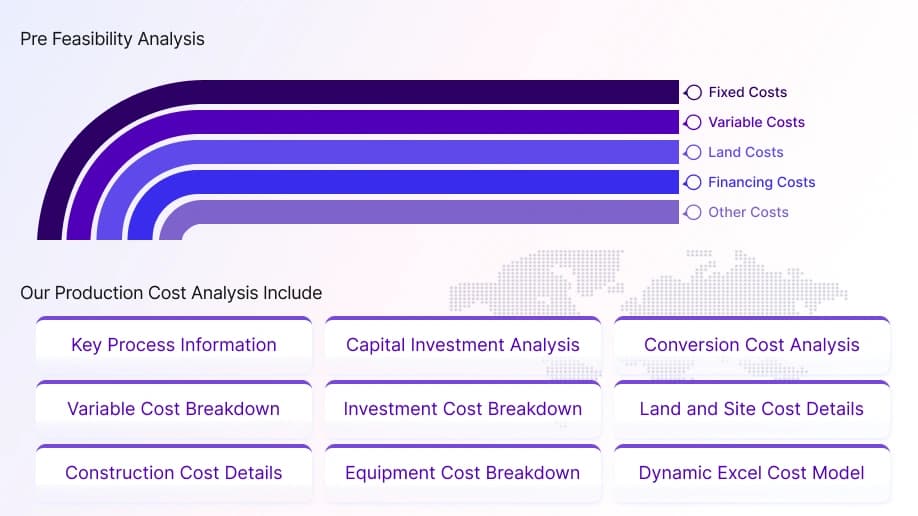
The report provides a detailed analysis essential for establishing a Diazepam production plant. It encompasses all critical aspects necessary for Diazepam production, including the cost of Diazepam production, Diazepam plant cost, Diazepam production costs, and the overall Diazepam production plant cost. Additionally, the study covers specific expenditures associated with setting up and operating a Diazepam production plant. These encompass production processes, raw material requirements, utility requirements, infrastructure needs, machinery and technology requirements, manpower requirements, packaging requirements, transportation requirements, and more.
Diazepam is a benzodiazepine drug that is mostly used in the treatment of various disorders. It is used in the treatment of anxiety disorders, alcohol withdrawal syndrome, and muscle spasms and has antiseizure properties. It is utilized for preoperative sedation and anxiolysis as a premedication to induce sedation and anxiety reduction before surgical procedures.
Diazepam helps in the prevention of oxygen toxicity during hyperbaric oxygen therapy. It is also used to manage organophosphate poisoning, which can reduce the chances of developing seizures and further complications in the brain or heart. It helps with complications of stimulant overdoses, particularly hallucinations associated with cocaine or methamphetamine. Also, it is used in the palliative care of stiff person syndrome characterized by spasticity and paroxysmal spasms.
The market for Diazepam is driven by several key factors. Its usage in treating mental health disorders around the globe contributes to its growing demand. Its utilization in managing anxiety disorders and alcohol withdrawal syndrome makes it a popular medication. Its use in sedation before surgical procedures makes it an important drug among surgeons. Its usage in several other problems, like oxygen toxicity and organophosphate poisoning, makes it a sought-after product. Overall, industrial Diazepam procurement is influenced by its usage in treating mental health disorders, anxiety, and alcohol withdrawal, along with the growing availability of generic medications.
Raw Material for Diazepam Production
According to the Diazepam production plant project report, the key raw materials used in the production of Diazepam include Methcathinone-Bromoacetyl Bromide-Ammonia-Methanol.
Production Process of Diazepam
The extensive Diazepam production cost report consists of the following major industrial production process:
- From Methcathinone, Bromoacetyl Bromide, Ammonia, and Methanol: The production process for Diazepam has several steps. First, methcathinone is reacted with bromoacetyl to form an intermediate compound. After this, the intermediate is reacted with ammonia in a methanol solution that forms N-methylglycinamide. This compound is cyclized by dehydration, forming Diazepam. The crude product is purified by recrystallization to get pure Diazepam.
Diazepam is a yellow to white crystalline powder. Its chemical formula is C16H13ClN2O, and it has a molecular weight of 284.74 g/mol. Its melting point is in the range from 131.5 °C to 134.5 °C and is very vaguely soluble in water, but freely soluble in chloroform and alcohol. Its log P value of 2.82 makes it moderately lipophilic, which affects its absorption and distribution in biological systems. Its topological polar surface area is 32.7 Ų, making it moderately polar. It is stored in air-tight containers, protected from light, and at room temperature. It bounds over 95% of protein, affecting its pharmacokinetics and therapeutic effects.