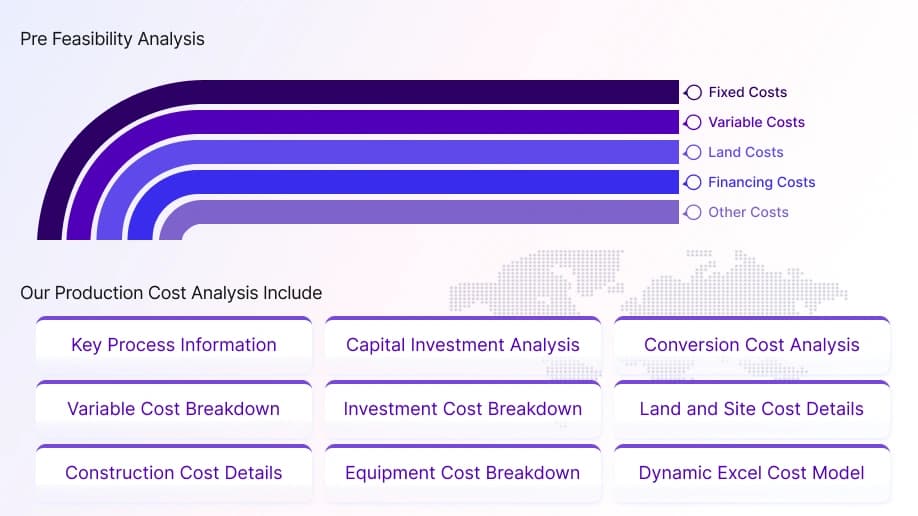
The report provides a detailed analysis essential for establishing a Digoxin production plant. It encompasses all critical aspects necessary for Digoxin production, including the cost of Digoxin production, Digoxin plant cost, Digoxin production costs, and the overall Digoxin production plant cost. Additionally, the study covers specific expenditures associated with setting up and operating a Digoxin production plant. These encompass production processes, raw material requirements, utility requirements, infrastructure needs, machinery and technology requirements, manpower requirements, packaging requirements, transportation requirements, and more.
Digoxin is a class of drugs typically used to treat different heart conditions. It acts by inhibiting the Na-K ATPase pump in cardiac myocytes, resulting in hemodynamic effects that are beneficial in the treatment of heart conditions. It enhances heart failure conditions by increasing the power of heart contractions. As a result, it reduces symptoms such as dyspnea and fluid retention.
It is used in maintaining heart rate among patients with atrial fibrillation and atrial flutter. Digoxin is used to control heart rate in patients presenting with supraventricular tachycardia (SVT). It is administered to pregnant women for the management of fetal supraventricular tachyarrhythmia but with caution because it poses potential risks to both mother and fetus. Besides managing heart failure and arrhythmias, it can manage other cardiac-related conditions.
The market for Digoxin is mainly driven by its clinical indications and pharmacological properties. Its use is to manage heart failure, improve the strength of heart contractions, and relieve various symptoms that contribute to its growing demand. It is also effective in controlling heart rate in patients with atrial fibrillation, atrial flutter, and supraventricular tachycardia (SVT).
It is prescribed to treat fetal supraventricular tachyarrhythmia in pregnant women, which further contributes to its demand. Regulatory considerations, the need for a prescription, and monitoring for toxicity further influence procurement decisions. Its cost and market accessibility also impact its market. Industrial digoxin procurement is influenced by its use in treating heart failure, atrial fibrillation, and other cardiac conditions, along with regulatory considerations, prescription requirements, monitoring for toxicity, cost, and market accessibility.
Raw Material for Digoxin Production
According to the Digoxin production plant project report, the key raw materials used in the production of Digoxin include Dried leaves (Digitalis purpurea and Digitalis lanata plant)-Ethanol.
Manufacturing Process of Digoxin
The extensive Digoxin production cost report consists of the following major industrial production process:
- From Dried leaves (Digitalis purpurea and Digitalis lanata plant) and Ethanol: The industrial production of Digoxin involves several steps. First, the leaves are dried and ground. After that, the powdered leaves are mixed into ethanol to facilitate solvent extraction. This mixture is filtered to remove solid residues. The crude extract is purified using chromatography and thin-layer chromatography (TLC). The pure Digoxin is then crystallized and formulated into various pharmaceutical preparations.
Digoxin is yellow or white in color. Its molecular formula is C41H64O14 and has a molar mass of 780.949 g/mol. It has a low solubility in water. It has a melting point of around 249.3 °C. It has a LogP value of 1.3, making it moderately lipophilic. It has six hydrogen bond donors and fourteen hydrogen bond acceptors with seven rotatable bonds. Its topological polar surface area of 203 Å. It has a bioavailability of 60-80% and 25% protein binding. Its elimination half-life ranges from 36 to 48 hours. These physical and chemical properties make it a critical medication for treating various conditions.