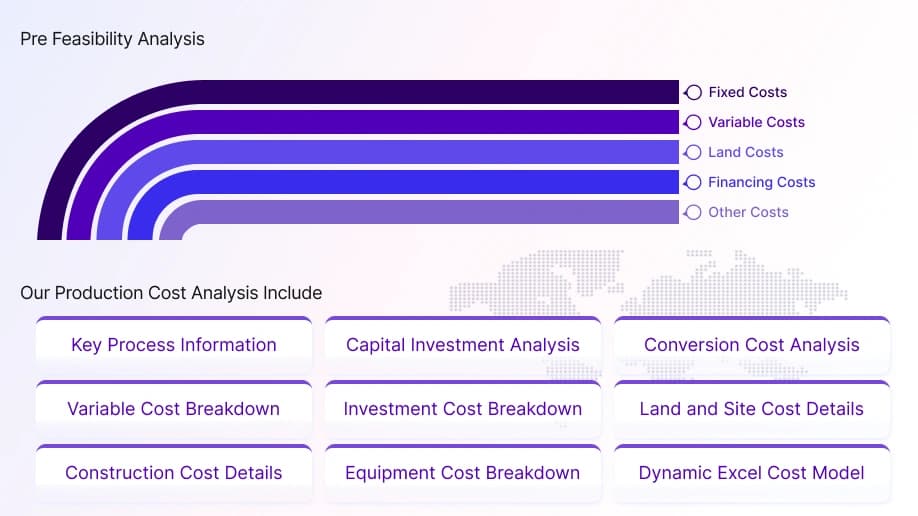
The report provides detailed analysis essential for establishing a dulaglutide production plant. It encompasses all critical aspects necessary for dulaglutide production, including the cost of dulaglutide production, dulaglutide plant cost, dulaglutide production costs, and the overall dulaglutide production plant cost. Additionally, the study covers specific expenditures associated with setting up and operating a dulaglutide production plant. These encompass production processes, raw material requirements, utility requirements, infrastructure needs, machinery and technology requirements, manpower requirements, packaging requirements, transportation requirements, and more.
Dulaglutide Market Analysis: Demand and Supply Analysis, and Sourcing
Dulaglutide is a once-weekly GLP-1 receptor agonist used to treat type 2 diabetes and to cut cardiovascular risk. It is sold as Trulicity by Eli Lilly. The molecule is a fusion protein, built from a modified GLP-1 peptide joined by a short linker to the Fc fragment of human IgG4. That Fc tail slows kidney clearance, resists enzyme breakdown, and adds size, so one injection lasts a week. The FDA and the EMA both approved it in 2014. Labels now cover adults and children aged 10 and older, with doses of 0.75, 1.5, 3, and 4.5 mg.
Demand for dulaglutide is large but past its peak. Trulicity was one of the top-selling diabetes drugs in the world, with strong uptake in the US, Europe, Japan, Canada, and Australia. It still logs over 10 million US prescriptions a year. Sales are now falling as patients switch to Lilly's own tirzepatide and to semaglutide. Lilly's fourth-quarter Trulicity revenue fell 17% to about USD 1.04 billion, and one recent full year of US sales came to about USD 2.91 billion. Lower net prices, payer pressure, and class switching all weigh on volume.
Lilly has been the main supplier of dulaglutide, handling the full process from cell banking and bioreactor production to filling, pens, and cartons. This is starting to change as biosimilars enter the market. Boan Biotech received approval in China for BA5101, the first dulaglutide biosimilar, and has licensed US rights to a partner. Other Chinese companies, including Sunshine Lake Pharma and Lepu Medical, are also developing dulaglutide biosimilars, along with several other clinical-stage programs. A dulaglutide demand and supply analysis needs to consider lower sales of the original product, the entry of biosimilars in China and the US, and the long time needed to build biologics manufacturing capacity.
Summary of the Product, Grades, and Uses
Dulaglutide has the molecular formula C2646H4044N704O836S18 for the protein backbone, a molar mass of 59,670.63 g/mol, and the CAS number 923950-08-7. With its main N-linked glycans, the molecular weight is about 62,561 Da. The molecule is a dimer of two identical chains joined by disulfide bonds, so it behaves more like an antibody than a peptide. Each chain carries a GLP-1 analog that is about 90% identical to native GLP-1, a small peptide linker, and a modified IgG4 Fc. Each chain holds one N-glycosylation site at Asn126, and the dimer holds twelve cysteines in disulfide bonds.
Dulaglutide is produced and sold as a biologic drug substance, not as a catalog chemical. Lilly makes the drug substance and the finished pens in its own network. Biosimilar makers produce their own drug substance under their own cell lines, media, purification trains, and control strategies. Release tests cover purity by size-exclusion and capillary electrophoresis, charge variants, oxidation, glycan profile, potency in a GLP-1 receptor cell assay, host cell protein, residual DNA, Protein A leachate, endotoxin, and sterility. Research-grade dulaglutide is sold by specialty suppliers for receptor binding, assay development, bioanalysis, and teaching work only.
The finished product is a clear, colorless solution in a single-dose prefilled pen. Each pen holds 0.5 mL with mannitol, citric acid, trisodium citrate, and polysorbate 80. Pens are stored at 2 to 8 degree Celsius and are good for two years. Unopened pens can sit at up to 30 degree Celsius for 14 days. The pen is a spring-driven autoinjector with a hidden needle, so device supply matters as much as protein supply.
Main End-Uses of Dulaglutide
Type 2 diabetes is the core end-use for dulaglutide. Doctors add it to diet, exercise, metformin, SGLT2 inhibitors, and basal insulin to lower blood glucose. Phase 3 trials showed HbA1c cuts of about 1% at 0.75 to 1.5 mg, and about 1.5% at the higher 3 and 4.5 mg doses. Patients also lose a few kilograms of weight on average. Once-weekly dosing, an easy pen, a hidden needle, and no mixing help adherence.
Cardiovascular risk reduction is another important use of dulaglutide, especially for cardiologists, insurers, and older patients. The REWIND trial showed a 12% reduction in major cardiovascular events. This led to an approved use for adults with existing heart disease or multiple risk factors. Insurance companies, treatment guideline groups, hospitals, and healthcare providers value GLP-1 medicines with proven heart benefits. This helps dulaglutide remain on many approved medicine lists.
Dulaglutide is also approved for children aged 10 years and older with type 2 diabetes. Type 2 diabetes in children and teenagers is becoming more common, although demand for dulaglutide in this group remains small. Its off-label use for weight loss is also limited compared with semaglutide and tirzepatide. Research laboratories buy small quantities of research-grade material for studies on GLP-1 receptors and Fc-fusion proteins.
Dulaglutide Market Risks
Dulaglutide faces the challenges of a maturing biologic in a fast-changing drug market. Tirzepatide and semaglutide provide greater weight loss and stronger blood sugar control, so some patients and doctors are switching to these medicines. Oral GLP-1 medicines, triple agonists, and amylin combinations are adding more competition. Net prices are also falling because of US rebates and Medicare price negotiations. Biosimilars are expected to reduce prices further when they launch outside China. Biosimilar manufacturers also face uncertainty because sales of the original product are declining while they are still building production capacity.
Dulaglutide production has its own risks because the molecule is a complex glycoprotein dimer. Methionine oxidation, changes in charge, aggregation, and clipping in the GLP-1 part can reduce its effectiveness. Boan identified oxidation and charge changes as some of its main technical challenges. The glycan profile, including sialylation, fucosylation, and high-mannose levels, needs to closely match the original product. Cell culture runs take two to three weeks, so contamination of a bioreactor can result in the loss of an entire batch. Pen assembly also creates supply risks because shortages of springs, plungers, or syringes can stop shipments.
Dulaglutide Production Process and Main Cost Drivers
The dulaglutide production process runs from cell bank thaw through seed expansion, fed-batch CHO culture, harvest, Protein A capture, viral inactivation, polishing chromatography, viral filtration, formulation, sterile filling, and pen assembly.
- By Fed-Batch CHO Cell Culture and Fc-Fusion Purification: The main inputs are a dulaglutide-producing CHO cell bank, chemically defined media and feeds, glucose, glutamine or substitutes, Protein A resin, ion-exchange resins, viral filters, buffers, mannitol, citrate salts, polysorbate 80, prefilled syringes, and autoinjector components.
Dulaglutide production starts with a vial from the master or working cell bank. CHO cells are first grown in shake flasks and then moved to seed bioreactors of increasing size. The main production bioreactor runs a fed-batch culture for about 14 to 21 days. Feed, pH, dissolved oxygen, and temperature are carefully controlled to maintain product yield and quality. The cells release dulaglutide into the growth medium along with host cell proteins, DNA, lipids, and used nutrients. The harvest is then processed through centrifugation and depth filtration to remove cells, cell debris, and other particles.
Purification uses a standard process for Fc-fusion proteins. Protein A chromatography captures dulaglutide from the filtered harvest. A low-pH treatment is then used to inactivate enveloped viruses. Anion and cation exchange or mixed-mode chromatography remove aggregates, charge variants, host cell proteins, and DNA. Nanofiltration removes small viruses, including parvoviruses. Ultrafiltration and diafiltration then place the protein into a citrate and mannitol buffer at the required concentration. The drug substance is frozen in bags or bottles or kept cold until fill-finish. During fill-finish, the solution is sterile filtered, filled into glass syringes, and assembled into autoinjector pens. Cell culture yield, Protein A resin life, batch success rate, and pen cost are the main factors affecting the cost per dose.
Main Factors Affecting Dulaglutide Production Cost
Dulaglutide production cost depends more on filling, packaging, and the delivery device than on the protein itself. Weekly doses are small, ranging from 0.75 to 4.5 mg. A full year of treatment uses only about 39 to 234 mg of protein per patient. Even with millions of patients, annual drug substance needs may only reach hundreds of kilograms. This keeps the drug substance cost per dose relatively low. However, each pen needs a sterile glass syringe, plunger, spring mechanism, housing, label, and carton.
Drug substance cost is still important for biosimilar manufacturers. The production titer, measured in grams per liter, determines how much bioreactor time is needed to make each kilogram of product. Protein A resin is expensive, so the number of times it can be reused affects production cost. Cell culture media, single-use bags, filters, and QC testing add regular costs. Batch failures can be very expensive because one failed batch can use weeks of bioreactor time, purification capacity, QC resources, and staff time. Cold-chain storage and transport at 2 to 8 degree Celsius also add to the cost. QC testing for each batch covers identity, potency, purity, charge variants, glycan profile, impurities, sterility, and endotoxin.
Raw Materials for Dulaglutide Production Plant and its Procurement
Raw material sourcing for dulaglutide centers on cell culture media, chromatography resins, and device parts. Chemically defined media and feeds come from suppliers such as Thermo Fisher, Merck KGaA, Fujifilm Irvine Scientific, and Lonza. Protein A resins come from Cytiva, Merck, and Tosoh, and ion-exchange resins come from the same group plus Bio-Rad. Single-use bags, depth filters, and viral filters come from Sartorius, Cytiva, Merck, and Asahi Kasei. Prefilled glass syringes come from BD, Schott, Gerresheimer, and Stevanato. Autoinjector platforms come from device makers such as Ypsomed, SHL Medical, and Owen Mumford, while Lilly uses its own pen design.
Input quality sets product quality. Media lots must be consistent, since trace metals and amino acids shift glycosylation and charge variants. Resins must be qualified for each step and tracked by cycle count. Excipients must meet USP, EP, and JP grades with low endotoxin, low bioburden, and full traceability. Polysorbate 80 must be low in peroxides, since peroxides drive methionine oxidation. Contracts for dulaglutide inputs specify animal-origin-free status, change notification, lot traceability, and supply security. Every critical input is qualified with use tests before release. Dual sourcing of media, resins, syringes, and device parts protects supply.
Sustainability and Regulatory Requirements
Dulaglutide manufacture raises sustainability duties around water, energy, and single-use plastics. Bioreactors, cleanrooms, and water-for-injection systems use large amounts of power and water. Single-use bags and filters cut cleaning chemicals but create plastic waste. Spent media, cell mass, and buffers need heat or chemical inactivation, pH control, and biological treatment before discharge. Pens add plastic, glass, and metal waste at the patient level. Recycling options remain limited. Some makers now study pen take-back schemes, lighter devices, and lower-carbon cold chains.
Regulatory requirements for dulaglutide are based on its status as a biologic and combination product. In the US, Trulicity is approved through a biologics license application, while biosimilar manufacturers must use the 351(k) pathway and provide analytical, clinical, and pharmacokinetic comparison data. In Europe, the EMA reviews biosimilars through its central approval process and biosimilar guidelines. China's NMPA has approved the first dulaglutide biosimilar, BA5101. Manufacturers follow ICH Q5A for viral safety, ICH Q5D for cell substrates, ICH Q5E for product comparability, and ICH Q6B for specifications. Sterile filling follows EU GMP Annex 1. The pen device must also meet US combination product requirements and EU medical device rules for integral devices.
CAPEX and OPEX for a Dulaglutide Production Plant
A dulaglutide plant is a mammalian biologics facility with separate areas for sterile filling and device assembly. The dulaglutide plant setup cost starts with cell bank storage, seed culture systems, and production bioreactors, which can be stainless steel or single-use systems with a capacity of around 2,000 L. Harvesting requires centrifuges and depth filtration equipment. Purification uses chromatography systems, columns, a low-pH holding vessel, viral filters, and UF/DF systems. The plant also needs water for injection, clean steam, HVAC systems for cleanrooms, chilled water, and compressed gases. The fill-finish area includes an isolator-based syringe filling machine, inspection equipment, and autoinjector assembly lines. The QC laboratory needs HPLC, capillary electrophoresis, mass spectrometry, cell-based potency testing, PCR, and sterility testing equipment.
Dulaglutide operating cost is led by labor, quality systems, consumables, and device parts. Media, Protein A resin, single-use bags, filters, and buffers make up most of drug substance variable cost. Syringes, pen mechanisms, and packaging lead drug product cost. Fixed costs cover depreciation on a costly facility, validation, environmental monitoring, and large QA and QC teams. Biologics plants often take three to five years to design, build, qualify, validate, and license. High utilization across several products is the main route to a low cost per dose.
Plant Location and Investment Factors
A suitable dulaglutide plant should be located in a biologics cluster with skilled workers and good regulatory support. In the US, North Carolina's Research Triangle, Indiana, and Massachusetts have large biologics plants. In Europe, Ireland, Italy, Germany, and Switzerland have experienced workers and favorable tax systems. In China, Shandong, Jiangsu, and Shanghai have several biosimilar developers, while South Korea and Singapore have large CDMO facilities. The site should have reliable power, clean water, cleanroom expertise, cold-chain logistics, and easy access to device suppliers.
For a dulaglutide project, the first investment decision is whether to produce in-house or use a CDMO. Building your own facility can cost hundreds of millions of dollars and take several years, while using a CDMO can allow production to start sooner. The second decision is market timing, which depends on patents, exclusivity, interchangeability, and tender schedules. Biosimilar launch dates vary by market based on patent expiry, exclusivity periods, and regulatory approvals. The third decision is the delivery device. A biosimilar needs a pen that patients find easy to use, so manufacturers may choose to license an existing autoinjector platform instead of developing a new one.
Major Dulaglutide Producing Regions
The US and Europe have Lilly's dulaglutide production network, including biologics manufacturing and device operations. Public sources link Trulicity production to Lilly's Research Triangle Park site in North Carolina and its facility in Sesto Fiorentino, Italy. China is the first market with an approved dulaglutide biosimilar, led by Boan Biotech in Yantai, Shandong. Sunshine Lake Pharma, Lepu Medical, and other Chinese companies are also running clinical programs. South Korea, India, Singapore, and Ireland have CDMO facilities that could support future dulaglutide biosimilar production.
Key Dulaglutide Producers
Eli Lilly and Company
- Indianapolis-based originator that developed dulaglutide and sells it worldwide as Trulicity.
- Makes drug substance in CHO cells and assembles single-dose autoinjector pens in its own network.
- Competes on originator status, cardiovascular outcome data, pediatric labeling, and a familiar pen.
- Holds the US biologics license and EU marketing authorization under FDA and EMA oversight.
Boan Biotech
- Yantai-based biologics company within the Luye Pharma group.
- Won Chinese approval for BA5101, the first dulaglutide biosimilar, after a Phase 3 trial with HbA1c cuts of 1.44% versus 1.41% for Trulicity.
- Competes on first-mover status, in-house CHO manufacturing, and control of oxidation and charge variants.
- Licensed US rights to a partner with FDA-inspected biologics manufacturing, with US trials cleared.
Sunshine Lake Pharma
- Guangdong-based pharmaceutical company within the HEC group, developing a dulaglutide biosimilar under the code HEC14028.
- Has completed pharmacokinetic studies, with further clinical work underway.
- Competes on diabetes portfolio depth, in-house biologics capacity & Chinese hospital reach.
- Develops under NMPA biosimilar guidance and Chinese GMP.
Lepu Medical
- Beijing-based medical technology and pharmaceutical group named among dulaglutide biosimilar developers.
- Pairs drug development with device and cardiovascular product experience.
- Competes on cardiology channel strength, device know-how & a broad Chinese sales network.
- Works under NMPA oversight for drug and device registration.
WuXi Biologics
- Chinese CDMO with large mammalian cell culture and Fc-fusion capacity in China and abroad.
- Could technically produce dulaglutide drug substance for biosimilar sponsors under contract.
- Competes on scale and speed from cell line to clinic & integrated drug substance and drug product services.
- Operates plants inspected by the FDA, EMA, and NMPA.
Samsung Biologics
- South Korean CDMO with one of the largest mammalian bioreactor capacities in the world.
- Could technically manufacture dulaglutide drug substance and fill prefilled syringes for a sponsor.
- Competes on scale, regulatory track record & full drug substance and drug product services.
- Runs plants approved by the FDA, EMA, and other major regulators.