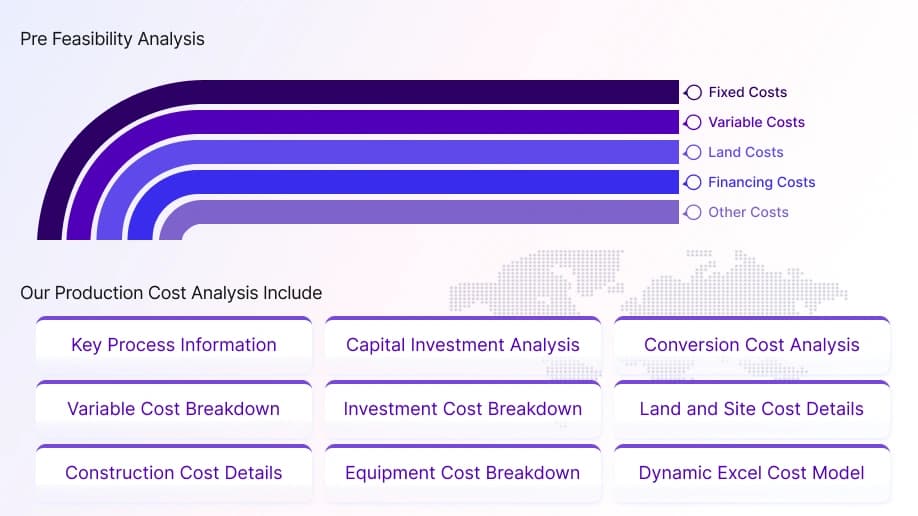
The report provides a detailed analysis essential for establishing an Eplerenone production plant. It encompasses all critical aspects necessary for Eplerenone production, including the cost of Eplerenone production, Eplerenone plant cost, Eplerenone production costs, and the overall Eplerenone production plant cost. Additionally, the study covers specific expenditures associated with setting up and operating an Eplerenone production plant. These encompass production processes, raw material requirements, utility requirements, infrastructure needs, machinery and technology requirements, manpower requirements, packaging requirements, transportation requirements, and more.
Eplerenone is used in the treatment of several cardiovascular conditions. It works by blocking a hormone that would otherwise cause the body to retain salt and water. Blocking of that hormone promotes the excretion of excess salt and water, leading to increased urine production and lower blood pressure. It is used to treat hypertension and can be used individually or in combination with other medications. It lowers blood pressure and reduces the risk of heart attack and kidney disease in heart patients. Its use to treat hypertension, either alone or alongside other medicines, further amplifies its utility and need. Overall, its availability in cardiovascular therapy, along with its cost-effective nature and development due to clinical research programs, influences industrial Eplerenone procurement.
The market for Eplerenone is driven by several factors. Its use in treating hypertension and other cardiovascular problems contributes to its growing demand. Its utilization in lowering blood pressure and saving patients with heart problems from strokes and kidney problems makes it a popular medication among patients and healthcare providers. Its use in patients who are having left ventricular dysfunction makes it a sought-after product. Its use in monotherapy or in combination with essential hypertension enhances its utility and adds to the demand. So, the industrial Eplerenone procurement is influenced by its utilization in cardiovascular diseases, cost-effectiveness, research improvements, and regulatory approvals.
Raw Material for Eplerenone Production
According to the Eplerenone production plant project report, the key raw materials used in the production of Eplerenone include Steroid Precursors-Oxidizing Agents-Halogenating Agents-Solvents.
Production Process of Eplerenone
The detailed Eplerenone production cost report consists of the following major industrial production process:
- From Steroid Precursors, Oxidizing Agents, Halogenating Agents, and Solvents: The production process for Eplerenone has several steps. First, steroid precursors go through a series of chemical reactions, making the core steroid structure. After that, the carbonyl group is introduced through the structure by oxidation reactions. Then, a five-membered lactone ring is incorporated, and halogenation occurs at the 9α position, forming Eplerenone. Finally, the compound is purified and crystallized to obtain pure Eplerenone.
Eplerenone is a white crystalline powder and is odorless. It has a chemical formula of C24H30O6 and a molar mass of 414.50 g/mol. It is slightly soluble in water and pH-independent. It is lipophilic in nature, with a melting point of about 242°C and a partition coefficient value of around 7.1 values. It is metabolized by cytochrome P450 3A4 enzyme with a plasma protein binding rate of around 50%. It has a half-life of about 4 to 6 hours, and less than five percent is excreted unchanged in the urine or feces. All these properties collectively make it possess pharmaceutical activity.