
Udeesha Tomar
AVP - Strategy and Solutions
Leading procurement research solutions across chemicals, materials, and food & beverages, with expertise in price forecasting and market analytics.
Last Updated: August, 2026

Trusted by 200+ Clients
The report provides a detailed analysis essential for establishing an ethyl propiolate production plant. It encompasses all critical aspects necessary for ethyl propiolate production, including the cost of ethyl propiolate production, ethyl propiolate plant cost, ethyl propiolate production costs, and the overall ethyl propiolate production plant cost. Additionally, the study covers specific expenditures associated with setting up and operating an ethyl propiolate production plant. These encompass production processes, raw material requirements, utility requirements, infrastructure needs, machinery and technology requirements, manpower requirements, packaging requirements, transportation requirements, and more.
Ethyl propiolate is made from propiolic acid and ethanol. It is one of the activated acetylenic esters, with a terminal alkyne placed beside an ester group. That structure makes the liquid useful in addition, cyclization, and coupling reactions. Commercial grades are generally clear and colorless, though a pale-yellow shade may also be accepted. Most material is sold at 98% to 99% purity in sealed glass bottles or compatible metal packs. Suppliers normally advise cool storage.
The market is small, and production mainly follows confirmed orders. Most buyers are pharmaceutical intermediate producers, custom synthesis firms, research laboratories, and companies that make heterocyclic chemicals. The material is supplied by specialist manufacturers and laboratory chemical companies in Japan, China, Europe, India, and the United States.
For a new plant, the first concern is propiolic acid supply. Batch size, customer approval, order frequency, and purity limits are just as important. The cost review must also allow for ethanol recovery, water removal, product lost during distillation, vapor control, and cold storage. Buyers commonly ask for gas chromatography results together with data on color, acidity, water, and residual solvents.
Ethyl propiolate has the chemical formula C5H6O2 and a molecular weight of 98.10 g/mol. Its IUPAC name is ethyl prop-2-ynoate. The liquid boils at around 118 to 120 degree Celsius, has a density of about 0.968 g/mL, and a refractive index of 1.411 to 1.413 at 20 degree Celsius.
Commercial material is normally 98.0% to 99.0% pure, based on gas chromatography tests. Since it catches fire easily, it must be handled in closed equipment with proper ventilation and kept away from sparks or flames. Suppliers usually recommend storing it at 2 to 8 degree Celsius under an inert gas, away from strong acids, bases, and oxidizing chemicals.
Buyers assess more than purity. They may also test color, acidity, water content, residual ethanol, refractive index, and high-boiling impurities. Packaging, container suitability, transport requirements, and batch documentation can also influence product approval. An ethyl propiolate production plant project report should therefore define plant design, storage systems, quality controls, analytical testing, packaging arrangements, and safety requirements according to the intended product grade.
Ethyl propiolate is mostly used by pharmaceutical and fine chemical companies. It helps produce drug ingredients, chemical intermediates, propiolamides, and several nitrogen-based ring compounds. The material is also used to make special acrylates, conjugated chemicals, modified monomers, and surface treatment products. It is rarely used in consumer goods because it is highly reactive and can catch fire easily.
Drug and fine chemical intermediates account for the largest share of ethyl propiolate demand. Its activated triple bond reacts readily with nucleophiles and dipoles, allowing chemists to introduce a short three-carbon unit containing an ethoxycarbonyl group. Orders often begin with laboratory quantities and may increase quickly when a downstream molecule enters process development or commercial production. Demand may decline when customers change their synthesis routes.
Ethyl propiolate is often used to make ring-shaped chemicals such as pyrazoles, pyridines, quinolines, and fused-ring compounds. These chemicals are used in pharmaceutical, agrochemical, and specialty material production. It can also react with amines to form propiolamides. Since each process creates a different mix of impurities, customers may set separate limits for moisture, color, acidity, and leftover process materials.
Research laboratories provide a steady flow of small-volume orders. These buyers normally purchase high-purity material in bottles and require full analytical documentation. Commercial customers use larger sealed containers and may impose specific impurity limits. An ethyl propiolate demand and supply analysis should assess these purchasing patterns, downstream project activity, customer qualification periods, raw material availability, and regional supplier capacity. This demand structure favors flexible batch production rather than a large continuous production line. Plant capacity is best aligned with typical campaign size, customer approval schedules, and safe inventory levels.
Propiolic acid is the biggest sourcing concern. It comes from a much narrower supplier base than ethanol, and a delayed shipment can stop a campaign. Demand is also tied to individual projects. Volumes may fall quickly when a pharmaceutical or custom synthesis customer changes its route. Small orders carry more testing, packing, and handling cost per kilogram. Substitution is possible in some reactions. Methyl propiolate, propiolyl chloride, or another activated alkyne may be chosen when the chemistry permits. Public data on plant capacity and market pricing is thin, which makes comparisons between projects difficult.
The plant must control flammable vapors and separate ethanol, water, catalyst, and product without damaging the ester. If water is not removed properly, the reaction may produce less material. Too much heat or a long distillation step can darken the liquid and create more waste. Any acid left in the product may shorten its shelf life and lead to rejection. Shared equipment must also be cleaned well because traces of other chemicals or metals can react with the product.
This ethyl propiolate production plant report provides a thorough value-chain evaluation for ethyl propiolate production and sets out a production cost analysis built around the dominant esterification of propiolic acid with ethanol.
Propiolic acid and ethanol are added to a closed reactor with continuous stirring. A catalyst helps the reaction take place, while the water formed during the process is removed or controlled to maintain a good conversion rate. Once the reaction is complete, the mixture is concentrated and washed to remove leftover catalyst and unreacted acid. The liquid layers are then separated, dried, and filtered. Fractional distillation removes ethanol, water, lighter materials, and heavy residue from the product. Operators must control the temperature and processing time, as too much heat can cause the product to darken. Before packing, the material is checked for purity, moisture, acidity, refractive index, and appearance. The main cost factors are propiolic acid prices, production yield, ethanol recovery, distillation losses, cold storage, and safety equipment for hazardous areas.
Propiolic acid is the main raw material expense because it makes up much of the finished product and is supplied by only a few companies. Ethanol costs less, but using too much means more recovery and purification work. The type of catalyst used can also affect production yield, equipment corrosion, chemical use, and wastewater treatment.
Some product may be lost in wash water or during distillation. Poor separation can also slow production and increase energy use. Every batch needs testing, packaging, and temperature-controlled storage, regardless of its size. Most utility spending comes from heating, cooling, vacuum systems, condensation, and final distillation. If the plant runs below capacity, the cost per kilogram rises because every batch still needs cleaning and quality testing. Small pack sizes, tighter purity requirements, and waste that cannot be reused also increase production costs.
Propiolic acid is the main raw material that needs to be secured first. Suppliers are usually fine chemical companies or custom manufacturers in East Asia, Europe, India, and North America. Each supplier should be checked for purity, water content, color, acidity, packaging, storage needs, delivery time, and performance on larger orders.
Dry ethanol is generally easy to obtain, but its water, aldehyde, and higher-alcohol content must stay within set limits. Denatured ethanol may not be suitable for pharmaceutical intermediate production. Sulfuric acid is low-cost, but it can cause corrosion and add to wastewater treatment needs. Other acid catalysts may be easier to handle and can simplify the washing stage.
The plant also requires nitrogen, treated water, cleaning chemicals, drying materials, and suitable containers. Propiolic acid prices vary with purity, order quantity, availability, transport costs, and delivery time. Ethanol prices also change from one region to another due to raw material costs, energy rates, taxes, local availability, etc.
The plant should approve at least two propiolic acid suppliers before production begins. Each contract should clearly state the quality requirements, delivery times, retesting rules, product changes, damaged packaging terms, and transport conditions. For a small or medium plant, dependable suppliers and good stock planning usually make more sense than producing propiolic acid on-site.
Waste can be reduced by recovering as much solvent as possible. A suitable condenser can send ethanol and product vapors back into the process. Distillation material may also be reused if it still meets quality standards. Acidic wastewater should be kept separate from solvent waste so each can be treated correctly. Hot condensate can also be reused to reduce heating costs.
The plant must follow rules for handling flammable liquids, protecting workers, registering chemicals, managing waste, and transporting the product. In Europe, higher production or import volumes may require a REACH review. Labels must meet CLP or local GHS standards. Ethyl propiolate is generally shipped as UN 3272, Class 3, Packing Group III.
Electrical equipment must be safe for use in hazardous areas. The site also needs proper ventilation, grounding, spill control, and fire protection. Filling and storage procedures should also reduce static charge and worker exposure to vapors.
The production section needs a compatible stirred reactor, metered feed systems, condensers, phase separators, wash vessels, dryers, filters, and a fractional distillation column. Glass-lined equipment or a suitable alloy is generally used where the acidic reaction mixture is handled. Nitrogen service, chilled storage, explosion-protected pumps, grounded transfer lines, vapor collection, firewater, and separate waste tanks are also required.
The quality lab needs equipment for gas chromatography, moisture testing, refractive index checks, and acidity testing. It also needs space to keep retained samples. Finished products and reference samples may require cold storage or cooled cabinets. The initial ethyl propiolate plant setup cost should also cover temperature alarms, emergency shut-off valves, nitrogen monitoring, safe electrical systems, storage areas, civil work, filling equipment, etc.
The main operating costs are propiolic acid and ethanol. Other expenses include catalysts, neutralizing chemicals, drying materials, nitrogen, steam, cooling, and electricity. The plant must also cover maintenance, cleaning, laboratory testing, rejected batches, waste treatment, packaging, hazardous-goods transport, labor, and administration. Working capital is needed to buy raw materials, hold finished stock, prepare customer samples, and manage delayed payments from export customers.
A fine chemical industrial zone is usually the best place for this type of plant. The site should have easy access to propiolic acid, dry ethanol, nitrogen, steam, cooling water, and chilled storage. Being near a port or air cargo center can also help reduce delivery time for raw materials and customer samples. The area must permit flammable liquid handling, solvent storage, distillation, and hazardous waste treatment.
The plant should have its own drainage system, firewater storage, backup power, and trained emergency staff. Spending should follow confirmed customer orders instead of uncertain bulk demand. Some equipment and utilities can be used for similar ester products, but proper cleaning is needed between batches. Making bigger batches and recovering ethanol well can reduce production costs. Producing propiolic acid at the same plant is usually not worthwhile unless similar chemicals are already made there. Project returns also depend on quick customer approval, steady raw material supply, good production yield, low distillation losses, enough storage space, and regular orders.
Ethyl propiolate is mainly supplied by established fine chemical producers rather than large petrochemical plants. Japan is known for specialty reagents, strict quality testing, and reliable global delivery of small and medium packs. China offers a wider range of catalog products and custom production services, including bulk orders.
Specialty suppliers and contract manufacturers in Western Europe and the United Kingdom serve pharmaceutical and research customers. The United States has a strong network for research chemicals and custom production. India also makes specialty intermediates, but public information on plant size is limited.
Supplier websites show that ethyl propiolate is available, although they rarely name the production site or state annual capacity. The product is probably made in batches at multipurpose fine chemical plants. Production timing usually depends on confirmed orders, propiolic acid supply, customer approval, and safe storage space. An ethyl propiolate production plant report can assess plant configuration, batch size, raw material requirements, operating costs, and supplier capabilities. It can also examine industrial production economics, including capital investment, utility consumption, labor costs, yield losses, storage requirements, and profitability.
Tokyo Chemical Industry Co., Ltd.
Merck KGaA / Sigma-Aldrich
Thermo Fisher Scientific Chemicals
Fluorochem Limited
BLD Pharmatech Ltd.
Ethyl Propiolate Production Cost Report
Choose What's Right for You
Pay Via



| Particulars | Details |
|---|---|
| Product Name | Ethyl propiolate |
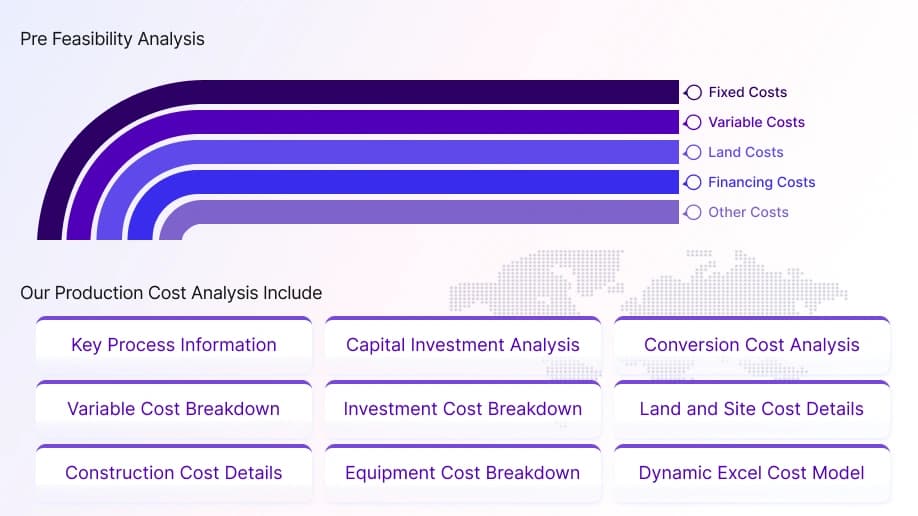
| Scope | Production Process: Process Flow, Material Flow, Material Balance Raw Material and Product Specifications: Raw Material Consumption, Product and Co-product Generation Land and Site Cost: Offsites/Civil Works, Equipment Cost, Auxiliary Equipment Costs, Contingency, Engineering and Consulting Charges, Working Capital Variable Cost: Raw Material, Utilities, Other Variable Costs Fixed Cost: Labor Requirements and Wages, Overhead Expenses, Maintenance Charges, Other Fixed Costs Financing Costs: Interest on Working Capital, Interest on Loans Other Costs: Depreciation Charges, General Sales and Admin Cost |
| Currency | US$ (Data can also be provided in the local currency) |
| Customization Scope | The report can be customized as per the requirement of the customer |
| Post-Sale Analysts Report | 10-12 weeks of post-purchase analyst support after report delivery for any queries from the deliverable |
| Delivery Format | PDF and Excel format through email (editable version in PPT/Word format of the report can be also provided on special request) |
At Procurement Resource, we not only focus on optimizing the should cost of production for ethyl propiolate but also provide our clients with extensive intel and rigorous information on every aspect of the production process. By utilizing a comprehensive cost model, we help you break down expenses related to raw materials, labor, and technology, offering clear pathways to savings. We also assist in evaluating the capital expenditure (CAPEX) and operating expenses (OPEX), which are often measured as cost per unit of production, such as USD/MT, ensuring that your financial planning is aligned with industry benchmarks.
We offer valuable insights on the top technology providers, in-depth supplier database, and best producers, helping you make informed decisions to improve efficiency. Additionally, we design the most feasible layout for your production needs, ensuring the entire process runs smoothly. By minimizing the cash cost of production, we ensure that you stay competitive while securing long-term profitability in the growing ethyl propiolate market. Partnering with Procurement Resource guarantees that every aspect of your production is cost-efficient, advanced, and tailored to your specific requirements.
AVP - Strategy and Solutions
Leading procurement research solutions across chemicals, materials, and food & beverages, with expertise in price forecasting and market analytics.
Need more help?

Still Need Help?
Compare & Choose the Right Report Version for You
How to Order Your Report?