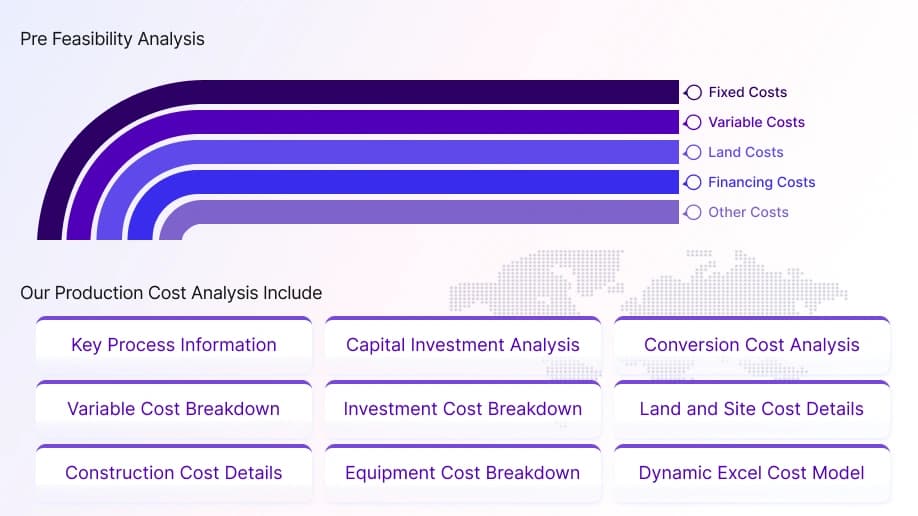
The report provides a detailed analysis essential for establishing an Ethylene production plant. It encompasses all critical aspects necessary for Ethylene production, including the cost of Ethylene production, Ethylene plant cost, Ethylene production costs, and the overall Ethylene production plant cost. Additionally, the study covers specific expenditures associated with setting up and operating an Ethylene production plant. These encompass production processes, raw material requirements, utility requirements, infrastructure needs, machinery and technology requirements, manpower requirements, packaging requirements, transportation requirements, and more.
Ethylene, sometimes referred to as ethene, is a hydrocarbon and an inconspicuous yet essential participant in industrial chemistry and a fundamental component of numerous everyday goods.
Ethylene finds its application in the automobile industry; it is used to produce car glasses owing to their durability. It is used in the metal sector for high-velocity thermal spraying, welding, and metal cutting. It functions in medical applications much like a gas anaesthetic in circumstances of unrestricted surgery.
It is also employed in the production of polyethylene, polystyrene, and polyvinyl chloride (PVC), which are subsequently processed into various goods, so expanding its market. Other applications of the product include thinning excess flowers and young fruits, including cherries, walnuts, cotton, etc., and its use as a refrigerant in LNG liquefaction plants, in rubber extraction, in ethanol production and as an anti-freezing compound in car radiators.
The market growth of Ethylene is being driven by its use in the chemical industry and for producing polyethene. Furthermore, it is also used in agricultural processes to ripen fruit and germinate seed in the form of Ethylene lamps that develop colour and ripen fruit which furthers the market growth.
It also has applications in thinning excess flowers and young fruits, including cherries, walnuts, cotton, etc. However, Ethylene is in great demand for its vast applications in automobile, medical, chemical and agricultural industries majorly. Moreover, there are several factors which influence the industrial Ethylene procurement, such as the cost and availability of its feedstock (such as ethane, steam, etc), the market prices of Ethylene, its distribution (which includes trading and transportation), logistics, etc.
Ethylene is used in numerous industries, which highlights its importance as a vital raw chemical with a variety of purposes, including industrial operations, medical applications, and agricultural methods.
Raw Material for Ethylene Production
According to the Ethylene production plant project report, the major raw materials for Ethylene production includes ethane, steam.
Production Process of Ethylene
The extensive Ethylene production cost report consists of a major industrial production process:
- Production via steam cracking: This method involves heating coal or petroleum oil to a high temperature and partially burning it with air to produce Ethylene. The Ethylene produced is then cooled and collected.
Ethylene (H2C=CH2) is the simplest organic compound, which is referred to as alkene, containing carbon-carbon double bonds. Ethylene's natural sources are natural gas and petroleum, but it also occurs in plant hormones that inhibit growth and stimulates the falling of a leaf and fruits while facilitating ripening.
It is a small hydrocarbon. It is produced by heating natural gas and is mostly present as ethene and propene. Ethylene appears to be colourless and has a sweet taste and odour. This is a flammable gas. It's a group of plant growth regulators used for ripening fruits and producing flowers and fruits. The melting and boiling point of Ethylene is -169.4 degree Celsius and -169.4-degree Celsius, respectively.