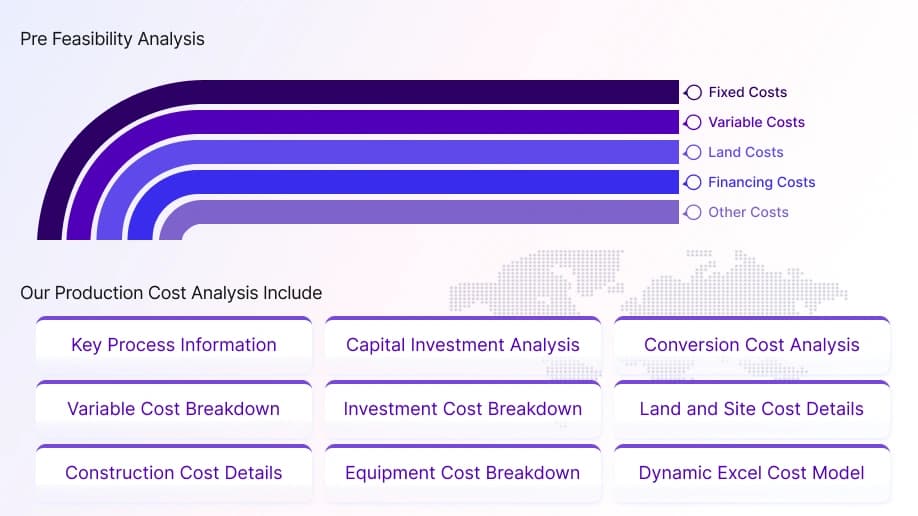
The report provides a detailed analysis essential for establishing a Fluoxetine production plant. It encompasses all critical aspects necessary for Fluoxetine production, including the cost of Fluoxetine production, Fluoxetine plant cost, Fluoxetine production costs, and the overall Fluoxetine production plant cost. Additionally, the study covers specific expenditures associated with setting up and operating a Fluoxetine production plant. These encompass production processes, raw material requirements, utility requirements, infrastructure needs, machinery and technology requirements, manpower requirements, packaging requirements, transportation requirements, and more.
Fluoxetine is a drug that is used for managing several mental health disorders. It works by increasing serotonin levels in the brain by stopping its reabsorption, improves mood, and reduces anxiety. It is used for treating Major Depressive Disorder (MDD) in adults and children above 8 years. It helps in reducing symptoms of depression, sadness, lack of appetite, etc. It is utilized to manage symptoms of Obsessive Compulsive Disorder (OCD) for reducing obsessive thoughts and compulsive behaviors.
Fluoxetine is used in Bulimia Nervosa for managing purging and binge eating in bulimic individuals. It controls panic attacks and associated anxiety. It is useful in treating severe emotional and physical symptoms associated with the menstrual cycle. Also, it is prescribed to treat depressive episodes in patients having bipolar disorder.
The industrial fluoxetine procurement is driven by its clinical application as well as several other factors. Its usage in treating MDD, OCD, bulimia nervosa, etc., contributes to its demand in the treatment of many mental health conditions. Its utilization in managing panic attacks and associated anxiety further contributes to its demand.
It is suitable for adults as well as children above 8, making it a sought-after product in a wide age group. It is a cost-effective medication that makes it popular in budget-conscious healthcare systems. It is on the WHO's List of Essential Medicines that drives its demand all over the world. Overall, the market of Fluoxetine is affected by its therapeutic use, cost-effectiveness, and inclusion in the WHO's List of Essential Medicines, along with regulatory compliance, market demand, pricing, and technological advancements.
Raw Material for Fluoxetine Production
According to the Fluoxetine production plant project report, the key raw materials used in the production of Fluoxetine include 3-Dimethylamino Propiophenone-Diborane-Hydrochloric Acid-Thionyl Chloride-(4-Trifluoromethyl Phenol).
Production Process of Fluoxetine
The extensive Fluoxetine production cost report consists of the following major industrial production process:
- From 3-Dimethylamino Propiophenone, Diborane, Hydrochloric Acid, Thionyl Chloride, and 4-Trifluoromethyl Phenol: The industrial production process for Fluoxetine involves several steps. First, 3-dimethylamino propiophenone is reacted with diborane, forming an intermediate compound dimethylaminopropanol. This intermediate is reacted with hydrochloric acid and thionyl chloride changes it into chloro derivative. After that, the chloro compound is reacted with 4-trifluoromethyl phenol, forming Fluoxetine. The crude product is purified and crystallized to obtain pure Fluoxetine.
Fluoxetine is a white crystalline solid. Its molecular formula is C17H18F3NO, and it has a molecular weight of 309.33 g/mol. Its melting point ranges from 179°C to 182°C and has a boiling point of 395.1°C. It is soluble in water and methanol but insoluble in hexane and benzene. Its LogP value is 4.05 making it highly lipophilic. It is distributed in the brain because of its plasma protein binding capability. It is probable pKa value is 9.8, and it is hydrophobic. All these physical and chemical properties contribute to its medicinal abilities.