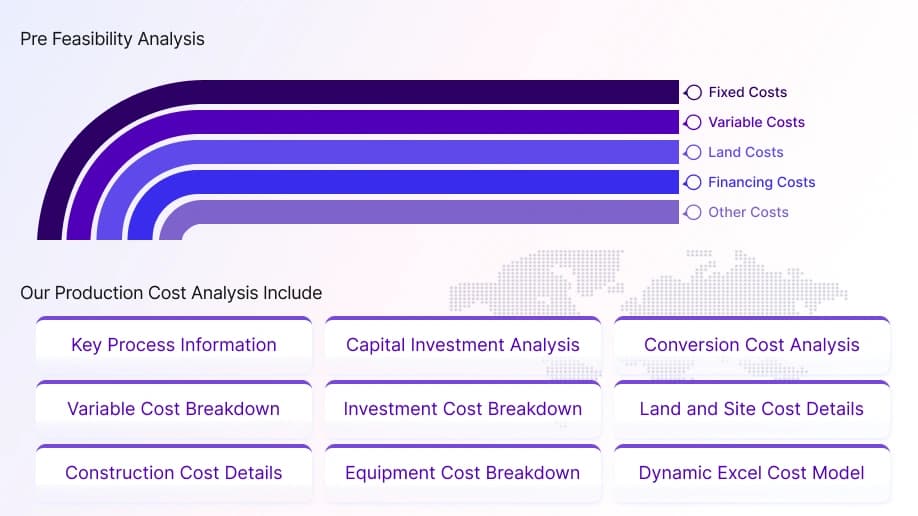
The report provides a detailed analysis essential for establishing a Fosinopril Sodium production plant. It encompasses all critical aspects necessary for Fosinopril Sodium production, including the cost of Fosinopril Sodium production, Fosinopril Sodium plant cost, Fosinopril Sodium production costs, and the overall Fosinopril Sodium production plant cost. Additionally, the study covers specific expenditures associated with setting up and operating a Fosinopril Sodium production plant. These encompass production processes, raw material requirements, utility requirements, infrastructure needs, machinery and technology requirements, manpower requirements, packaging requirements, transportation requirements, and more.
Fosinopril Sodium is used to help lower blood pressure in people with mild to moderate hypertension. It can also be used alongside other treatments for heart failure. Additionally, it may help slow down kidney problems in people with high blood pressure who have diabetes and show signs of kidney damage, whether mild or severe. It is a member of the class of drugs called angiotensin-converting enzyme inhibitors (ACE).
The procurement of Fosinopril Sodium is influenced by its utilization in the pharmaceutical and medical industries as an antihypertensive medication. The widespread occurrence of hypertension is significantly increasing the demand for Fosinopril Sodium. It experiences a large demand from the aging population as it is more inclined to be affected by high blood pressure and other ailments. The use of Fosinopril Sodium for off-label conditions such as acute myocardial infarction, diabetic nephropathy, and HIV-associated nephropathy is a key driver for the growth of its market.
Because of its longer half-life than that of other ACE inhibitors, such as captopril and enalapril, once-daily dosing is possible, improving patient convenience and adherence. Fosinopril Sodium's hydrophilic nature facilitates greater distribution and absorption inside the body, which may enhance efficacy. This characteristic distinguishes it from other lipophilic ACE inhibitors and helps explain why its demand is rising. Overall, industrial Fosinopril Sodium procurement is influenced by its utilization in the pharmaceutical and medical industries, rising cases of hypertension, the aging population, its off-label uses, long half-life, patient compliance, greater distribution and distribution, and regulatory approvals.
Raw Material for Fosinopril Sodium Production
According to the Fosinopril Sodium production plant project report, the key raw material used in the production of Fosinopril Sodium includes 4-phenyl-1-butene.
Manufacturing Process of Fosinopril Sodium
The extensive Fosinopril Sodium production cost report consists of the following major industrial production process:
- Production from 4-phenyl-1-butene: The production process of Fosinopril Sodium starts with the radical addition of hypophosphorous acid to the starting compound to form phosphinic acid. Phosphinic acid is reacted with chloroacetic acid to give dialkyl phosphinic acid. The compound is subjected to benzylation to form an intermediate. The intermediate undergoes alkylation by using racemic 1-chloro-2-methylpropyl propionate, and, on further hydrogenolysis, gives another intermediate. Finally, the intermediate is reacted with sodium 2-ethylhexanoate to produce Fosinopril sodium.
Fosinopril Sodium, commercially known as Monopril, is the sodium salt of Fosinopril. It appears to be a white to off-white crystalline powder having the molecular formula C30H45NNaO7P and a molecular weight of 585.654. It has an estimated water solubility of 0.00132 mg/mL. It has a melting point in the range of 196-198°C. The value of its dissociation constant, pKa, is 3.87. It is an angiotensin-converting enzyme inhibitor used to treat hypertension.