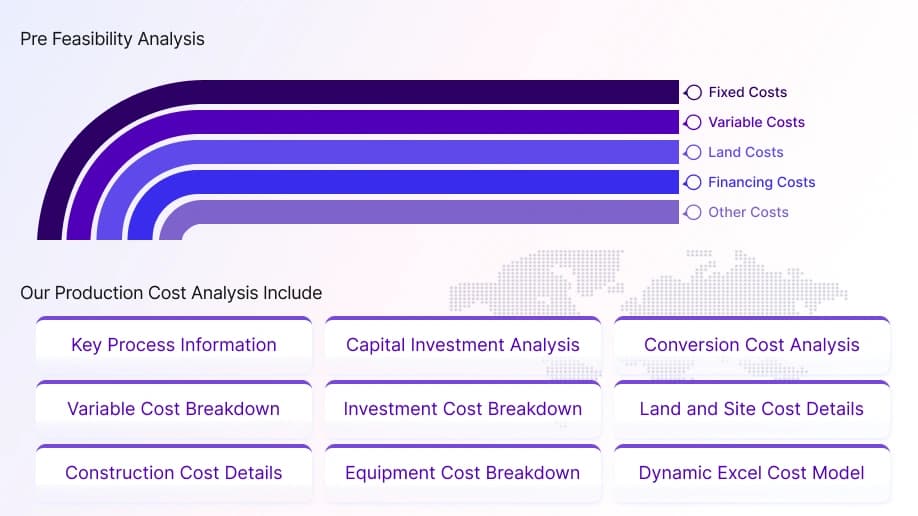
The report provides a detailed analysis essential for establishing a glutamine production plant. It encompasses all critical aspects necessary for glutamine production, including the cost of glutamine production, glutamine plant cost, glutamine production costs, and the overall glutamine production plant cost. Additionally, the study covers specific expenditures associated with setting up and operating a glutamine production plant. These encompass production processes, raw material requirements, utility requirements, infrastructure needs, machinery and technology requirements, manpower requirements, packaging requirements, transportation requirements, and more.
Glutamine is a non-essential amino acid and one of the building blocks of protein. It is an important component for proper functioning of the immune system, brain function, and digestion. It is widely used in the manufacture of various flavored health food products and certain pharmaceuticals. Moreover, it also finds its application in the production of nutritional supplements due to its key role in providing energy and protein synthesis. It is also used as a muscle growth enhancer by athletes and bodybuilders. Additionally, it is also used to increase maize production in the agriculture field.
The market for glutamine is majorly driven by its applications in the form of a nutritional supplement to enhance muscle growth and overall metabolic homeostasis, which significantly promotes its demand in the wellness, healthcare, and nutraceutical industries. Moreover, its utilization in the production of flavored health food products further enhances its demand in the food industry. It is also utilized to promote growth in maize production, which notably increases its demand in the agriculture industry.
Additionally, several factors influence industrial glutamine procurement, such as the availability and cost of production of glutamine's feedstock (bacterial strain, glucose, etc.), contamination control, supply chain reliability, glutamine market prices, strain efficiency, distribution (including trading and shipping), logistics, regulatory compliance, environmental regulations, safety standards, etc.
Raw Material for Glutamine Production
According to the Glutamine production plant project report, the major raw materials for Glutamine production include Bacterial strain Glucose-Ammonia.
Manufacturing Process of Glutamine
The extensive Glutamine production cost report consists of the following industrial production process:
- Production via Fermentation: This method of producing glutamine involves maintaining a sterile fermentation tank that is free from contamination under positive pressure, as an essential part of the process. Glucose, ammonia (a nitrogen source), and other essential vitamins and minerals are used as a fermentation medium under controlled conditions of pH, oxygen, and temperature for carbon, ammonia, and other vitamins & mineral sources. Further, glucose is continuously added in the fermentation tank to allow fermentation bacteria (l-Gln-producing bacterium) to grow and increase in number. Then, at a certain level, the production of glutamine begins, which can be managed by adjusting the glucose supply.
Glutamine (C5H10N2O3) is an amino acid with distinct physical and chemical properties that contribute to its essential roles in biological systems as it has significant applications in the nutraceutical and the healthcare sector. It can be taken as a supplement and is also naturally produced by the body. It plays key role in maintaining proper functioning of the digestive and immune system. It is essential for the removal of excess ammonia from the body.
Molecular weight of the compound is 146.14 g/mol. Glutamine has a melting point of 185 °C and a boiling point of 445.6 °C. Many tissues metabolize glutamine; however the liver, kidneys, and intestines are where the majority of the metabolism takes place. In order to enhance immunological function and gastrointestinal health, glutamine is used medicinally as a dietary supplement, particularly in situations of stress, trauma, and critical sickness.