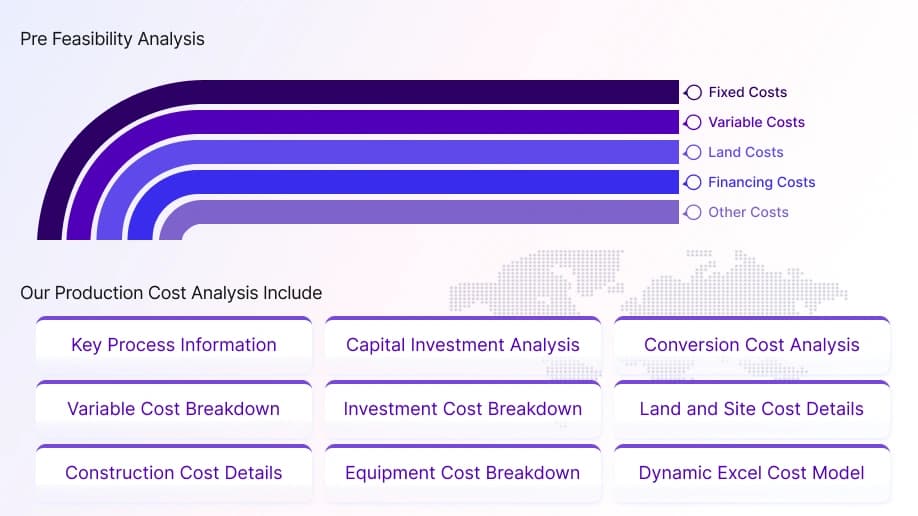
The report provides a detailed analysis essential for establishing a gonadotropin production plant. It encompasses all critical aspects necessary for gonadotropin production, including the cost of gonadotropin production, gonadotropin plant cost, gonadotropin production costs, and the overall gonadotropin production plant cost. Additionally, the study covers specific expenditures associated with setting up and operating a gonadotropin production plant. These encompass production processes, raw material requirements, utility requirements, infrastructure needs, machinery and technology requirements, manpower requirements, packaging requirements, transportation requirements, and more.
Gonadotropins are a group of hormones that stimulate the activity of the gonads (testes in males and ovaries in females) in the body. It is widely utilized for the treatment of infertility in people facing problems ovulating on their own. Moreover, it also finds application in the treatment of endometriosis and hormone-dependent disorders. Additionally, it is also employed in the form of injection during fertility treatments, including intrauterine insemination (IUI) or in vitro fertilization (IVF). During the treatment of infertility in women, gonadotropin is administered to promote the luteal phase to initiate ovulation and facilitate follicular maturation. In men, it is used to increase Leydig cell synthesis of testosterone in cases of hormone shortage and male hypogonadism.
The market for gonadotropin is majorly driven by its broad usage in the medical and pharmaceutical industries for the treatment of infertility, as it induces ovulation, which significantly accentuates its market expansion. Moreover, its application in the treatment of cryptorchidism, central precocious puberty, and hormone-sensitive cancers, such as prostate cancer and breast cancer, further enhances its demand in the medical and pharmaceutical industries.
Additionally, its employment in fertility treatments and hormone replacement therapy, effectively accelerates its market growth and also contributes to its demand in the medical and biotechnology industries. Furthermore, several factors influence industrial gonadotropin procurement, such as the source and its purity, cost, and pricing, compliance with medical and pharmaceutical regulations, quality standards, technological advancements, environmental considerations, sustainability practices, distribution (including trading and shipping), logistics, safety standards, etc.
Raw Material for Gonadotropin Production
According to the Gonadotropin production plant project report, the major raw materials for Gonadotropin production include Chinese Hamster ovary cells (Transfected).
Production Process of Gonadotropin
The extensive gonadotropin production cost report consists of the following industrial production process:
- Production via Recombinant DNA Technology: This method of production involves the use of recombinant DNA technology that takes advantage of biological processes to produce large molecules that cannot possibly be manufactured using chemical synthesis methods. The process is initiated by the isolation of DNA from the source (transfected Chinese Hamster ovary cells), which is further subjected to controlled fragmentation by using bacterial enzymes (restriction enzymes/endonucleases), which cut the DNA at a certain specific position, followed by the linkage of the desired DNA fragment to obtain gonadotropin as a resultant product.
Gonadotropins are the glycoproteins that are heterodimeric and are produced by the process of glycosylation. The molecular formula of Human chorionic gonadotropin, beta-subunit, is C105H169N27O32, and its molecular weight is 2321.6 g/mol. Human chorionic gonadotropin (hCG) extract was the first gonadotropin product to be sold commercially. It is a class of hormones that primarily affects the testis in males and the ovary in females and regulates gamete and the production of sex hormones. Organon's 1931 release of an hCG extract was the first gonadotropin to be sold commercially. Follicle-stimulating hormone (FSH) and Luteinizing hormone (LH) are the two hormones that are categorized as gonadotropins.