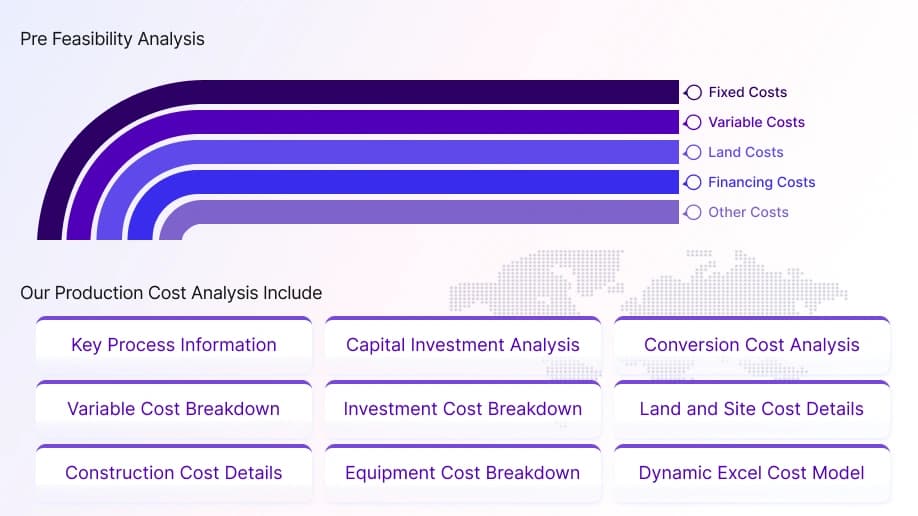
The report provides a detailed analysis essential for establishing an Isosorbide Dicaprylate production plant. It encompasses all critical aspects necessary for Isosorbide Dicaprylate production, including the cost of Isosorbide Dicaprylate production, Isosorbide Dicaprylate plant cost, Isosorbide Dicaprylate production costs, and the overall Isosorbide Dicaprylate production plant cost. Additionally, the study covers specific expenditures associated with setting up and operating an Isosorbide Dicaprylate production plant. These encompass production processes, raw material requirements, utility requirements, infrastructure needs, machinery and technology requirements, manpower requirements, packaging requirements, transportation requirements, and more.
Isosorbide Dicaprylate is an organic oil-based skin-hydrating element that finds a wide range of applications in various industries. It is widely utilized as an ingredient in the production of water-based cosmetic products to enhance its texture. Moreover, the compound is often used as a smart skin hydrator that moisturizes the skin and strengthens the skin barrier. Additionally, the compound also finds its application as a solubilizer in the production of various cosmetic formulations due to its skin conditioning properties.
The market of Isosorbide Dicaprylate is largely led by its application as an emollient in the production of various skin care products, including creams, lotions, etc., which significantly fuels its demand in the skincare and cosmetics industry. Moreover, its utilization in the production of water-based skincare and cosmetics products further enhances its demand in the cosmetics industry.
Additionally, its employment in the skincare and cosmetics industry, due to its exceptional properties of enhancing skin hydration, remarkably accelerates its demand in the cosmetic and personal care industries. Furthermore, several factors influence industrial Isosorbide dicaprylate procurement, such as the availability of raw materials (isosorbide, toluene, etc.), cost and pricing, regulatory compliance, quality standards, technological advancements, environmental considerations, sustainability practices, distribution (including trading and shipping), logistics, safety standards, supplier relationships, etc.
Raw Material for Isosorbide Dicaprylate Production
According to the Isosorbide Dicaprylate production plant project report, the major raw materials for Isosorbide Dicaprylate production include Toluene- Octanoic Acid-Titanium (IV) Butoxide-Sodium Hydroxde.
Manufacturing Process of Isosorbide Dicaprylate
The extensive Isosorbide Dicaprylate production cost report consists of the following industrial production process:
- Production via Esterification: This method of production is initiated by the reaction of isosorbide and toluene in a 1L 4-necked flask at room temperature, followed by the addition of octanoic acid and titanium (IV) butoxide at 130 °C. Further, toluene is removed reaction temperature is maintained at 220°C and is then naturally cooled to 70°C, followed by the neutralization of the mixture with a saturated NaOH aqueous solution and is removed using a separating funnel until the PH=0, which results in the synthesis of Isosorbide Dicaprylate at 120 °C, after removing the residual solvent and the moisture.
Isosorbide Dicaprylate is a diester of isosorbide and caprylic acid that is extracted from natural plant-based materials. The molecular formula of the compound is C22H38O6, and its molecular weight is 398.5 g/mol. Moreover, the IUPAC name of the compound is [(3S,3aR,6R,6aR)-6-octanoyloxy-2,3,3a,5,6,6a-hexahydrofuro[3,2-b]furan-3-yl] octanoate. The compound is soluble in water, 0.2092 mg/L at 25 degrees Celsius. Additionally, the compound finds its huge applications in the cosmetics industry due to its skin hydrating properties. The compound is mainly marketed under the brand name Hydra Synol DOI.