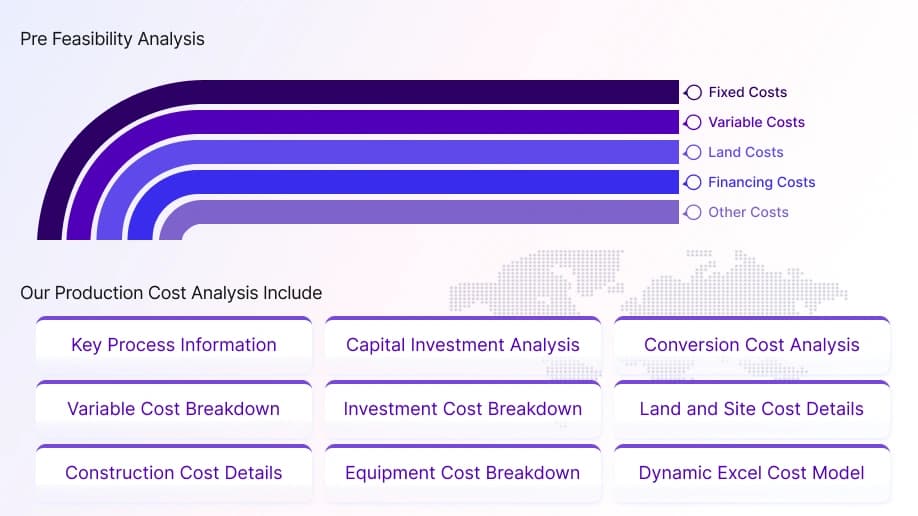
The report provides a detailed analysis essential for establishing a Levetiracetam production plant. It encompasses all critical aspects necessary for Levetiracetam production, including the cost of Levetiracetam production, Levetiracetam plant cost, Levetiracetam production costs, and the overall Levetiracetam production plant cost. Additionally, the study covers specific expenditures associated with setting up and operating a Levetiracetam production plant. These encompass production processes, raw material requirements, utility requirements, infrastructure needs, machinery and technology requirements, manpower requirements, packaging requirements, transportation requirements, and more.
Levetiracetam is an anticonvulsant drug used to treat different kinds of seizures caused by epileptic diseases. It is used in epileptic patients as an adjuvant treatment for partial-onset, myoclonic, and generalized tonic-clonic seizures. It is a member of the pyrrolidine class of drugs. It limits the seizure activity through the specific inhibition of hyper-synchronized epileptiform burst firing without interfering with normal neuronal transmission. It is also recognized for its use in focal epilepsy by effectively lowering the frequency of seizures.
The procurement of Levetiracetam is influenced by its use as an anticonvulsant drug in the pharmaceutical and medical industries to treat various kinds of seizures in epileptic patients. The need for Levetiracetam is increasing as cases of epilepsy are on the rise. It can be used on its own or, in combination with medications to manage partial-onset, myoclonic, and generalized tonic-clonic seizures leading to a higher demand for it. It functions as a good option in the field of pediatric neurology since it has received approval for treating seizures in children. It witnesses a significant demand from the aging population as they are more likely to be affected by neurological disorders such as epilepsy.
It is available in generic forms, which enhances its accessibility. It is preferred over other antiepileptic drugs due to its broad therapeutic index and minimum drug interactions. It is present in a variety of dosage forms, such as tablets, solutions, and intravenous injections, thus increasing the patient compliance. Overall, the industrial Levetiracetam procurement is influenced by its application in the pharmaceutical and medical industries to treat various types of seizures in epileptic patients, increasing cases of epileptic diseases, its use in pediatric neurology, broad therapeutic index, minimum drug interactions, patient compliance, along with cost-effectiveness, research and development, and regulatory approvals.
Raw Material for Levetiracetam Production
According to the Levetiracetam production plant project report, the key raw material used in the production of Levetiracetam include 2-Amino butyramide Hydrochloride.
Manufacturing Process of Levetiracetam
The extensive Levetiracetam production cost report consists of the following major industrial production process:
- Production from 2-Amino butyramide Hydrochloride: The production process of Levetiracetam involves a two-step process. The first step is the condensation of 2-Amino butyramide Hydrochloride with 4-Chlorobutyryl chloride in the presence potassium carbonate and acetonitrile to form N-[1-(Amino carbonyl)propyl]-4-chlorobutyramide (intermediate). In the second and final step, the intermediate is cyclized in the presence of methylene chloride and potassium hydroxide to produce Levetiracetam.
Levetiracetam, commercially known as Keppra, appears as a white to off-white crystalline powder, having the molecular formula C8H14N2O2 and a molecular weight of 170.21 g/mol. It melts at 117 °C and dissolves at 104g per 100 ml. It dissolves well in water, dissolves in chloroform and methanol, can dissolve in ethanol, has solubility in acetonitrile and is almost insoluble in n-hexane. Its log P value is -0.6. Levetiracetam is a medication used to manage forms of seizures as an antiepileptic drug.