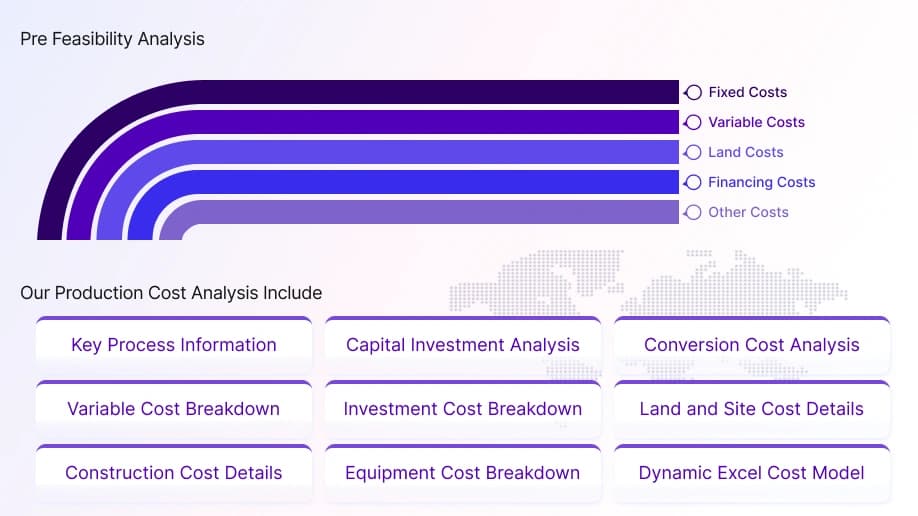
The report provides detailed analysis essential for establishing a loxoprofen sodium production plant. It encompasses all critical aspects necessary for loxoprofen sodium production, including the cost of loxoprofen sodium production, loxoprofen sodium plant cost, loxoprofen sodium production costs, and the overall loxoprofen sodium production plant cost. Additionally, the study covers specific expenditures associated with setting up and operating a loxoprofen sodium production plant. These encompass production processes, raw material requirements, utility requirements, infrastructure needs, machinery and technology requirements, manpower requirements, packaging requirements, transportation requirements, and more.
Loxoprofen Sodium Market Analysis: Demand and Supply Analysis, and Sourcing
Loxoprofen sodium is a nonsteroidal anti-inflammatory drug (NSAID) belonging to the propionic acid class, which also includes ibuprofen and naproxen. It is a prodrug that is quickly converted after oral administration into its active trans-alcohol metabolite. This metabolite inhibits cyclooxygenase and reduces prostaglandin production, helping relieve pain & inflammation, and fever. Loxoprofen sodium is used to treat rheumatoid arthritis, osteoarthritis, lower back pain, shoulder pain, dental pain, and postoperative pain. Sankyo, now Daiichi Sankyo, patented the drug in 1977 and launched it in Japan under the Loxonin brand in 1986.
Demand for loxoprofen sodium is concentrated in Japan, with growing use in China, South Korea, Latin America, and parts of Asia & the Middle East. In Japan, it is one of the most widely prescribed NSAIDs and a leading over-the-counter pain reliever sold under the Loxonin S brand. Topical formulations have expanded its applications, including a poultice approved in Japan in 2006, a tape in 2008, and a gel in 2010. The drug is also marketed in Brazil, Mexico, Argentina, India, Thailand, Saudi Arabia, Bahrain, and Russia under local brands, but it is not marketed in the United States or the European Union. Loxoprofen sodium demand and supply analysis depend on Japanese prescription and OTC sales, Chinese hospital demand, growth in topical patches, and generic price competition. Supply comes from manufacturers in Japan, South Korea, China, and a few Indian API producers. Approximately 40 Japanese and 50 Korean drug master files are on record. On receipt, buyers check assay, related substances, water content, heavy metals, residual solvents, and particle size.
Summary of the Product, Grades, and Uses
Loxoprofen sodium hydrate has the molecular formula C15H17NaO3·2H2O, a molar mass of 304.31 g/mol, and CAS number 80382-23-6. Its parent compound, loxoprofen, has the molecular formula C15H18O3, a molar mass of 246.30 g/mol, and CAS number 68767-14-6. Its chemical name is 2-[4-[2-oxocyclopentylmethyl]phenyl]propanoic acid. Loxoprofen is a nonsteroidal anti-inflammatory drug (NSAID) supplied as a racemic mixture. The sodium hydrate is generally a white to yellowish-white crystalline powder that dissolves readily in water & methanol. Commercial API is commonly supplied as a dihydrate, containing approximately 11.8% water by weight.
Loxoprofen sodium is available in pharmaceutical API, market-specific, micronized, and reference standard grades. Pharmaceutical API grade complies with applicable pharmacopeial specifications and is used in tablets, granules, and topical formulations. Market-specific grades meet the regulatory and quality requirements of individual countries. Micronized grades are used in poultices, patches, tapes, and gels where particle size affects dissolution and drug delivery. Reference standards are used for quality control, analytical testing, and research. Grade selection depends on purity, impurity profile, water content, particle size, and applicable regulatory requirements.
Loxoprofen sodium is used in oral tablets and fine granules for the management of pain and inflammation, including arthritis, lower back pain, dental pain, menstrual pain, and postoperative pain. It is also formulated into topical poultices, tapes, patches, and gels for muscle and joint discomfort. Oral formulations are used for systemic treatment, while topical products provide localized drug delivery. These dosage forms require appropriate control of API purity, particle size, stability, and formulation characteristics to ensure consistent product quality.
Main End-Uses of Loxoprofen Sodium
Oral prescription products take the largest share of loxoprofen sodium volume. Japanese doctors use 60 mg tablets three times a day for chronic pain and as needed for acute pain. Many Japanese generic makers sell loxoprofen sodium tablets alongside Daiichi Sankyo's Loxonin. Chinese hospitals and pharmacies use domestic loxoprofen sodium tablets & capsules made by companies such as Hunan Jiudian Pharmaceutical. Korean, Brazilian, Mexican, Argentine, and Indian makers sell their own brands. Buyers in this outlet care most about price, impurity profile, dissolution, and stable supply under drug master files.
Over-the-counter oral products form the second outlet for loxoprofen sodium. Japan switched loxoprofen sodium to OTC status, and Loxonin S became one of the country's best-known pain relievers. Daiichi Sankyo agreed in April 2026 to sell its consumer health unit, which owns the Loxonin OTC line, to Suntory for 246.5 billion yen. Rival OTC brands, drugstore private labels, and combination products add further volume. OTC buyers need tight cost control & large lot sizes, and consistent quality.
Topical products make up the third outlet. Loxoprofen sodium poultices, tapes, and gels treat muscle pain & joint pain, back pain, stiff shoulders, and sports injuries. Japanese, Korean, and Chinese patch makers have built large coating and cutting lines around these products. Topical makers need API with controlled particle size, low color, low odor, and good stability in hydrogel or adhesive bases. Demand here is growing faster than for oral tablets.
Loxoprofen Sodium Market Risks
Loxoprofen sodium carries pricing risk above everything else because it is an old, fully generic drug in its main markets. Japan cuts drug reimbursement prices regularly, and generic loxoprofen sodium tablets sell at very low prices. Margins on API follow those cuts. Chinese volume-based procurement can push tender prices down sharply for oral NSAIDs. The drug is not approved in the US or EU, so makers cannot fall back on those large markets. Gastrointestinal, kidney, liver, and cardiovascular risks shared by all NSAIDs also limit long-term use. A safety warning or label change in Japan would hit demand quickly. Demand is concentrated in Japan, which ties the market to Japanese policy and demographics.
Loxoprofen sodium manufacturing carries its own risks because the route uses reactive alkylating agents and strong acids. The key intermediate, 2-[4-bromomethylphenyl]propionic acid, is a benzylic bromide that irritates skin and needs closed handling. Hydrogen bromide, formaldehyde, sodium methoxide, and concentrated sulfuric acid all need careful dosing, venting, and temperature control. Decarboxylation at high temperature can form colored by-products and related impurities. Genotoxic impurity limits apply to alkyl bromides, residual intermediates, and some solvents. Water content in the dihydrate has to stay within narrow limits, since drying too hard or too little changes the crystal form. Batch failures usually show up as high related substances, off-color product, or water out of range.
Loxoprofen Sodium Production Process and Main Cost Drivers
The loxoprofen sodium production process runs from benzyl cyanide through 2-phenylpropionic acid and bromomethylation, then cyclopentanone alkylation, hydrolysis & decarboxylation, salt formation, and crystallization of the dihydrate.
- By Bromomethylphenylpropionate Alkylation and Decarboxylation: The main inputs are benzyl cyanide, dimethyl carbonate, caustic soda, hydrogen bromide, formaldehyde, methanol, dimethyl adipate, sodium methoxide, sulfuric acid, acetic acid, sodium hydroxide, acetone, and activated carbon.
Loxoprofen sodium production starts with the key intermediate 2-[4-bromomethylphenyl]propionic acid. One route methylates benzyl cyanide with dimethyl carbonate and potassium carbonate under pressure to give 2-phenylpropionitrile. Caustic hydrolysis and acidification give 2-phenylpropionic acid. The acid is then bromomethylated with hydrogen bromide and formaldehyde in sulfuric acid, and the product is recrystallized from xylene at about 98% purity. Many loxoprofen makers buy this intermediate rather than make it, which cuts capital, waste, and bromine handling on site.
In the next stage, the bromomethyl acid is esterified with methanol and sulfuric acid in toluene at 20 to 30 degree Celsius. Dimethyl adipate is cyclized with sodium methoxide to methyl 2-oxocyclopentanecarboxylate, which is alkylated by the bromomethyl ester. The alkylated intermediate is heated with acetic acid, water, and sulfuric acid at 120 to 130 degree Celsius. That step hydrolyzes both esters and removes one carboxyl group, giving crude loxoprofen acid. The acid is recrystallized from toluene, dissolved in acetone, and neutralized with sodium hydroxide at 30 to 40 degree Celsius. Activated carbon removes color, and loxoprofen sodium crystallizes as the dihydrate. QC covers assay, related substances, residual solvents, water, heavy metals, and particle size.
Main Factors Affecting Loxoprofen Sodium Production Cost
Loxoprofen sodium production cost is shaped mainly by the price of 2-[4-bromomethylphenyl]propionic acid and the overall yield of the alkylation and decarboxylation steps. The bromomethyl intermediate carries most of the aromatic carbon in the molecule. Its cost follows benzyl cyanide, dimethyl carbonate, hydrogen bromide, and formaldehyde. Dimethyl adipate and sodium methoxide make up the second large material block. Solvents such as toluene, methanol, acetone, xylene, and acetic acid are used in volume and must be recovered.
Loxoprofen sodium unit cost also moves with yield losses, solvent recovery, and GMP overhead. Side reactions in the alkylation, such as double alkylation or elimination, cut yield and add impurities. Heating for decarboxylation and distillation for solvent recovery are the main energy loads. Waste streams carry bromide salts, sulfuric acid, spent carbon & organic residues that need treatment. Genotoxic impurity testing, stability studies, and drug master file upkeep in Japan, Korea, and China add fixed costs. Plant utilization decides margin, since generic prices leave little room. Every point of yield counts. Scale helps, and large Chinese plants carry a clear cost edge.
Raw Materials for Loxoprofen Sodium Production Plant and its Procurement
Raw material sourcing for loxoprofen sodium centers on the bromomethyl intermediate, the cyclopentanone building block, and bulk solvents. Benzyl cyanide and dimethyl carbonate come from Chinese fine chemical makers. Hydrogen bromide, formaldehyde, sulfuric acid, and caustic soda are bulk chemicals. Dimethyl adipate comes from the adipic acid chain used for nylon, polyurethane, and plasticizers. Sodium methoxide is bought as a methanol solution. Toluene, methanol, acetone, xylene & acetic acid make up the solvent list. Activated carbon and purified water complete the inputs.
Intermediate quality shapes the final impurity profile. Isomers of the bromomethyl compound, such as ortho-substituted material, carry through to related substances that are hard to remove. Residual bromide compounds have to be controlled as potential genotoxic impurities. Water in the alkylation step consumes sodium methoxide, lowers yield, and raises side products.
Contracts for loxoprofen sodium inputs specify assay, isomer content, residual bromide, and moisture. Every incoming lot of 2-[4-bromomethylphenyl]propionic acid is tested by HPLC for purity, isomers, water, and residual solvents. Vendor qualification runs through audits, sample batches, and change control agreements tied to drug master files. Two qualified sources for the bromomethyl intermediate protect against outages. Siting in an East China API cluster puts most inputs within trucking distance.
Sustainability and Regulatory Requirements
Loxoprofen sodium manufacture raises environmental and occupational concerns that center on brominated intermediates, acid waste & solvent emissions, and bromide-rich effluent. The bromomethylation step needs closed reactors, scrubbers for hydrogen bromide, and careful handling of formaldehyde. Solvent recovery units capture toluene, methanol, acetone, and xylene for reuse. Effluent with sulfate, bromide, acetate, and organic load goes to neutralization, stripping, and biological treatment. Bromide recovery can cut both waste and raw material costs.
Regulatory obligations for loxoprofen sodium follow from its status as a prescription and OTC drug in Japan and other markets. API for Japan must meet the Japanese Pharmacopeia monograph for Loxoprofen Sodium Hydrate and Japanese GMP, with a Japanese drug master file. Korean supply needs a Korean drug master file and GMP inspection. Chinese supply needs registration with the National Medical Products Administration and Chinese GMP. ICH Q7 GMP and ICH M7 limits on genotoxic impurities apply across these markets. The drug is not approved in the US or EU, though a few US drug master files support exports and development work. Sites usually hold ISO 14001 and ISO 45001 certification along with GMP licenses.
CAPEX and OPEX for a Loxoprofen Sodium Production Plant
A loxoprofen sodium manufacturing plant is a medium-sized, multipurpose API facility equipped with glass-lined and stainless steel reactors. The main investment includes a bromomethylation section, if intermediates are produced in-house, with acid-resistant reactors and hydrogen bromide scrubbers. The main production line requires esterification & alkylation reactors, a high-temperature hydrolysis and decarboxylation reactor, and crystallizers. Filtration is carried out using centrifuges or filter-dryers, followed by controlled drying to maintain the dihydrate form. Milling, micronizing, and sieving equipment is required for topical-grade products, where particle size, flow properties, and color are important. Solvent recovery systems include distillation columns, condensers, and storage tanks. The quality control laboratory needs HPLC, GC, Karl Fischer titration, particle size analysis equipment, and stability chambers. Civil infrastructure includes a GMP-compliant finishing area, a flameproof processing section, a solvent storage yard, an effluent treatment plant, and a warehouse.
Loxoprofen sodium operating cost follows the same inputs and control points. The variable costs are driven by the bromomethyl intermediate, dimethyl adipate, sodium methoxide, and solvents. Energy for decarboxylation, distillation, and drying adds to it. Labor for GMP batch work, QC testing, cleaning validation, and documentation is a steady fixed cost. The loxoprofen sodium plant setup cost depends on whether the bromomethyl intermediate is made in-house, the batch size, and the need for micronizing. Backward integration into the intermediate raises capital but cuts material cost. Unit cost then comes down to intermediate price, overall yield, solvent recovery & plant utilization.
Plant Location and Investment Factors
A workable loxoprofen sodium site sits in an established API cluster with solvent supply, effluent treatment, and GMP-trained staff. Zhejiang and Hubei host several Chinese producers with Japanese drug master files. Korea's API makers in Seoul, Gyeonggi, and Chungcheong supply Japanese, Korean, and Southeast Asian customers. Japan keeps originator and specialty API capacity close to its formulators. The site also needs reliable steam, cooling, nitrogen, purified water, and a short route to an export port.
For a loxoprofen sodium plant, the main investment challenge is securing market access rather than developing the manufacturing process. Japan is the largest market, so new API manufacturers need a Japanese drug master file and must pass customer audits, which can take time. China offers high-volume opportunities through hospital tenders, retail pharmacies, and topical product manufacturers, although price competition in tenders is intense. Topical-grade API can command higher prices, making it attractive for manufacturers with micronizing and particle-size control capabilities. Backward integration into 2-[4-bromomethylphenyl]propionic acid can improve raw material security and reduce costs. Long-term supply agreements with Japanese generic and over-the-counter drug manufacturers can also help reduce demand and sales risks.
Major Loxoprofen Sodium Producing Regions
Japan, South Korea, and China are the main production centers for loxoprofen sodium. Japan is home to the original developer, Daiichi Sankyo, and specialized API manufacturers such as Hamari Chemicals. South Korea has a large group of API producers with Japanese and Korean drug master files, including Dongbang FTL, Shin Poong Pharmaceutical, Kolon Life Science, Hanseo Chem, and Yungjin Pharmaceutical. China also has several manufacturers, including Hubei Xunda Pharmaceutical, Zhejiang Apeloa Tospo-Jiayuan, and Fujian Huitian Bio-pharma, many of which have Japanese regulatory filings. India has a smaller supplier base, primarily serving domestic markets and buyers in Southeast Asia and Latin America. A new manufacturing plant would most likely be established in an East China or South Korean API manufacturing cluster with experience in meeting Japanese GMP requirements.
Key Loxoprofen Sodium Producers
Daiichi Sankyo Co., Ltd.
- Developed loxoprofen sodium and launched it as Loxonin in Japan in 1986.
- Holds a Japanese drug master file and supplies its own Loxonin tablets, poultices, tapes, and gels.
- Competes on brand strength, clinical history & a full range of oral and topical forms.
- Agreed in April 2026 to sell its consumer health unit, which owns the Loxonin OTC line, to Suntory for 246.5 billion yen.
Hamari Chemicals, Ltd.
- Produces loxoprofen sodium API in Japan as a specialty pharmaceutical chemical maker.
- Holds a Japanese drug master file for loxoprofen sodium.
- Competes on Japanese GMP quality, close ties to domestic formulators & long API experience.
- Supplies Japanese generic and OTC makers.
Dongbang FTL Co., Ltd.
- Produces loxoprofen sodium API from its base in Seoul, South Korea.
- Holds both Japanese and Korean drug master files for loxoprofen sodium.
- Competes on export focus, regulatory filings & Japanese customer experience.
- Has passed third-party audits, with reports available to buyers.
Hubei Xunda Pharmaceutical Co., Ltd.
- Produces loxoprofen sodium API in Hubei, China.
- Holds a Japanese drug master file for loxoprofen sodium.
- Competes on a Chinese cost base, scale & export experience into Japan.
- Supplies Japanese and domestic Chinese formulators.
Zhejiang Apeloa Tospo-Jiayuan Pharmaceutical Co., Ltd.
- Produces loxoprofen sodium API as part of the Apeloa pharmaceutical group in Zhejiang, China.
- Holds a Japanese drug master file for loxoprofen sodium.
- Competes on group scale, API breadth & regulated-market experience.
- Supplies Japanese, Chinese, and other Asian customers.
Shin Poong Pharmaceutical Co., Ltd.
- Produces loxoprofen sodium API in South Korea alongside its own finished drugs.
- Holds a Japanese drug master file for loxoprofen sodium.
- Competes on API and finished-dose integration & long Korean market presence.
- Supplies Korean and Japanese formulators.