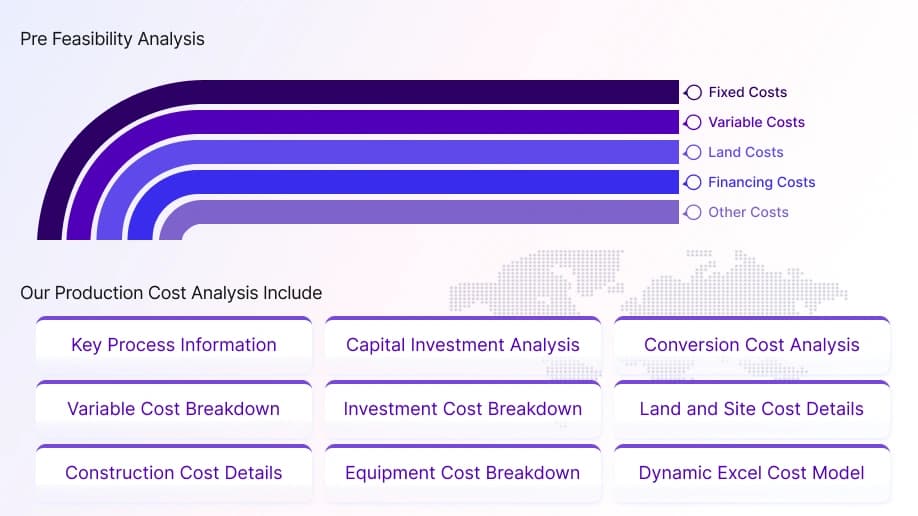
The report provides a detailed analysis essential for establishing a magnesium production plant. It encompasses all critical aspects necessary for magnesium production, including the cost of magnesium production, magnesium plant cost, magnesium production costs, and the overall magnesium production plant cost. Additionally, the study covers specific expenditures associated with setting up and operating a magnesium production plant. These encompass production processes, raw material requirements, utility requirements, infrastructure needs, machinery and technology requirements, manpower requirements, packaging requirements, transportation requirements, and more.
Magnesium is a chemical element and a mineral that is important for many processes in the body, including regulating muscle and nerve function, making protein, etc. However, its compounds are widely used in construction and medicine, as well. It is also necessary for healthy neurons, muscles, and cardiac function.
Many foods contain magnesium, including green leafy vegetables, nuts, seeds, and whole grains. It is also employed in a variety of sectors, including the manufacture of alloys, ceramics, and electronics. It is frequently used in the manufacture of lightweight products, which include car seats, cameras, laptops, luggage, and power tools. Moreover, it is also used in fireworks and flares because the chemical ignites easily.
The need for lightweight materials in the automotive and aerospace sectors primarily drives the magnesium industry. Moreover, numerous factors drive the magnesium market, such as the growing need for lightweight materials in the automotive and aerospace sectors, the growing use of magnesium alloys in consumer goods and electronics, and the emergence of renewable energy technologies that demand the production of magnesium for these respective industries. Due to its strong and lightweight properties, it is frequently utilized in the production of medical equipment and medical devices, which boosts its demand in the medical and biomedical sectors.
Additionally, the availability and cost of production of magnesium’s feedstock (dolomite ore, magnesite ore), magnesium market prices, regulatory compliance, quality and safety standards, distribution (including trading and shipping), environmental concerns, etc., are some of the elements that influence an industrial magnesium procurement. The global procurement of this commodity is greatly influenced by its usage as a key component for the automobile, pharmaceutical, medical & biomedical, construction, and aerospace industries.
Raw Material for Magnesium Production
According to the Magnesium production plant project report, the major raw materials for Magnesium production include Dolomite Ore-Magnesite Ore.
Production Process of Magnesium
The extensive Magnesium production cost report consists of this major industrial production process:
- Production via Electrochemical Process: This method uses an electrochemical procedure to extract metal from dolomite and magnesite ore. This method involves crushing and roasting dolomite, which is then combined with coke along with seawater and is then, heated. This yields magnesium chloride, which is then electrolyzed again to produce magnesium.
The chemical symbol of magnesium is “Mg” and its atomic number 12. It is a silvery-white, lightweight metal that is the eighth most prevalent element in the Earth's crust and the fourth most plentiful element overall. Magnesium is required for several biological activities, including the synthesis of ATP (adenosine triphosphate), the cell's energy currency. At ambient temperature, magnesium is solid with a melting point of 650°C (1202°F) and a boiling point of 1090°C (1994°F). It's a gleaming silvery-white metal with a greyish undertone.
It has a brilliant and clear surface when freshly cut, but it rapidly tarnishes in the air, leaving a thin coating of oxide. It has a density of 1.74 g/cm3 and is a lightweight metal. It has around two-thirds the density of aluminium, another lightweight metal. It has a Mohs hardness of 2.5, making it a comparatively soft metal. It is softer than most other metals, including steel and aluminium.