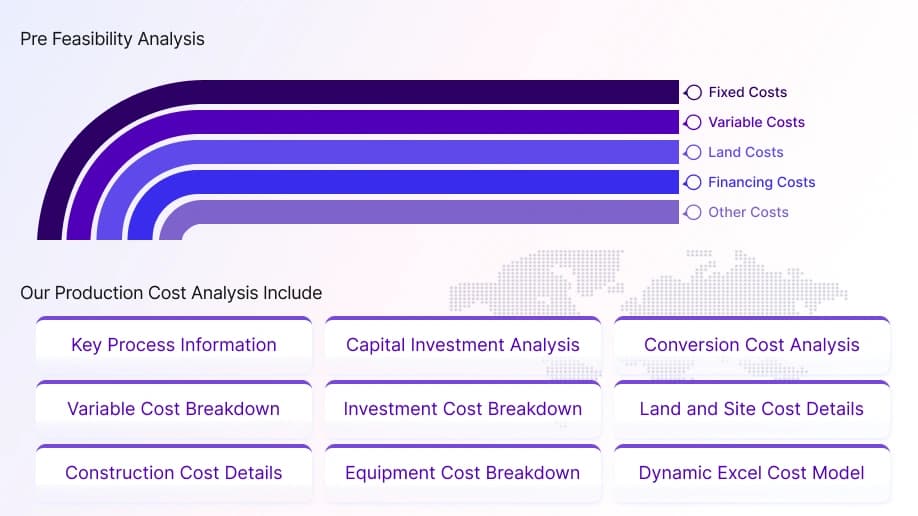
The report provides a detailed analysis essential for establishing a methyl bromide production plant. It encompasses all critical aspects necessary for methyl bromide production, including the cost of methyl bromide production, methyl bromide plant cost, methyl bromide production costs, and the overall methyl bromide production plant cost. Additionally, the study covers specific expenditures associated with setting up and operating a methyl bromide production plant. These encompass production processes, raw material requirements, utility requirements, infrastructure needs, machinery and technology requirements, manpower requirements, packaging requirements, transportation requirements, and more.
Methyl Bromide, also known as Bromomethane, is an organobromine compound that has various applications across different industries. It majorly finds its applications in controlling a wide variety of pests in agriculture and shipping, which includes weeds, insects, fungi, nematodes, and rodents. It is also used for structural fumigation, soil fumigation, and quarantine treatment, where the products are stored in large quantities, such as in warehouses, ships, grain elevators, etc.
It finds application as a pre-plant soil fumigant treatment for the production of flowers, nursery crops, tomatoes, and other assorted vegetables. Moreover, it is also used as a refrigerant, fire extinguisher, and solvent for oil extraction from seeds, nuts, and flowers. Additionally, it is also used as a methylating agent for production certain pharmaceuticals and crop protection chemicals.
The market for methyl bromide is majorly driven by its application as an effective and versatile fumigant to kill unwanted insects & pests, which contributes to its market expansion. Its usage in the agriculture industry as a soil fumigant to control soil-borne pests and fumigate stored products further boosts its market growth.
Its application as a methylating agent for the production of crop protection chemicals and some pharmaceuticals propels its demand in the agrochemical and pharmaceutical industries. Moreover, its use in the fumigation of buildings and structures to eradicate pests like termites, etc., notably increases its demand in the buildings & construction and pest control industries.
Additionally, several factors influence industrial methyl bromide procurement, such as the source and purity, cost and pricing, compliance with pharmaceutical regulations, quality standards, technological advancements, environmental considerations, sustainability practices, distribution (including trading and shipping), logistics, safety standards, etc.
Raw Material for Methyl Bromide Production
According to the Methyl Bromide production plant project report, the major raw materials for Methyl Bromide production include Methanol-Hydrogen Bromide; Bromine-Methyl Alcohol.
Production Process of Methyl Bromide
The extensive Methyl Bromide production cost report consists of the following industrial production processes:
- Production from Methanol: This process involves the interaction of methanol and hydrogen bromide to form crude methyl bromide as the product. Further, the obtained mixture is distilled and purified by low-temperature fractional distillation to obtain pure methyl bromide as the final product.
- Production in a Japanese Manufacturing Plant: In this process, bromine is firstly combined with methyl alcohol and heated in a boiler at 60-80 degrees Celsius to give methyl bromide, followed by its cooling, purification, and condensation.
Methyl Bromide is a colorless, odorless gas that is highly toxic. It can be produced both naturally and synthetically. The majority of the sources responsible for its emission in the environment are biomass burning and fumigation use. It is considered highly toxic in that it can damage the lungs and lead to neurological effects in humans if inhaled. The chemical formula of the compound is CH4Br, and the molecular weight is 94.94 g/mol. Its density is 1.73 g/cm3.
Moreover, methyl bromide is three times heavier than air. It is slightly soluble in water but readily dissolves in chloroform, ether, etc. The combination of methanol and hydrogen bromide produces it. Methyl Bromide's usage has been significantly restricted and regulated due to its adverse environmental impact on ozone layer depletion.