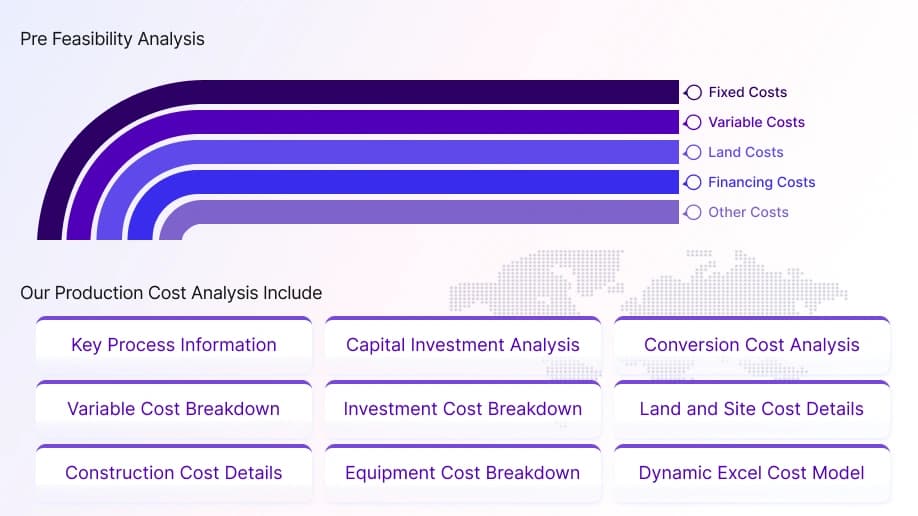
The report provides a detailed analysis essential for establishing a Mirtazapine (Remeron) production plant. It encompasses all critical aspects necessary for Mirtazapine (Remeron) production, including the cost of Mirtazapine (Remeron) production, Mirtazapine (Remeron) plant cost, Mirtazapine (Remeron) production costs, and the overall Mirtazapine (Remeron) production plant cost. Additionally, the study covers specific expenditures associated with setting up and operating a Mirtazapine (Remeron) production plant. These encompass production processes, raw material requirements, utility requirements, infrastructure needs, machinery and technology requirements, manpower requirements, packaging requirements, transportation requirements, and more.
Mirtazapine (Remeron) is the only FDA-approved synthetic drug that is administered orally for the treatment of depression. It is extensively used as a medication to treat major depressive disorder and insomnia by regulating the levels of neurotransmitters in the brain that are responsible for low mood and sleep issues. Moreover, it also finds its applications in the treatment of anxiety disorders, agitation, panic disorder, nausea, and drug-induced sexual dysfunction.
The market for Mirtazapine (Remeron) is predominantly driven by its extensive usage as an anti-depressant for the treatment of moderate to severe depression and managing anxiety disorders, which significantly promotes its demand in the medical and health & wellness industries. Moreover, its application as a medication in the treatment of panic disorder, agitation, insomnia, and other anxiety disorders further enhances its demand in the medical and pharmaceutical industries. Furthermore, several factors influence industrial Mirtazapine (Remeron) procurement, such as the availability of raw materials, cost, and pricing, compliance with pharmaceutical regulations, quality standards, technological advancements, environmental considerations, sustainability practices, distribution (including trading and shipping), logistics, safety standards, etc.
Raw Material for Mirtazapine (Remeron) Production
According to the Mirtazapine (Remeron) production plant project report, the major raw materials for Mirtazapine (Remeron) production include 1-(3-hydroxymethylpyridyl-2)-2-phenyl-4-methylpiperazine-Sulfuric Acid.
Production Process of Mirtazapine (Remeron)
The extensive Mirtazapine (Remeron) production cost report consists of the following industrial production process:
- Production via Ring Cyclization: This production process involves the chemical reaction of a pyridinemethanol compound (1-(3-hydroxymethylpyridyl-2)-2-phenyl-4-methylpiperazine) with concentrated sulfuric acid at room temperature for 4 hours and heating it further for one hour at about 500 to 60° C, which results in the formation of mirtazapine as a product. In this method, the temperature of the sulfuric acid is around 50 to 35° C, and the pyridine methanol compound should be added as a solid and in divided portions to the concentrated sulfuric acid.
Mirtazapine (Remeron) serves as an alpha-adrenergic antagonist and is also a tetracyclic antidepressant. The compound is widely used as a drug, as it has anti-depressive and sleep-promoting effects. Moreover, mirtazapine is a noradrenergic and selective serotonergic antidepressant (NaSSA) with a tetracyclic molecular structure. The molecular formula of this drug is C17H19N3, and its molecular weight is 265.35 g/mol. The compound is commonly known by some other names, that are Remeron, Zispin, Avanza, and Norset. The IUPAC name of the compound is 1,2,3,4,10,14b-hexahydro-2-methyl-pyrazi no[2, 1-a]pyrido[2,3-c][2]-benzazepine. Additionally, the melting point of the compound is 114 - 116 °C, and its boiling point is 432.4°C.