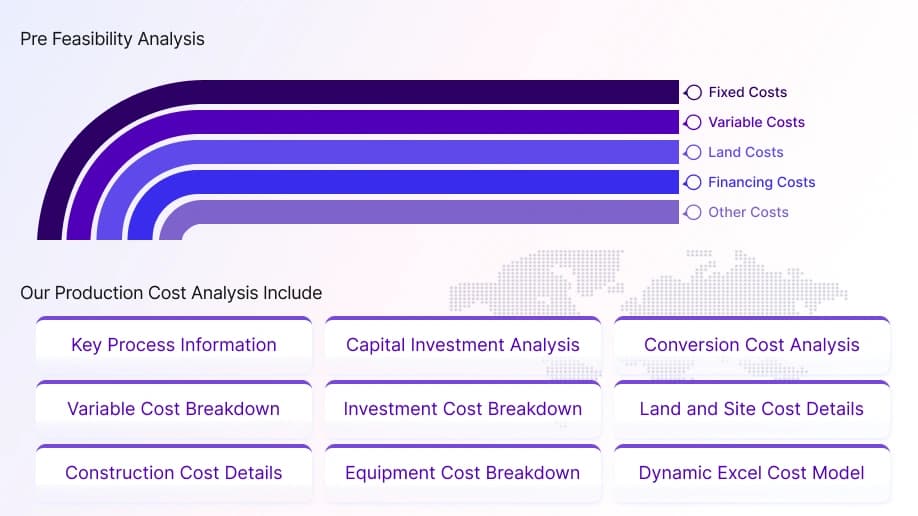
The report provides a detailed analysis essential for establishing a myoglobin production plant. It encompasses all critical aspects necessary for myoglobin production, including the cost of myoglobin production, myoglobin plant cost, myoglobin production costs, and the overall myoglobin production plant cost. Additionally, the study covers specific expenditures associated with setting up and operating a myoglobin production plant. These encompass production processes, raw material requirements, utility requirements, infrastructure needs, machinery and technology requirements, manpower requirements, packaging requirements, transportation requirements, and more.
Myoglobin is an iron-containing protein that is found in the muscles of vertebrates. It facilitates the process of oxygen diffusion in the body. It is a hemoprotein that is responsible for the red color of meat and is widely used for authentication in meat fraud. Moreover, it often serves as the key indicator of meat quality that is largely used to assess the freshness of meat products. Additionally, it is also used as a cardiac biomarker for myocardial infarction and the diagnosis of any muscle injury. It is often utilized to study protein structure and in the development of oxygen delivery systems.
The market for myoglobin is predominantly driven by its usage as an indicator for determining the quality and freshness of meat products, which significantly boosts its demand in the food industry. Moreover, its usage in clinical diagnostics for the identification of any muscle injury further enhances its demand in the medical, biomedical, and clinical diagnostics industries. Additionally, its employment in tissue engineering and developing biosensors promotes its demand in the biotechnology and research & development industries.
Furthermore, several factors influence industrial myoglobin procurement, such as the availability of raw materials, cost and pricing, compliance with pharmaceutical regulations, quality standards, technological advancements, environmental considerations, sustainability practices, distribution (including trading and shipping), logistics, safety standards, etc.
Raw Material for Myoglobin Production
According to the Myoglobin production plant project report, the major raw materials for Myoglobin production includes Nicotiana benthamiana (Plant).
Manufacturing Process of Myoglobin
The extensive Myoglobin production cost report consists of the following industrial production process:
- Production from Plant Source: This method of production involves using a viral vector delivered by Agrobacterium tumefaciens to produce human myoglobin in the leaves of Nicotiana benthamiana by transient expression. The process involves selecting and integrating a piece of external DNA (human Mb gene) and cloning it into a viral vector, followed by its transfer into the cells of the leaf of Nicotiana benthamiana using Agrobacterium tumefaciens for transient expression. This method produces a high-purity myoglobin and is cost-effective.
Myoglobin is a type of oxygen binding heme protein that has a single polypeptide chain with an iron heme serving as its prosthetic group. The molecular mass of myoglobin is 18kDa. Its primary structure constitutes 153 amino acids. It is readily soluble in water and other aqueous solutions. The isoelectric point of myoglobin is 7.0. Moreover, it is stable at normal temperature and pH conditions but gets denatured when exposed to high temperatures. It has a very high affinity for oxygen. It appears reddish due to the red color of muscle tissue.