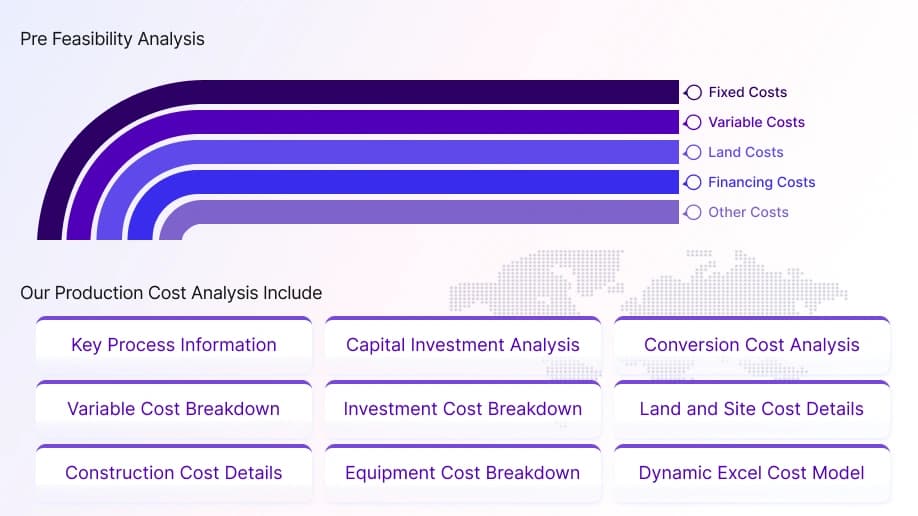
The report provides a detailed analysis essential for establishing a nifedipine (Adalat) production plant. It encompasses all critical aspects necessary for nifedipine (Adalat) production, including the cost of nifedipine (Adalat) production, nifedipine (Adalat) plant cost, nifedipine (Adalat) production costs, and the overall nifedipine (Adalat) production plant cost. Additionally, the study covers specific expenditures associated with setting up and operating a nifedipine (Adalat) production plant. These encompass production processes, raw material requirements, utility requirements, infrastructure needs, machinery and technology requirements, manpower requirements, packaging requirements, transportation requirements, and more.
Nifedipine (Adalat) is a generic name for the medication that is widely used in the medical and pharmaceutical industries. It is majorly utilized for the management and treatment of hypertension or high blood pressure, as it helps the blood vessels to relax. Moreover, it also finds its application in the treatment of severe chest pain (angina), as it facilitates increased blood supply to the heart.
The market for nifedipine (Adalat) is majorly driven by its broad usage as an anti-hypertensive medication to treat high blood pressure, which remarkably promotes its demand in the pharmaceutical industry. Additionally, its usage as an anti-anginal medication for the prevention of heart failure and the treatment of angina by increasing oxygen and blood supply to the heart further amplifies its demand in the medical and pharmaceutical industries. Furthermore, several factors influence industrial nifedipine (Adalat) procurement, such as the availability of raw materials (2-Nitrobenzaldehyde, etc.), cost and pricing, compliance with medical and pharmaceutical regulations, quality standards, technological advancements, environmental considerations, sustainability practices, distribution (including trading and shipping), logistics, safety standards, etc.
Raw Material for Nifedipine (Adalat) Production
According to the Nifedipine (Adalat) production plant project report, the major raw materials for Nifedipine (Adalat) production include 2-Nitrobenzaldehyde-Methyl Acetoacetate-Ammonia.
Production Process of Nifedipine (Adalat)
The extensive nifedipine (Adalat) production cost report consists of the following industrial production process:
- Production via Hantzsch Reaction: This method of production involves the condensation of 2-nitrobenzaldehyde with methyl acetoacetate in the presence of heat and ammonia, which results in the formation of nifedipine as the product. In this method, ammonia as a source in the form of gaseous ammonia and ammonia solutions are regarded as a challenging reagent because of handling concerns and associated stench. Thus, to get rid of this issue, a bench-stable magnesium nitride is used as a nitrogen source, which, upon hydrolysis, releases the necessary ammonia in situ that can be utilized in the process for the production of nifedipine.
Nifedipine (Adalat) exists in the form of an odorless yellow-colored crystalline powder. It belongs to the class of dihydropyridines. It serves as a drug for hypertension, as it reduces blood pressure and is a helpful anti-anginal medication. This drug is widely marketed under the brand name Adalat. The molecular formula of this drug is C17H18N2O6, and its molar mass is 346.3 g/mol. Moreover, the IUPAC name of the compound is dimethyl 2,6-dimethyl-4-(2-nitrophenyl)-1,4-dihydropyridine-3,5-dicarboxylate. Its melting point is 172-174 °C, and it gets easily dissolved in organic solvents, such as ethanol, dimethyl formamide (DMF), and DMSO. Additionally, the compound emits toxic fumes of nitrogen oxide when it gets decomposed in heating.