
Udeesha Tomar
AVP - Strategy and Solutions
Leading procurement research solutions across chemicals, materials, and food & beverages, with expertise in price forecasting and market analytics.
Last Updated: November, 2026

Trusted by 200+ Clients
The report provides detailed analysis essential for establishing a nylon DTY production plant. It encompasses all critical aspects necessary for nylon DTY production, including the cost of nylon DTY production, nylon DTY plant cost, nylon DTY production costs, and the overall nylon DTY production plant cost. Additionally, the study covers specific expenditures associated with setting up and operating a nylon DTY production plant. These encompass production processes, raw material requirements, utility requirements, infrastructure needs, machinery and technology requirements, manpower requirements, packaging requirements, transportation requirements, and more.
Nylon DTY, or nylon draw textured yarn, is a continuous filament yarn made by drawing and texturing nylon partially oriented yarn. Texturing gives each filament a permanent crimp, making the yarn bulkier, softer, and more stretchable. It also helps the yarn return to its original shape after stretching. Most nylon DTY is made from nylon 6, while nylon 66 DTY is used in higher-end hosiery, intimate wear, and sportswear. The yarn has a crystallinity of about 30 to 40% and moisture regain of around 4%. Its main buyers include hosiery mills, sock manufacturers, knit-to-shape garment makers, warp knitters, and weaving units.
Demand for nylon DTY mainly comes from clothing, activewear, intimate wear, and hosiery. Asia-Pacific accounts for about 51% of global nylon filament volume. Partially oriented yarn (POY) makes up around 31% of this market, and a large share is further processed into textured yarn. Demand is growing with the use of nylon in sportswear, swimwear, knit-to-shape garments, outdoor clothing, and down jacket shells. Polyester textured yarn is about 15 to 20% cheaper and competes strongly in price-sensitive markets. Nylon is still preferred for products that need softness, strength, abrasion resistance, and bright colors.
China is the main production center for nylon DTY, with other plants in India, Taiwan, Israel, Italy, Turkey, and Brazil. Some Chinese manufacturers handle the entire process, from caprolactam and polymer chips to POY and DTY. Smaller texturing companies often buy POY from other suppliers. China is also expected to add about 3.36 million tons per year of new nylon 6 polymer capacity over a few years, mainly in Jiangsu, Zhejiang, and Fujian. The price difference of about USD 291 per ton between POY and DTY must cover the cost of texturing and the producer's margin. A nylon DTY demand and supply analysis must weigh caprolactam and POY prices, apparel demand, polyester substitution, and Chinese capacity growth.
Nylon DTY has no single molecular formula because it is a polymer yarn defined by its repeat unit. Nylon 6 DTY has the repeat unit (C6H11NO)? at 113.16 g/mol per unit, the same formula as caprolactam. Nylon 66 DTY has the repeat unit (C12H22N2O2)? at 226.32 g/mol per unit. Nylon 6 melts near 220 degree Celsius, and nylon 66 melts near 260 degree Celsius. Textile grades use lower molecular weight chips than tire or industrial yarns.
Nylon DTY grades are split by count, filament number, luster, and color. Counts run from very fine hosiery yarns of about 10 to 20 denier up to coarser yarns for weaving and outerwear. Typical yarns include 44 dtex with 34 filaments, 74 dtex with 34 filaments, and 80 dtex with 46 filaments. Luster grades include bright, semi-dull, and full-dull, while dope-dyed black and colored grades skip later dyeing. Single- or double-covered yarns wrap DTY around spandex for hosiery and shapewear. Buyers check denier, tenacity, elongation, crimp contraction, dye uniformity, intermingling, oil pick-up, and package build.
Nylon DTY ships on paper tubes in cartons or on pallets with stretch wrap. Packages must keep a steady build and tension so that knitting and weaving machines run without breaks. Dye lot control matters, since small shifts in polymer, heater temperature, or twist show up as shade bars in fabric. Storage needs dry, clean areas away from direct sunlight, dust, and heat. Most yarn moves by container from Asian spinners to knitting and weaving clusters.
Hosiery, socks, and legwear form the classic demand segment for nylon DTY. Sheer tights, pantyhose, and stockings use very fine nylon yarns, often covered with spandex. Socks use nylon DTY for strength at heels and toes and for a soft hand. The Castel Goffredo hosiery district in Italy remains a major center for premium legwear. China, Turkey, and other Asian countries run large hosiery and sock clusters. These knitters value fine counts, clean dyeing, and steady package quality. Medical compression stockings also use nylon-covered yarns.
Activewear, swimwear, and intimate wear are also important uses of nylon DTY. Warp knitting machines use it with spandex to make leggings, swimsuits, bras, and shapewear. Circular knitting machines use it for sportswear, underwear, and base layers. Nylon makes these fabrics soft, quick-drying, and resistant to wear. Bright and dope-dyed yarns are available in different colors, while functional grades are chosen for specific fabric requirements. Some premium brands use nylon 66 because it offers better heat resistance and allows deeper dye shades.
Nylon DTY is also used in woven fabrics, outerwear, and technical textiles. Weaving units use it to make jackets, down jacket shells, windbreakers, bags, and luggage linings. Outdoor clothing and military textiles use nylon for fabrics that need to be both strong and lightweight. Smaller quantities go into automotive textiles, home furnishings, medical products, and narrow fabrics. Recycled nylon DTY is also used by brands looking to include more recycled materials in their products. These outlets help spinners balance seasonal swings in hosiery and swimwear.
Polyester substitution forms the largest risk for nylon DTY producers. Polyester textured yarn costs about 15 to 20% less, and many sportswear fabrics can switch fibers when nylon prices rise. Cationic dyeable polyester and polyester blends keep closing the performance gap. Fast fashion brands focus on cost per garment, which favors polyester. Nylon holds its place mainly in premium, legwear, intimate, and abrasion-critical uses.
Nylon 6 production costs are sensitive to caprolactam prices, which depend on benzene, ammonia, and energy costs. New nylon 6 capacity in China can increase supply and intensify competition, putting pressure on POY and DTY margins. Weak demand from the textile and apparel sectors also makes it difficult for producers to pass on higher feedstock costs. In India, anti-dumping investigations into nylon 6 chips and caprolactam imports add further trade uncertainty and may affect sourcing costs and market competition.
Nylon DTY production carries its own risks because texturing is sensitive to small process changes. Heater temperature drift, worn friction discs, or tension shifts cause dye streaks and crimp variation. A single bad lot can create shade bars across thousands of garments, which leads to claims. Fine-count yarns break easily, so waste, downtime, and claims rise if POY quality slips. Seasonal fashion demand also leaves texturizers with uneven loading.
The nylon DTY production process runs from nylon chips or POY receipt through melt spinning of POY, creel loading, drawing, heating, false-twist texturing, cooling, heat setting, intermingling, oiling, winding, inspection, and packing.
Nylon DTY production starts with POY spinning. Textile-grade nylon chips are dried, melted in an extruder, and pumped through spin packs and spinnerets. The filaments are cooled by quench air, coated with spin finish, and wound at high speed as partially oriented yarn. Integrated plants can feed POY directly from a continuous polymerization line, as one new nylon 6 direct spinning chain in Zhejiang does at about 20 tons a day. POY is aged and tested for denier, elongation, and dye uptake before texturing. Many texturizers skip this step and buy POY from spinners.
POY packages are loaded on a creel, and each end passes through a feed roller into a heated draw zone. The yarn first passes through a primary heater, which softens it as it is drawn. It then moves through friction discs that add a false twist. This twist passes back through the heated section and sets the crimp in the yarn. Once the yarn leaves the discs, the twist is removed. A cooling plate helps hold the crimp in place, while a second heater can be used to adjust the yarn's stretch and bulk for different applications. Intermingling jets add tack points, the yarn is oiled, and it is wound onto paper tubes. Machine speeds for fine nylon run up to about 900 to 1,500 m/min, depending on machine type.
Material balance follows the polymer chain. One ton of nylon 6 polymer needs about one ton of caprolactam in theory. One ton of DTY needs a little over one ton of POY, since texturing waste, start-up yarn, and off-grade packages raise use. At about USD 2,402 per ton for POY, the feed alone costs a little over USD 2,400 per ton of DTY before waste. Texturing then adds power, labor, oil, packaging, and depreciation. The main cost drivers are POY or chip price, power, yield, and machine speed.
Nylon DTY production cost depends most on the POY feed. POY and DTY price differences directly affect the margins of texturizers that purchase POY from external suppliers. When the spread between the two products narrows, texturizers have less room to cover processing and operating costs. Integrated manufacturers that produce caprolactam, polymer chips, and POY have an advantage because they capture value at multiple stages and rely less on external suppliers.
Energy and yield form the second cost layer. Texturing heaters, drives, and air systems draw steady electricity, and POY spinning adds extruder and quench energy. Compressed air for intermingling jets and chilled water for spinning add utility cost. Yield losses from breaks, off-grade packages, and dye defects raise POY use per ton. Friction discs, heaters, rollers, and jets wear and need regular replacement and calibration.
Production volume, yarn count, and quality also affect the cost. Fine hosiery yarn takes longer to produce and gives lower output per machine than coarser yarn. Large texturing plants with more machines can spread labor and overhead costs across higher production volumes. Dope-dyed, functional, and recycled yarns cost more to make because they need masterbatch and additional certification, but they can also be sold at higher prices. Regular laboratory tests for dye uniformity, crimp, tenacity, and oil pick-up add to the cost of each batch.
Raw material sourcing for nylon DTY centers on POY or textile-grade chips. Nylon 6 chips are sourced from caprolactam polymerization plants in China, Taiwan, Europe, India, and the US. The world's largest caprolactam producer runs an integrated chain through polymerization and fiber spinning in Fujian. Chinese producers also sell large volumes of nylon 6 POY to independent texturizers in China and abroad. Contracts fix relative viscosity, titanium dioxide content, amino end groups, moisture, and color.
Nylon 66 POY and chips have a limited supplier base because production depends on adiponitrile and hexamethylenediamine, which can be difficult to source. Regional differences in nylon 66 polymer costs also affect procurement expenses. Premium hosiery and intimate apparel yarn manufacturers use nylon 66 for its heat resistance and dye performance, but higher feedstock costs can affect their margins. Recycled nylon 6 from industrial waste, carpets, and fishing nets offers an alternative raw material for manufacturers producing certified recycled yarns.
Nylon DTY producers also buy spin finish, texturing oil, masterbatch, paper tubes, cartons, and pallets. Friction discs, heater parts, and intermingling jets are regular spares. Every POY lot is sampled and tested for denier, elongation, and dye uptake before use. Lot tracking from POY to finished package helps trace any shade or crimp complaint.
Nylon DTY production creates yarn waste, spin finish mist, used oil, and packaging waste. Yarn waste can be reprocessed into chips or sold to engineering plastics compounders. Oil mist from heaters is captured by exhaust systems, filters, and mist collectors. Recycled nylon programs use industrial yarn waste and recovered fishing nets as feed. Energy-efficient heaters, drives, and air systems cut power use, heat load, and cost per ton.
Nylon DTY regulation follows textile chemical, labeling, and trade rules. Spin finishes, oils, and masterbatches must meet REACH and restricted substance lists set by apparel brands. Many buyers ask for OEKO-TEX Standard 100 certification for skin-contact yarns. Recycled grades need chain-of-custody certification such as the Global Recycled Standard. Trade remedies, such as India's probes on textile-grade nylon 6 chips and caprolactam, affect feed costs. Nylon DTY is not a drug and has no pharmacopeia monograph.
A nylon DTY plant is a textile machinery unit, with or without an upstream POY spinning line. Plant investment for a spinning plant starts with chip dryers, extruders, spin beams, quench cabinets, and high-speed POY winders. The texturing section uses false-twist draw texturing machines with creels, heaters, friction units, cooling plates, intermingling jets, and winders. Air compressors, chillers, humidification, and dust control serve both sections. A textile lab, dyeing test units, and packing lines complete the plant.
Nylon DTY operating cost is led by POY or chip feed, power, labor, and packaging. Texturing oil, spare parts, maintenance, and waste handling follow. Fixed costs cover operators, technicians, QC staff, insurance, and depreciation. The nylon DTY plant setup cost depends on the number of texturing positions, POY integration, count range, and automation level. Cost per ton comes down to POY price, machine speed, yield, and plant loading.
A nylon DTY plant should be located near POY suppliers and knitting and weaving units. Zhejiang, Jiangsu, and Fujian in China have facilities for nylon polymer production, POY spinning, texturing, and garment production. In India, Gujarat and Maharashtra have texturizing units that supply local knitting and weaving industries. Turkey, Italy, and Israel also have suppliers close to European hosiery and activewear manufacturers. The plant needs a reliable power supply, humidity control, skilled machine technicians, and access to container ports.
The first investment decision is whether to buy POY or produce it in-house. A texturizing plant that buys POY needs less investment, but its earnings depend on the difference between POY and DTY prices. A plant that also produces POY or makes its own polymer chips can earn more from each stage, but requires much higher investment. The choice of yarn count is another important factor. Fine hosiery yarns need more precise machines, while coarser yarns can be made on high-speed lines. The product range also needs to be decided, as dope-dyed, recycled, and nylon 66 grades can be sold at higher prices.
China is the largest nylon DTY producing region, led by Zhejiang, Jiangsu, and Fujian. Taiwan hosts established nylon filament producers that serve Asian and global brands. India hosts the largest nylon filament producer in the country and many smaller texturizers. Israel and Brazil host nylon 66 textured yarn plants for hosiery, circular knit, and warp knit uses. Italy hosts premium nylon 66 DTY and covered yarn manufacturers in its hosiery district. Turkey hosts sock and hosiery clusters close to European demand.
Highsun Holding Group
Yiwu Huading Nylon
Nilit
Fulgar
Century Enka
Zhejiang Leinuo Textile Technology
Nylon DTY Production Cost Report
Choose What's Right for You
Pay Via



| Particulars | Details |
|---|---|
| Product Name | Nylon DTY |
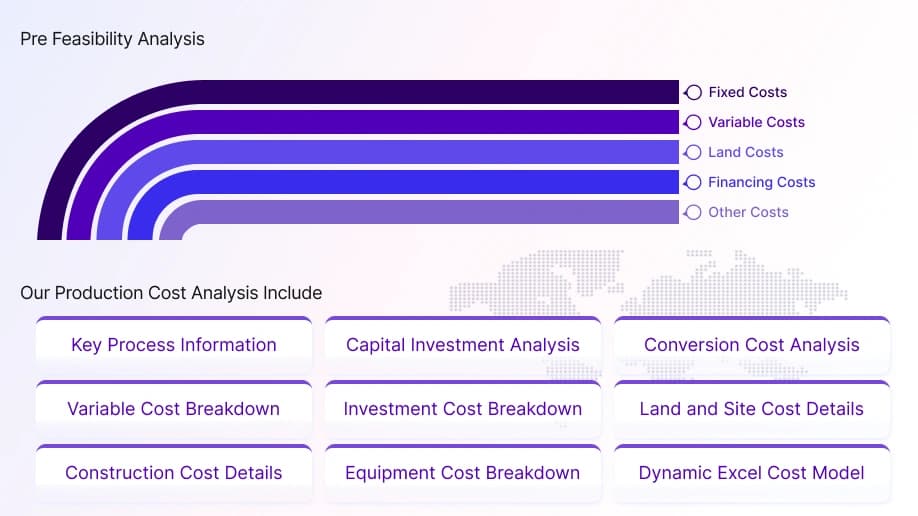
| Scope | Production Process: Process Flow, Material Flow, Material Balance Raw Material and Product Specifications: Raw Material Consumption, Product and Co-product Generation Land and Site Cost: Offsites/Civil Works, Equipment Cost, Auxiliary Equipment Costs, Contingency, Engineering and Consulting Charges, Working Capital Variable Cost: Raw Material, Utilities, Other Variable Costs Fixed Cost: Labor Requirements and Wages, Overhead Expenses, Maintenance Charges, Other Fixed Costs Financing Costs: Interest on Working Capital, Interest on Loans Other Costs: Depreciation Charges, General Sales and Admin Cost |
| Currency | US$ (Data can also be provided in the local currency) | Customization Scope | The report can be customized as per the requirement of the customer |
| Post-Sale Analysts Report | 10-12 weeks of post-purchase analyst support after report delivery for any queries from the deliverable |
| Delivery Format | PDF and Excel format through email (editable version in PPT/Word format of the report can be also provided on special request) |
Nylon DTY Production Cost Processes with Cost Analysis
The study offers a detailed cost analysis of Nylon DTY Production via Nylon POY. In addition, the report incorporates the manufacturing process with detailed process and material flow, operating costs along with financial expenses and depreciation charges.
At Procurement Resource, we focus on improving the should-cost of production for nylon DTY and map every stage of the route, from textile-grade nylon 6 or nylon 66 chips or POY receipt through chip drying, melt spinning of POY, aging and testing, creel loading, heated drawing, friction disc false-twist texturing, cooling, secondary heat setting, intermingling, oiling, winding, inspection & packing. The cost model resolves each input separately, including nylon chips, POY, masterbatch, spin finish, texturing oil, electricity, compressed air, chilled water, friction discs, paper tubes, cartons & yarn waste. We evaluate CAPEX and OPEX on a per-ton basis across hosiery, apparel, and weaving counts, isolating the POY share, the energy share & the yield and quality share.
Alongside the cost build-up, the report identifies providers of POY spinning lines, false-twist draw texturing machines, friction units, heaters, intermingling jets, and winders, and offers a supplier database for nylon chips, POY, masterbatch, oils & packaging. It sets out a feasible plant layout covering chip or POY storage, spinning, creels and texturing, quality testing, packing & yarn storage. By modeling POY price, machine speed, yield, energy use & plant loading, the analysis shows where the cash production cost of nylon DTY can be reduced. It supports decisions on POY integration, nylon 6 versus nylon 66, count range, and dope-dyed or recycled grades.
AVP - Strategy and Solutions
Leading procurement research solutions across chemicals, materials, and food & beverages, with expertise in price forecasting and market analytics.
Need more help?

Still Need Help?
Compare & Choose the Right Report Version for You
How to Order Your Report?