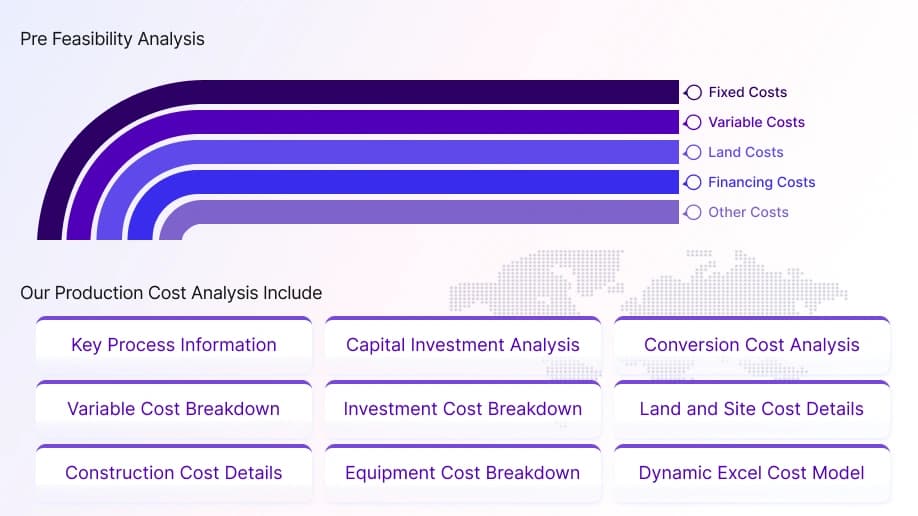
The report provides a detailed analysis essential for establishing a Paclitaxel production plant. It encompasses all critical aspects necessary for Paclitaxel production, including the cost of Paclitaxel production, Paclitaxel plant cost, Paclitaxel production costs, and the overall Paclitaxel production plant cost. Additionally, the study covers specific expenditures associated with setting up and operating a Paclitaxel production plant. These encompass production processes, raw material requirements, utility requirements, infrastructure needs, machinery and technology requirements, manpower requirements, packaging requirements, transportation requirements, and more.
Paclitaxel is a chemotherapy drug extensively used in cancer therapy. It stabilizes microtubules, which are needed for cells to divide; it prevents the cancer cell from dividing. It is used for treating First-line and Advanced Ovarian cancer. It is used in the treatment of locally advanced and metastatic breast cancers at an early stage. it has a significant application in the treatment of non-small cell lung cancer.
Paclitaxel is also used for cancers of the prostate, bladder, and head. Paclitaxel availability in nanoparticle formats has allowed for its targeted delivery to tumor specific sites. It is commonly referred to in biological and biomedical studies as a microtubule stabilizer that employs this compound for various cellular processes and drug interaction research.
The market of Paclitaxel is mainly driven by its use in treating various types of cancers. It helps in the worldwide treatment of ovarian cancer, which increases its demand. The rising cases of non-small cell lung cancer have made it a sought-after drug. The drug is also indicated for use in other cancers such as pancreatic, bladder, and head and neck cancer, making it a broad-spectrum chemotherapy drug.
Their nanoparticle formulations are less toxic and can be more efficient in delivering the photosensitizer to tumor sites. Moreover, its application in biological and biomedical research for the analysis of cellular processes or drug interactions contribute to its high demand. Its demand as a chemotherapeutic drug for multiple medical applications and in research, along with its production prices, market prices, and logistics, directly influences industrial Chlorothiazide procurement in the market across the world.
Raw Material for Paclitaxel Production
According to the Paclitaxel production plant project report, the key raw materials used in the production of Paclitaxel include 10-deacetylbaccatin III-(O-benzylhydroxylamine hydrochloride)-solvents-reagents.
Production Process of Paclitaxel
The extensive Paclitaxel production cost report consists of the following major industrial production processes:
- From 10-deacetylbaccatin III, O-benzylhydroxylamine hydrochloride, solvents, and reagents: The industrial production of Paclitaxel involves several steps. First, 10-deacetylbaccatin III goes through a transesterification reaction that introduces a β-keto ester function into the structure. Then, it is further treated with O-benzylhydroxylamine hydrochloride in the presence of pyridine to form an oxime derivative. this compound, on oxidation, is reduced to alter the hydroxyl groups. This step is further followed by acetylation and hydrolysis to form Paclitaxel as the final product.
Paclitaxel is a white or off-white color powder. It has a molecular formula of CHNO and a molecular weight of around 853.91 g/mol. It is insoluble in water and polar solvents. It has a melting point of 216-217°C. Its LogP value is about 2.96, pointing towards its hydrophobic nature. It consists of four hydrogen bond donors and 15 rotatable bonds. Its topological polar surface area is 221.29 Å. It is usually administered intravenously to ensure fast distribution into the bloodstream. These physical and chemical properties contribute to its action as an antimicrotubular agent.