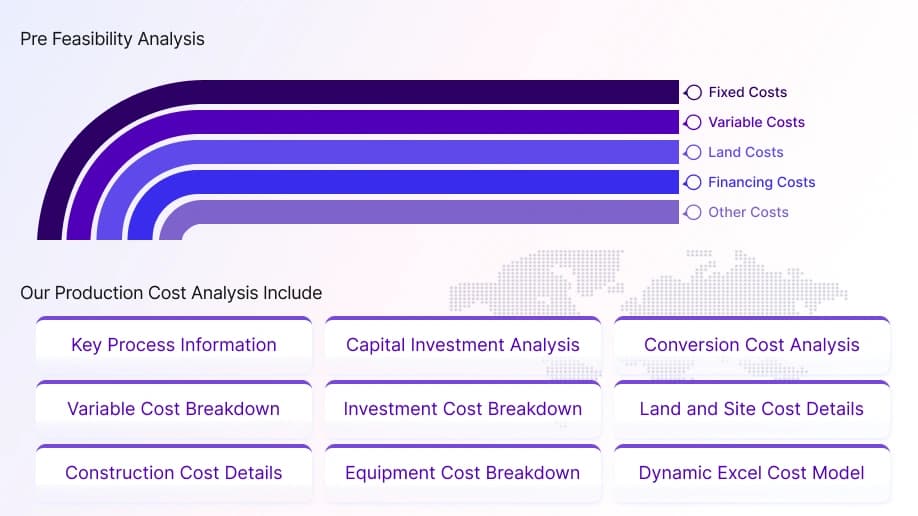
The report provides a detailed analysis essential for establishing a Paroxetine (Paxil) production plant. It encompasses all critical aspects necessary for Paroxetine (Paxil) production, including the cost of Paroxetine (Paxil) production, Paroxetine (Paxil) plant cost, Paroxetine (Paxil) production costs, and the overall Paroxetine (Paxil) production plant cost. Additionally, the study covers specific expenditures associated with setting up and operating a Paroxetine (Paxil) production plant. These encompass production processes, raw material requirements, utility requirements, infrastructure needs, machinery and technology requirements, manpower requirements, packaging requirements, transportation requirements, and more.
Paroxetine (Paxil) is a generic name for a famous medication that is widely used to treat all types of depression and anxiety disorders. It finds its applications in the treatment of obsessive-compulsive disorder (OCD), social phobia, posttraumatic stress disorder (PTSD), and premenstrual dysphoric disorder (PMDD). Moreover, this drug is also prescribed during talking therapy and other panic disorder treatments, where it helps diminish the extremity of compulsive behaviors. Additionally, this drug is also extensively employed in clinical research to study its safety effectivity, and potential risks associated with its usage.
The market for paroxetine is majorly led by its wide usage in the pharmaceutical industry as an antidepressant for the treatment of various anxiety and panic disorders, which significantly contributes to its market expansion. Moreover, its employment as a selective serotonin reuptake inhibitor (SSRI) to treat major depressive disorder (MDD) and manage symptoms of obsessive-compulsive disorder (OCD) by stabilizing mood further enhances its demand in the medical, healthcare, and wellness industries.
Additionally, its utilization in the development of new drugs and various research activities effectively promotes its demand in the biotechnology and research & development industries. Furthermore, several factors such as the source and purity, cost and pricing, compliance with pharmaceutical regulations, quality standards, technological advancements, environmental considerations, sustainability practices, distribution (including trading and shipping), logistics, safety standards, etc., largely influence industrial Paroxetine (Paxil) procurement globally.
Raw Material for Paroxetine (Paxil) Production
According to the Paroxetine production plant project report, the major raw materials for Paroxetine production include Arecoline-4-Fluorophenylmagnesium Bromide- LiAlH4- Thionyl Chloride.
Production Process of Paroxetine (Paxil)
The extensive Paroxetine production cost report consists of the following industrial production process:
- Production via Grignard Reaction: This production process is initiated by the reaction of arecoline with 4-fluorophenylmagnesium bromide to from a cis-/trans mixture of methyl 4-(4-fluorophenyl)-N-methyl-nipecotate, followed by hydrolysation to convert it into acid chloride and is further esterified with (-)-menthol. Then, the obtained methyl ester is transformed using hydrobromide salts to obtain its (-)-trans form, which is further reduced with LiAlH4 to obtain desired (-)-trans alcohol. The obtained alcohol is further reacted with thionyl chloride and sodium salt of 3.4-methylenedioxyphenol in refluxing methanol for 16 hours to obtain paroxetine as the final product.
Paroxetine is an FDA-approved selective serotonin reuptake inhibitor (SSRI) and is also called Paxil. This drug can be dangerous if taken without a medical prescription. This medication is mainly available in the form of a tablet or a capsule. The molecular formula of the compound is C19H20FNO3, and its molecular weight is 329.4 g/mol. It belongs to the group of benzodioxoles. The IUPAC name of the compound is (3S,4R)-3-(1,3-benzodioxol-5-yloxymethyl)-4-(4-fluorophenyl)piperidine. Moreover, the melting point of the compound is 120 - 138°C, and its boiling point is 451.7°C. This drug also comprises potential compounds that disrupt the endocrine system. This drug is often sold under the trade names Paxil, Aropax, and Seroxat.