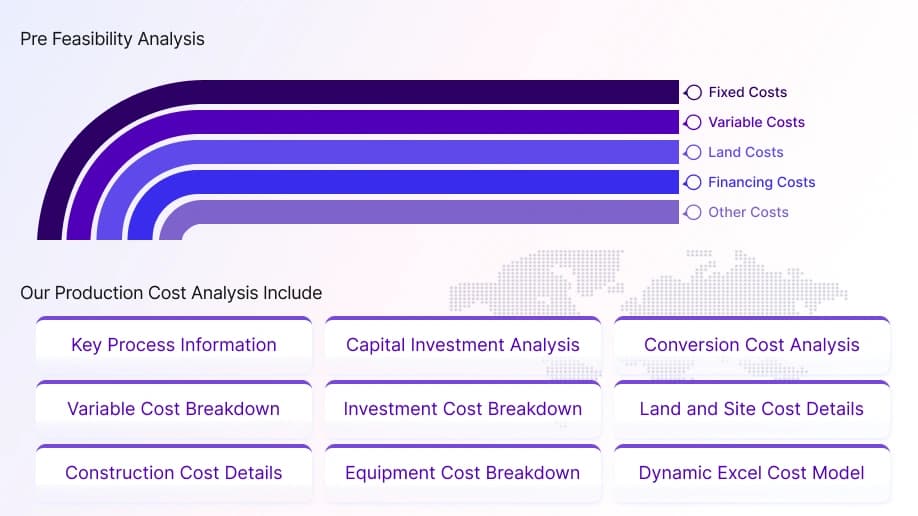
The report provides a detailed analysis essential for establishing a Phenothrin production plant. It encompasses all critical aspects necessary for Phenothrin production, including the cost of Phenothrin production, Phenothrin plant cost, Phenothrin production costs, and the overall Phenothrin production plant cost. Additionally, the study covers specific expenditures associated with setting up and operating a Phenothrin production plant. These encompass production processes, raw material requirements, utility requirements, infrastructure needs, machinery and technology requirements, manpower requirements, packaging requirements, transportation requirements, and more.
Phenothrin is a synthetic pyrethroid that finds huge applications in the agriculture sector. It is widely used as an insecticide to control pests and insects in agricultural farms. Moreover, it also finds its application in killing insects, protecting stored grain, and controlling pests in poultry farms. It is often utilized for vector control for insects, including mosquitoes in institutional settings, medical institutions, and various industrial settings. Additionally, it is also used as a component in the production of aerosol insecticides for greenhouses, gardens, and homes.
The demand for Phenothrin is predominantly driven by its application as an insecticide for controlling household insects and controlling pests in farming, which significantly boosts its demand in the household and agrochemical industries. Moreover, its usage in the production of aerosol insecticidal sprays used in animal kennels, gardens, and commercial and industrial settings further enhances its market growth. Additionally, its world-wide employment for killing insects in grain storage bins remarkably promotes its demand in the agriculture sector. Furthermore, several factors, such as the availability of raw materials (chrysanthemic acid), cost, compliance with agricultural practices, logistics, and quality standards, significantly influence industrial Phenothrin procurement globally.
Raw Material for Phenothrin Production
According to the Phenothrin production plant project report, the major raw material for Phenothrin production includes Chrysanthemic Acid.
Production Process of Phenothrin
The extensive Phenothrin production cost report consists of the following industrial production process:
- Production via Chemical Synthesis: This method of production is initiated by the conversion of chrysanthemic acid by using thionyl chloride and dimethylformamide (DMF) into the corresponding acyl chloride (99% yield). Further, the obtained acyl chloride is subjected to condensation with 3-phenoxyphenyl methanol in the presence of pyridine, which results in the formation of phenothrin (96% yield) as the final product.
Phenothrin appears as a pale yellow to brownish-yellow liquid that is corrosive. The compound is a cyclopropanecarboxylate ester and has a role as an insecticide. The molecular formula of the compound is C23H26O3, and its molar mass is 350.4 g/mol. Moreover, the compound is also known as sumithrin. The density of the compound is 1.06gm/cm3, and its solubility in water is 2mg/L at 30ºC. Additionally, the melting point of the compound is 25°C, and its boiling point is 444.44°C. The compound is sparingly soluble in organic solvents, such as chloroform, and is stored at a temperature range of 0-6°C. This compound is explosive and is generally stable but shows incompatibility with strong oxidizing agents. It is also recommended to keep the compound in dark places, as it is light-sensitive.