
Udeesha Tomar
AVP - Strategy and Solutions
Leading procurement research solutions across chemicals, materials, and food & beverages, with expertise in price forecasting and market analytics.
Last Updated: September, 2026

Trusted by 200+ Clients
The report provides a detailed analysis essential for establishing a polyethylene glycol (PEG) production plant. It encompasses all critical aspects necessary for polyethylene glycol (PEG) production, including the cost of polyethylene glycol (PEG) production, polyethylene glycol (PEG) plant cost, polyethylene glycol (PEG) production costs, and the overall polyethylene glycol (PEG) production plant cost. Additionally, the study covers specific expenditures associated with setting up and operating a polyethylene glycol (PEG) production plant. These encompass production processes, raw material requirements, utility requirements, infrastructure needs, machinery and technology requirements, manpower requirements, packaging requirements, transportation requirements, and more.
Polyethylene glycol (PEG) is an organic chemical compound that has a wide range of applications, from industrial production to medicine. The medical industry finds various uses for PEG, for instance, wound healing, as a liquid for contact lenses and synthetic lubricants. It is utilized to modify the surface of medical polymer materials and coat pill outer layers, improving drug diffusion effectiveness. Moreover, it also finds its application as a crucial factor in drug delivery in the form of micelles, nanoparticles, and hydrogels.
In addition to that, it has a vital application in wound closure as an adhesive and in managing and treating constipation. Furthermore, it has various other applications, including water-based coatings, skincare, cosmetics, cleaners, agricultural commodities, solvents, laxatives, and so forth. It finds extensive application in formulating oral, topical, and parenteral pharmaceutical products due to its hydrophilic nature. It is commonly used in oral medications to improve drug absorption and bioavailability. Additionally, as a permeation enhancer in topical formulations, PEG facilitates the delivery of active ingredients through the skin.
The market for polyethylene glycol (PEG) is majorly driven by its demand for its use in the medical and pharmaceutical industries due to its wide usage in the form of medications, solvents, delivery liquids, tablets to fillers, for the treatment of constipation, and as suppository bases in ophthalmic solutions, which significantly propels its market growth. Moreover, these compounds are widespread in several household products from cosmetics and skin care to cleaners and baby wipes, which further enhances its demand in the cosmetic, household, and personal care and hygiene industries. Additionally, industrial polyethylene glycol (PEG) procurement is also impacted by several other factors, including market prices, the cost and availability of its feedstock (ethylene oxide, glycol), trading and distribution of the product, transportation, logistics, environmental regulations, etc.
According to the Polyethylene Glycol (PEG) production plant project report, the major raw materials for Polyethylene Glycol (PEG) production include Ethylene Oxide-Glycol.
The extensive Polyethylene Glycol (PEG) production cost report consists of the following industrial production processes:
Polyethylene glycol (PEG) is a synthetic compound derived from petroleum and is commonly employed as a laxative to address constipation. Its versatility extends to other applications, such as moisture retention, solvent properties, and thickening substances. This hydrophilic polymer is produced by combining ethylene oxide with ethylene glycol, ethylene glycol oligomers, or water.
PEG can be hydrolyzed by ethylene oxide, and while low molecular weight forms can be somewhat toxic, diols generally exhibit low toxicity. Its topical application, especially for mucosal drug use, may cause irritating pain, but when used in lotions, it enhances skin flexibility and moisturizes. High oral doses can lead to diarrhea.
Polyethylene Glycol (PEG) Production Cost Report
Choose What's Right for You
Pay Via



| Particulars | Details |
|---|---|
| Product Name | Polyethylene glycol (PEG) |
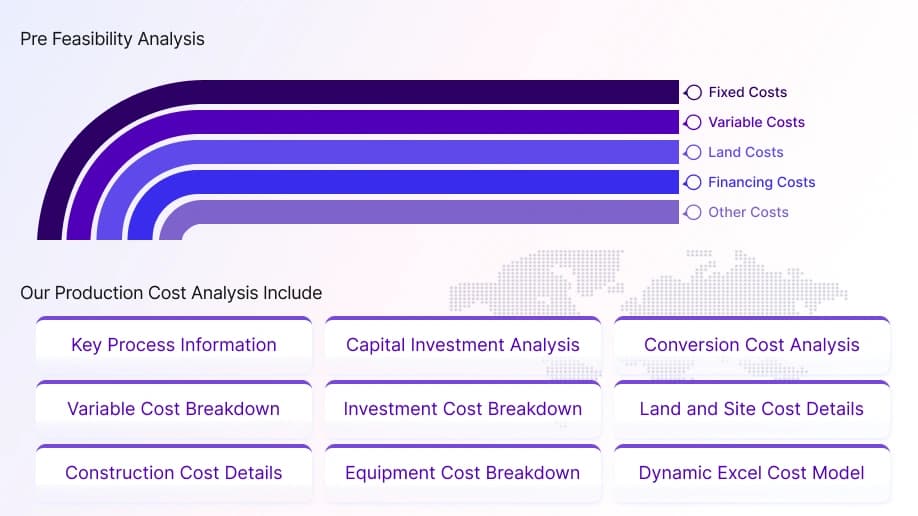
| Scope | Production Process: Process Flow, Material Flow, Material Balance Raw Material and Product Specifications: Raw Material Consumption, Product and Co-product Generation Land and Site Cost: Offsites/Civil Works, Equipment Cost, Auxiliary Equipment Costs, Contingency, Engineering and Consulting Charges, Working Capital Variable Cost: Raw Material, Utilities, Other Variable Costs Fixed Cost: Labor Requirements and Wages, Overhead Expenses, Maintenance Charges, Other Fixed Costs Financing Costs: Interest on Working Capital, Interest on Loans Other Costs: Depreciation Charges, General Sales and Admin Cost |
| Currency | US$ (Data can also be provided in the local currency) | Customization Scope | The report can be customized as per the requirement of the customer |
| Post-Sale Analysts Report | 10-12 weeks of post-purchase analyst support after report delivery for any queries from the deliverable |
| Delivery Format | PDF and Excel format through email (editable version in PPT/Word format of the report can be also provided on special request) |
Polyethylene Glycol (PEG) Production Cost Processes with Cost Analysis
The study offers a detailed cost analysis of Polyethylene Glycol (PEG) Production from Ethylene Oxide. In addition, the report incorporates the manufacturing process with detailed process and material flow, operating costs along with financial expenses and depreciation charges.
At Procurement Resource, we not only focus on optimizing the should cost of production for Polyethylene Glycol (PEG) but also provide our clients with extensive intel and rigorous information on every aspect of the production process. By utilizing a comprehensive cost model, we help you break down expenses related to raw materials, labor, and technology, offering clear pathways to savings. We also assist in evaluating the capital expenditure (CAPEX) and operating expenses (OPEX), which are often measured as cost per unit of production, such as USD/MT, ensuring that your financial planning is aligned with industry benchmarks.
We offer valuable insights on the top technology providers, in-depth supplier database, and best manufacturers, helping you make informed decisions to improve efficiency. Additionally, we design the most feasible layout for your production needs, ensuring the entire process runs smoothly. By minimizing the cash cost of production, we ensure that you stay competitive while securing long-term profitability in the growing Polyethylene Glycol (PEG) market. Partnering with Procurement Resource guarantees that every aspect of your production is cost-efficient, advanced, and tailored to your specific requirements.
AVP - Strategy and Solutions
Leading procurement research solutions across chemicals, materials, and food & beverages, with expertise in price forecasting and market analytics.
Need more help?

Still Need Help?
Compare & Choose the Right Report Version for You
How to Order Your Report?