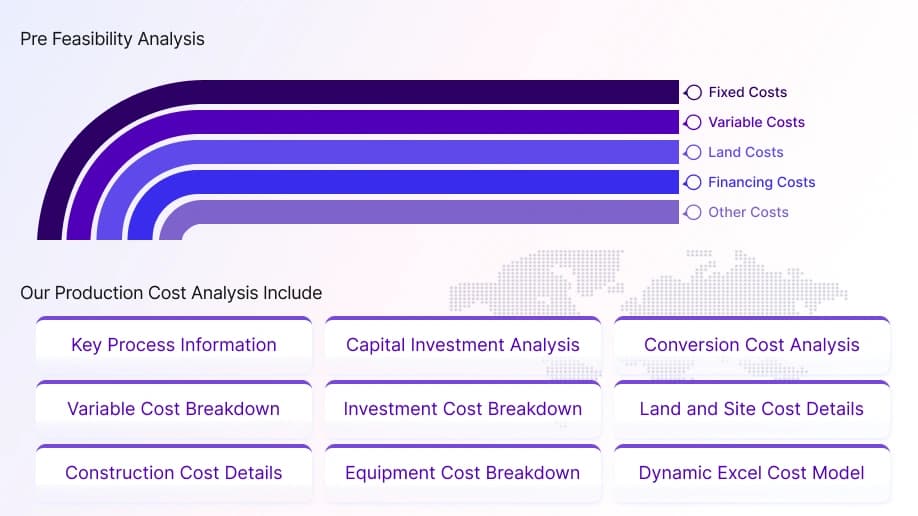
The report provides a detailed analysis essential for establishing a propane production plant. It encompasses all critical aspects necessary for propane production, including the cost of propane production, propane plant cost, propane production costs, and the overall propane production plant cost. Additionally, the study covers specific expenditures associated with setting up and operating a propane production plant. These encompass production processes, raw material requirements, utility requirements, infrastructure needs, machinery and technology requirements, manpower requirements, packaging requirements, transportation requirements, and more.
Propane is an alkane gas which is also known as, liquified petroleum gas (LPG), and is regarded as a clean-burning alternative fuel. It provides more energy per unit volume than natural gas and is commonly used as a fuel for residential heating, cooking, and transportation.
It is also utilized as a feedstock in the production of petrochemicals such as propylene and polypropylene and some applications as a refrigerant. It is a clean-burning fuel that is frequently used in vehicles as an alternative to petrol and diesel. Propane is a common fuel used to heat homes, businesses, and commercial facilities. Moreover, propane fuel is utilized in a wide range of industrial and agricultural applications, including forklifts, boilers, kilns, and irrigation pumps. Fuel pricing, environmental laws, and the availability of other alternative fuels all influence the demand for propane as a transportation fuel.
The market for propane is majorly driven by its applications as a fuel for cooking, heating, and transportation, which contributes to its market expansion and increases its demand in the food, energy utility industry, and transportation industries. It is also extensively utilized as a feedstock in the production of petrochemicals like propylene and polypropylene and as a refrigerant, which further enhances its demand in the chemical & petrochemical, and production industries respectively.
It is often employed as fuel in vehicles, farm irrigation engines, forklifts, and buses as an alternative to petrol and diesel, which promotes its demand in the automotive, agriculture, and transportation industries. Weather conditions, energy pricing, and the availability of other heating fuels, such as natural gas and heating oil, all influence the demand for propane as a heating fuel. Also, fuel pricing, environmental laws, and the availability of other alternative fuels all influence the demand for propane as a transportation fuel. Furthermore, the availability and cost of production of propane’s feedstock (crude oil, natural gas), propane market prices, distribution (including trading and shipping), logistics, environmental regulations, safety standards, etc., are some of the elements that influence industrial propane procurement.
Raw Material for Propane Production
According to the Propane production plant project report, the major raw materials for Propane production include Crude Oil; Natural Gas.
Manufacturing Process of Propane
The extensive Propane production cost report consists of the following industrial production processes:
- Production from Petroleum Refining: This method utilizes the process of fluid catalytic cracking during the refining process of crude oil, to create new, smaller molecules from larger hydrocarbon molecules to make valuable fuels such as gasoline, diesel, and LPG and propane.
- Production from Natural Gas: The process involves the processing of “wet” natural gas, which produces propane as a byproduct.
Propane is a member of the hydrocarbon family. It is a three-carbon alkane that is also known as liquefied petroleum gas (LPG) or propane gas. It is a byproduct of the natural gas and crude oil refining industries. It is kept and transported under pressure as a liquid and vaporises when released from its container.
The chemical formula of propane is C3H8, and its molecular weight is 44.097 g/mol. It is colourless, odourless gas at room temperature and atmospheric pressure. The density of propane is 1.88 g/cm³ and its melting point is -187.7°C (-305.9°F). The boiling point of propane is -42.25°C (-44.05°F). It is insoluble in water but is soluble in organic solvents such as acetone and ethanol.