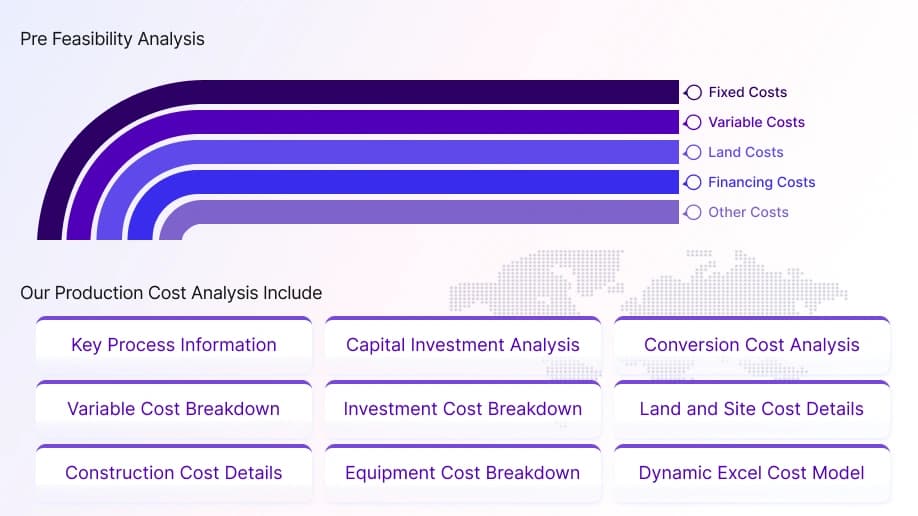
The report provides a detailed analysis essential for establishing a Sulforaphane production plant. It encompasses all critical aspects necessary for Sulforaphane production, including the cost of Sulforaphane production, Sulforaphane plant cost, Sulforaphane production costs, and the overall Sulforaphane production plant cost. Additionally, the study covers specific expenditures associated with setting up and operating a Sulforaphane production plant. These encompass production processes, raw material requirements, utility requirements, infrastructure needs, machinery and technology requirements, manpower requirements, packaging requirements, transportation requirements, and more.
Sulforaphane is a naturally occurring phytochemical that is known for its medical applications. It majorly finds its application as a powerful anticancer compound for the treatment of various types of cancer and neurodegenerative diseases (like Alzheimer's and Parkinson's). Moreover, it also finds its application as a nutrient supplement to combat inflammation in the body, protect skin, eyes, kidneys, and brain, and restore cognitive function due to its antiviral, antibacterial, and antifungal properties. Additionally, it is often utilized for the treatment of hay fever, autism, liver disease, and prostate cancer.
The market for Sulforaphane is largely driven due to its potential health benefits, including suppression of inflammation, anticancer activities, and protection against neurodegenerative diseases. Moreover, its utilization as a compound that promotes detoxification, prevents, and combats cancer, lowers cholesterol, and improves diabetes significantly boosts its demand in the medical and pharmaceutical industries.
Additionally, its employment in the nutraceutical industry for the treatment of various inflammatory diseases, promoting overall health, and reducing the risk of chronic diseases further accentuates its market growth. Furthermore, several factors, such as the availability of raw materials (sodium hydroxide, thiophosgene, etc.), cost and pricing, compliance with medical regulations, and maintaining quality standards, significantly influence industrial Sulforaphane procurement globally. Also, optimized distribution and logistics, advancement in science or technology, and powerful sustainability practices lead to variations in the requirements for procurement.
Raw Material for Sulforaphane Production
According to the Sulforaphane production plant project report, the major raw materials for Sulforaphane production include Chloroform-(R)-4-(Methylsulfinyl)-1-butylamine-Sodium Hydroxide-Thiophosgene.
Production Process of Sulforaphane
The extensive Sulforaphane production cost report consists of the following industrial production process:
- Production via Chemical Synthesis: This method of production is initiated by mixing chloroform, (R)-4-(Methylsulfinyl)-1-butylamine, and sodium hydroxide solution in a one-litre round bottom flask equipped with a stir bar, followed by the addition of thiophosgene to give a biphasic solution. Further, the reaction is vigorously stirred for one hour, followed by diluting the mixture by adding chloroform and brine and combining the organics. Then, the combined organics are dried and concentrated over sodium sulfate to give a residue that is further adsorbed into silica and is eluted with methanol in chloroform to obtain a light-yellow oil, i.e., sulforaphane as the final product.
Sulforaphane belongs to the class of isothiocyanates and has a density of 1.17g/cm3. The molecular formula of the compound is C6H11NOS2, and its molar mass is 177.3 g/mol. Moreover, the compound appears in the form of a slightly yellow liquid that is sensitive to light. The compound is soluble in DMSO and methanol with a solubility of 40 mg/mL. Additionally, it also exists in its food-bound form, which is known as Glucoraphanin. It is also found in cruciferous vegetables, such as cabbage, cauliflower, bok choy, kale, Chinese broccoli, turnip, etc. For this compound, LogP = 0.407 (est), and it is stored at -20°C.