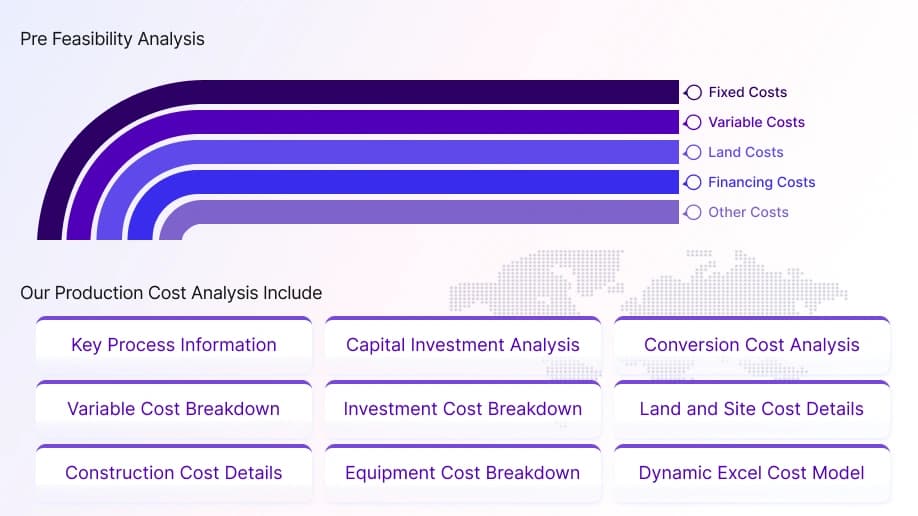
The report provides a detailed analysis essential for establishing a Superoxide Dismutase production plant. It encompasses all critical aspects necessary for Superoxide Dismutase (SOD) production, including the cost of Superoxide Dismutase production, Superoxide Dismutase (SOD) plant cost, SOD production costs, and the overall Superoxide Dismutase (SOD) production plant cost. Additionally, the study covers specific expenditures associated with setting up and operating a Superoxide Dismutase production plant. These encompass production processes, raw material requirements, utility requirements, infrastructure needs, machinery and technology requirements, manpower requirements, packaging requirements, transportation requirements, and more.
Superoxide dismutase (SOD) is an important antioxidant enzyme that helps in protecting cells from oxidative strain. It works by catalyzing the dismutation of superoxide radicals into molecular oxygen and hydrogen peroxide that, in turn, stops cellular damage. It is used to prevent changes in cells that may become cancerous and reduces inflammation connected with tumor growth. It helps to reduce inflammation due to rheumatoid arthritis and cystic fibrosis. SOD is used in supplements that respond to age-related oxidative stress. It is utilized in cosmetic formulations that protect skin from oxidative damage and aging. SOD is also used in the food industry to enhance the nutritional quality and shelf life of food products. It improves plant's resistance to environmental stress leading to good crop yield.
The procurement of Superoxide Dismutase is driven by its varied applications across multiple industries. It is used in healthcare because of its antioxidant properties preventing oxidative stress and inflammation in various disorders. Its role in preventing cellular changes that may lead to cancer contributes to its demand. Its use in the cosmetic industry for protecting skin from damage and aging, makes it popular among consumers. It improves nutritional quality and extends the shelf life of products, making it a sought-after product in food production. It is used in agriculture to enhance plants' resistance to environmental stress, contributing to better crop yields. The changes in healthcare, cosmetics, food, and agriculture, along with production prices, market prices, and logistics, directly influence industrial SOD procurement across the globe.
Raw Material for Superoxide Dismutase (SOD) Production
According to the Superoxide Dismutase (SOD) production plant project report, the key raw materials used in the production of SOD include Animal Tissues-Buffer Solutions-Ammonium Sulfate.
Production Process of Superoxide Dismutase (SOD)
The extensive Superoxide Dismutase (SOD) production cost report consists of the following major industrial production process:
- From Animal Tissues, Buffer Solutions, and Ammonium Sulfate: The industrial production process of SOD is a multi-step process. First, animal tissues are collected under hygienic conditions. The tissues are homogenized in a buffer, creating a tissue homogenate. This homogenate is centrifuged to separate cellular debris giving a supernatant containing soluble proteins. This supernatant goes through purification by using heat treatment and ammonium sulfate precipitation to obtain SOD. SOD is further purified by using chromatography. Finally, the purified SOD is formulated and packaged.
Superoxide dismutase (SOD) has several forms depending upon its metal cofactor at active sites. Cu/Zn SOD (SOD1) is a homodimer composed of about 151 amino acids having copper and zinc ions. Its copper ion helps in electron transfer, and zinc ion stabilizes the enzyme's structure. Another one is Mn-SOD (SOD2), which contains manganese and works by protecting mitochondria against oxidative stress. The enzyme is very efficient and achieves a turnover number exceeding 7 × 10⁹ M−1 s-1. All these properties contribute to its function as an antioxidant defense against reactive oxygen species.