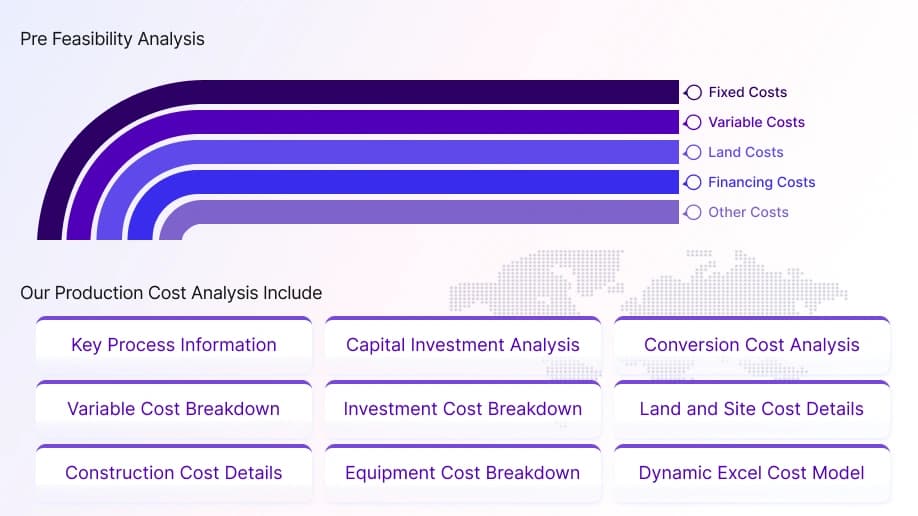
The report provides a detailed analysis essential for establishing a Tetrandrine production plant. It encompasses all critical aspects necessary for Tetrandrine production, including the cost of Tetrandrine production, Tetrandrine plant cost, Tetrandrine production costs, and the overall Tetrandrine production plant cost. Additionally, the study covers specific expenditures associated with setting up and operating a Tetrandrine production plant. These encompass production processes, raw material requirements, utility requirements, infrastructure needs, machinery and technology requirements, manpower requirements, packaging requirements, transportation requirements, and more.
Tetrandrine is a vasoactive alkaloid that is often used in Chinese medications and has applications in the medical industry. It is widely used as an anti-inflammatory and antifibrogenetic agent for the treatment of rheumatism, silicosis, lung cancer, and other inflammatory diseases. Moreover, the compound is also utilized to treat hypertension and angina due to its vasodilative effects. It also finds its application in the treatment of various ailments, including tuberculosis, dysentery, hyperglycemia, malaria, cancer, and fever. Additionally, it is often employed in the treatment of Ebola infection.
The market for Tetrandrine is largely driven due to its role as a calcium channel antagonist for the treatment of hypertension, which significantly boosts its demand in the medical industry. Moreover, its usage as antirheumatic and analgesic drugs for the treatment of rheumatism, tuberculosis, hypertension, lung cancer, and other diseases further accentuates its demand in the healthcare and pharmaceutical industries. Additionally, several factors, such as the availability of raw materials (Stephania tetandra, etc.), cost and pricing, compliance with healthcare regulations, and maintaining quality standards, significantly influence industrial Tetrandrine procurement globally. Furthermore, optimized distribution and logistics, new innovations in science or technology, and powerful sustainability practices lead to variations in the requirements for procurement.
Raw Material for Tetrandrine Production
According to the Tetrandrine production plant project report, the major raw material for Tetrandrine production includes Stephania tetandra (Plant species)-Sodium Hydroxide-Acetone.
Production Process of Tetrandrine
The extensive Tetrandrine production cost report consists of the following industrial production process:
- Production from Plant Species: This method of production involves the extraction of the bisbenzylisoquinoline alkaloid-tetrandrine from the plant species Stephania tetandra. In this method, Tetrandrine is mainly extracted from the powdered root samples of S. tetrandra through the alcohol percolation method. Further, the alcoholic extract was concentrated, acidified, and filtered, followed by the treatment with sodium hydroxide and precipitation from acetone to obtain Tetrandrine in crystalline form as the final product.
Tetrandrine belongs to the family of isoquinolines that is isolated from the root of the plant Radix stephania tetrandrae. Moreover, the molecular formula of the compound is C38H42N2O6, and its molecular weight is 622.7 g/mol. The compound is also known as tetrandrin. It appears in the form of a Colorless needle crystal that is almost insoluble in water. The compound is soluble in some organic solvents and ether. Additionally, the density of the compound is 1.1528, and its flash point is 175.8°C. The melting point and the boiling point of the compound are 219-222°C and 662.81°C. The compound serves as a medication for the treatment of various inflammatory diseases.