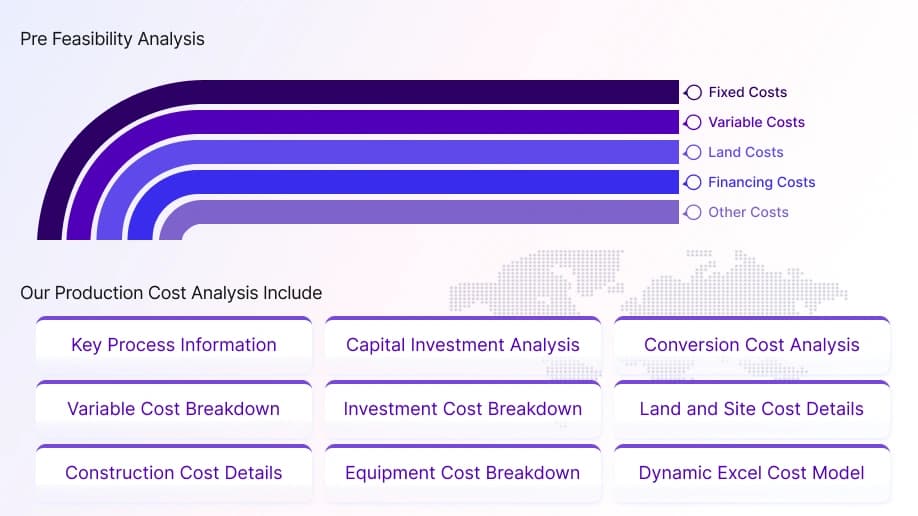
The report provides a detailed analysis essential for establishing a Tobramycin production plant. It encompasses all critical aspects necessary for Tobramycin production, including the cost of Tobramycin production, Tobramycin plant cost, Tobramycin production costs, and the overall Tobramycin production plant cost. Additionally, the study covers specific expenditures associated with setting up and operating a Tobramycin production plant. These encompass production processes, raw material requirements, utility requirements, infrastructure needs, machinery and technology requirements, manpower requirements, packaging requirements, transportation requirements, and more.
Tobramycin is an aminoglycoside antibacterial that finds huge applications in the medical industry. It is widely used as an antibiotic for the treatment of a variety of systemic and ocular infections. Moreover, it is also utilized in the treatment of cystic fibrosis, urinary tract infections, eyes, skin, and various other infections caused by bacteria. Additionally, it is often employed in the form of infections for the treatment of serious bacterial infections, like meningitis, bone, or skin infections.
The demand for Tobramycin is predominantly driven by its application as a broad-spectrum antibiotic that is effective against Gram-positive and Gram-negative organisms. Its huge applications in the treatment of various bacterial infections, such as cystic fibrosis, UTIs, lung infections, etc., significantly boost its demand in the medical and healthcare industries. Moreover, its availability in a variety of forms for administration, such as by inhalation, injection, and external application to the eye (ophthalmic), further fuels its demand and contributes to its market expansion. Additionally, variations in its demand, the availability and cost of raw materials (Streptomyces tenebrarius), and maintaining set quality standards, along with sustainability practices, are some of the major factors that influence industrial Tobramycin procurement globally.
Raw Material for Tobramycin Production
According to the Tobramycin production plant project report, the major raw materials for Tobramycin production includes Streptomyces tenebrarius (Actinomycete).
Production Process of Tobramycin
The extensive Tobramycin production cost report consists of the following industrial production process:
- Production via Fermentation: This method of production involves the use of actinomycete Streptomyces tenebrarius, which produces tobramycin through fermentation. This method is initiated by the process of microbial fermentation of a strain of the actinomycete Streptomyces tenebrarius in a growth media containing one or more carbon and nitrogen sources, essential metabolic precursors, co-factors, and various salts required for cell growth, metabolic intermediates, and the desired complex of nebramycin that consists of carbamoyl-tobramycin. Further, the obtained carbamoyl-tobramycin, containing fermentation broth, is subjected to alkaline hydrolysis to convert the carbamoyl-tobramycin to tobramycin chemically.
Tobramycin is a type of amino cyclitol glycoside that is functionally related to kanamycin B. The molecular formula of the compound is C18H37N5O9, and its molecular weight is 467.5 g/mol. It is also recognized by some other names, like Nebramycin 6 or Tobralex. Moreover, it appears as a white color solid that is completely soluble in water. It is recommended to store the compound in a dark place and an inert atmosphere between 2-8°C. The melting point of the compound is 178 °C, and its boiling point is 570.01°C. Additionally, the density of the compound is 1.3458 gm/cm3 and its value of dissociation constant is pKa 6.7.