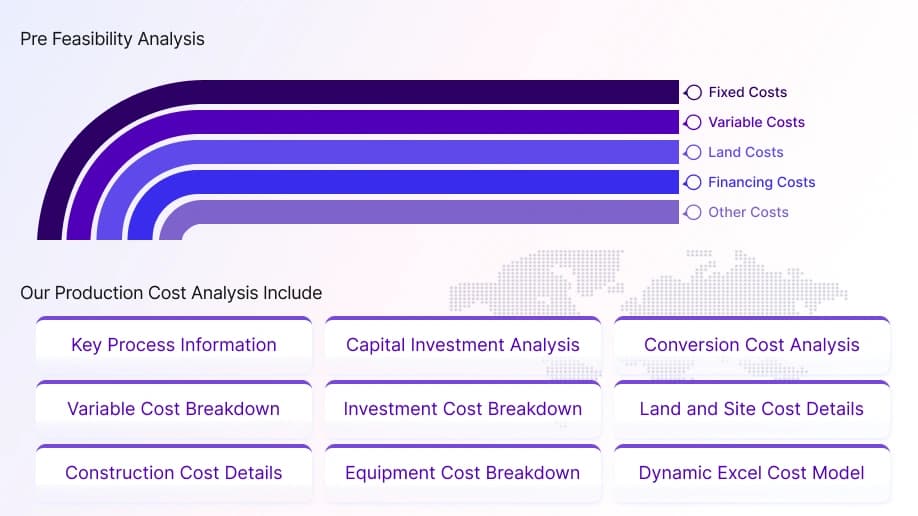
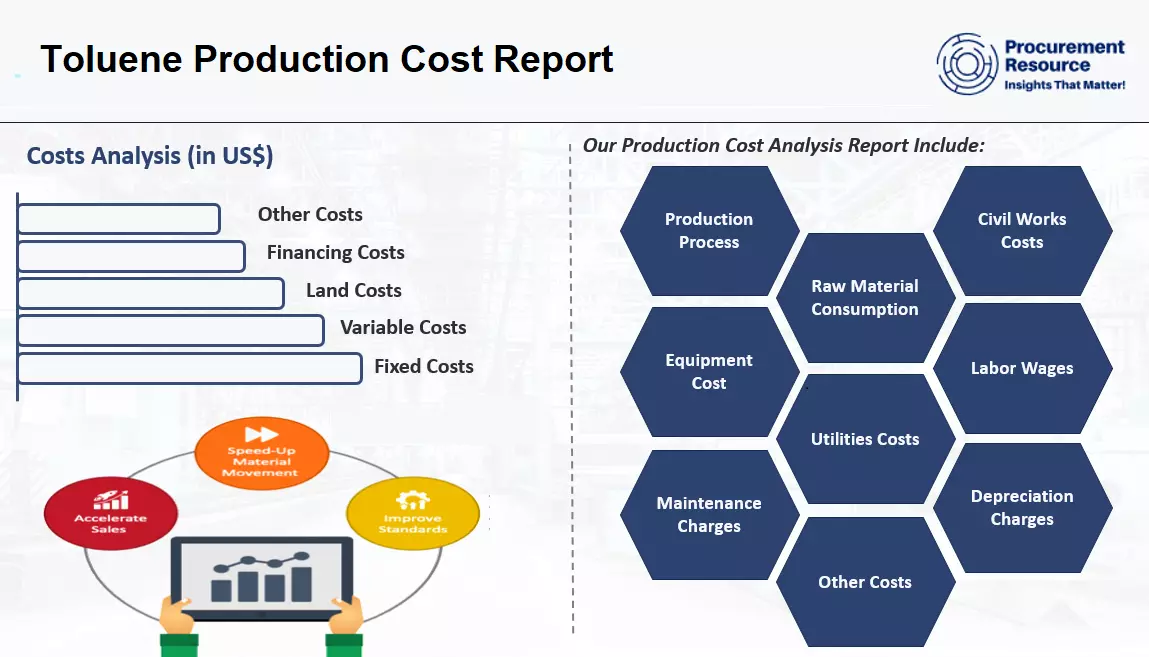
The report provides a detailed analysis essential for establishing a Toluene production plant. It encompasses all critical aspects necessary for Toluene production, including the cost of Toluene production, Toluene plant cost, Toluene production costs, and the overall Toluene production plant cost. Additionally, the study covers specific expenditures associated with setting up and operating a Toluene production plant. These encompass production processes, raw material requirements, utility requirements, infrastructure needs, machinery and technology requirements, manpower requirements, packaging requirements, transportation requirements, and more.
Toluene is an aromatic hydrocarbon used in gasoline blends as an octane booster to regulate energy output and improve engine performance, especially in high-performance engines due to its high-octane rating and low sensitivity. Toluene also forms part of benzene-toluene-xylene (BTX) blends used in reformulated gasoline. Further, in the petrochemical sector, it is used in the synthesis of fibers, pest control, dyes, elastomers, and paints. It can be used as a starting material for the production of other chemicals such as benzene, xylenes, and trinitrotoluene (TNT) used in manufacture of explosives, plastics, and drugs. It is also used in production of personal care products such as nail polish removers and used in laboratories for evoking chemical reactions.
The market for Toluene is driven by its usage as a solvent in numerous products such as paints, varnishes, adhesives, and cleaning agents. Its utilization as a solvent in paints and coatings amplifies its demand in the automotive and construction industries. Its function as a precursor to synthesize various chemicals such as benzene, xylene, and trinitrotoluene (TNT) fuels its demand in the chemical industry. Its usage as an additive in gasoline to improve octane ratings and enhance fuel performance contributes to its demand in the fuel industry.
Its utilization in the formulation of various pharmaceutical products and cosmetics due to its solvent properties boosts its demand in the pharmaceutical and cosmetics industries. Overall, industrial Toluene procurement is influenced by its usage in various industries such as automotive, construction, chemical, fuel, pharmaceutical, and cosmetics industries, the availability of its raw material (hydrocarbons), the cost of its raw material, emerging markets, and technological advancements.
Raw Material for Toluene Production
According to the Toluene production plant project report, the key raw material used in the production of Toluene includes hydrocarbons.
Production Process of Toluene
The extensive Toluene production cost report consists of the following major industrial production process:
- Production via catalytic reforming: The production process of Toluene involves the catalytic reforming (or hydroforming) by passing a mixture of hydrocarbons over a platinum-based dehydrogenation catalyst. This process yields aromatic hydrocarbons such as Toluene while removing hydrocarbon gases like hydrogen. Toluene is then separated from other products through distillation or solvent extraction.
Toluene is a substituted aromatic hydrocarbon that has the IUPAC name methyl benzene. It is colorless and is insoluble in water. It has a paint or tinner-like odor. It has the molecular formula C6H5CH3 and a molecular weight of 92.14 g/mol. Its boiling point and melting point are 110.6 °C and -95 °C, respectively. The density of Toluene is 867 kg/m3. It is highly reactive to electrophiles as compared to benzene. It is flammable and explosive in nature.