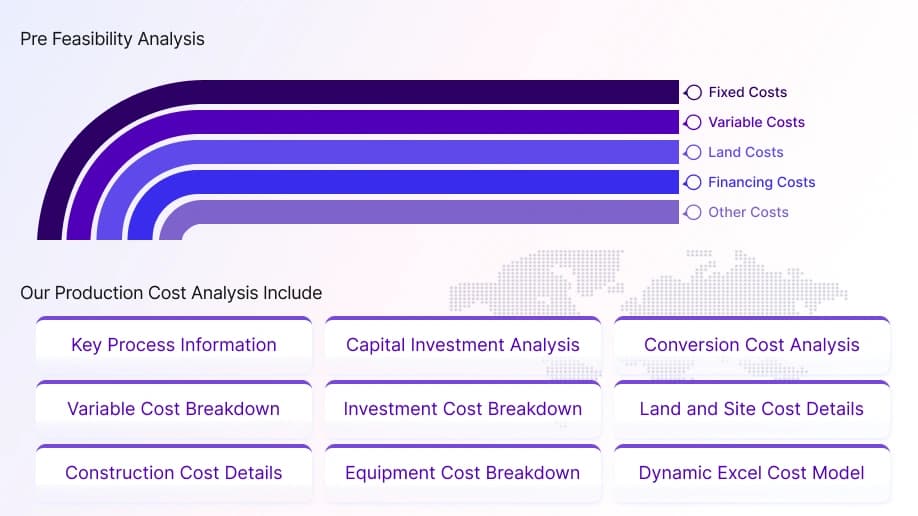
The report provides a detailed analysis essential for establishing a Triethyl Phosphate production plant. It encompasses all critical aspects necessary for Triethyl Phosphate production, including the cost of Triethyl Phosphate production, Triethyl Phosphate plant cost, Triethyl Phosphate production costs, and the overall Triethyl Phosphate production plant cost. Additionally, the study covers specific expenditures associated with setting up and operating a Triethyl Phosphate production plant. These encompass production processes, raw material requirements, utility requirements, infrastructure needs, machinery and technology requirements, manpower requirements, packaging requirements, transportation requirements, and more.
Triethyl phosphate is used in different industrial applications. It serves as an industrial catalyst in the production of acetic anhydride and several other reactions. It acts as a plasticizer in the production of unsaturated polyesters, polyisocyanurate, and polyurethane foam insulation to make rigid, fire-retardant plastics. Triethyl phosphate is employed as a solvent for improving characteristics in the preparation of cellulose acetate and other polymers. It is used in the making of agricultural chemicals like tetraethyl pyrophosphate. It is utilized as a flame retardant in plastics and foam. Also, it is used for modifying the viscosity of plastic resins and as a stabilizer for peroxide used in making adhesives, sealants, and coatings.
The market of Triethyl Phosphate is driven by several key factors. Its use as an industrial catalyst in various reactions contributes to its growing demand. Its utilization as a plasticizer in the production of fire-resistant material makes it a popular product in polymer synthesis. Its usage in making agricultural chemicals like insecticide makes it a sought-after product. Also, its usage in the synthesis of adhesives, sealants, and coatings further contributes to its demand. Thus, industrial triethyl phosphate procurement is affected by growing demand in chemical applications, flame retardant properties, agrochemicals, plastics industry expansion, and regional growth trends despite challenges posed by its corrosive nature and regulatory constraints.
Raw Material for Triethyl Phosphate Production
According to the Triethyl Phosphate production plant project report, the key raw materials used in the production of Triethyl Phosphate include Phosphorus Oxychloride-Ethanol.
Production Process of Triethyl Phosphate
The extensive Triethyl Phosphate production cost report consists of the following major industrial production process:
- From Phosphorus Oxychloride and Ethanol: The production of Triethyl Phosphate consists of several steps. First, the esterification of phosphorus oxychloride takes place in the presence of ethanol, forming Triethyl Phosphate. The mixture is then purified by distillation to obtain pure Triethyl Phosphate. Finally, the product goes through quality checks, followed by packaging for distribution.
Triethyl phosphate is a colorless liquid with a density of about 1.072 g/cm³. Its molecular formula is C6H15O4P, and it has a molecular weight of approximately 182.15 g/mol. It has a melting point of −56.5 °C and a boiling point of around 215 °C. It is mixable in water and shows good solubility. It has a vapor pressure of around 39 Pa at 20 °C, and it is mostly stable in normal conditions. It decomposes on burning to produce toxic fumes and reacts intensely with strong bases and oxidizing agents. It decomposes on burning to produce toxic fumes and reacts fiercely with strong bases and oxidizing agents. Its log P value is 1.11, making it hydrophilic. Such physical and chemical properties make it appropriate for several applications in chemical synthesis and materials science.