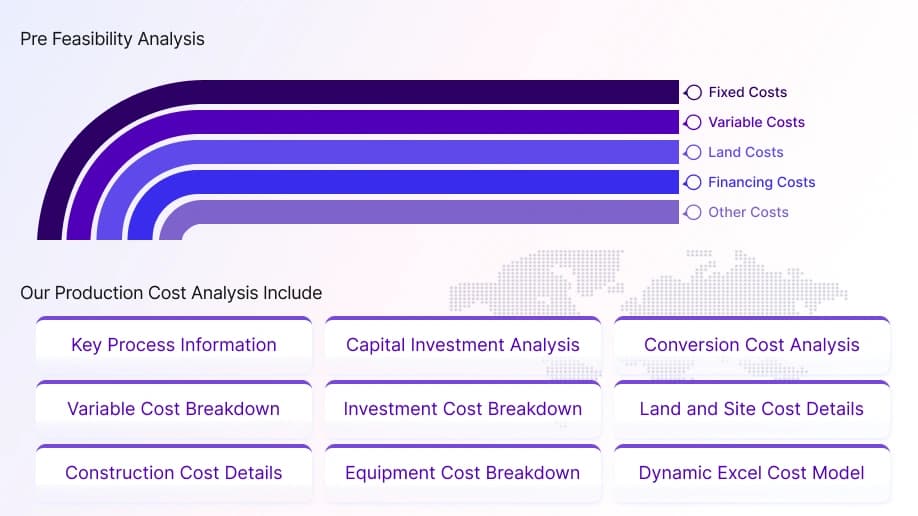
The report provides a detailed analysis essential for establishing a tyrosinase production plant. It encompasses all critical aspects necessary for tyrosinase production, including the cost of tyrosinase production, tyrosinase plant cost, tyrosinase production costs, and the overall tyrosinase production plant cost. Additionally, the study covers specific expenditures associated with setting up and operating a tyrosinase production plant. These encompass production processes, raw material requirements, utility requirements, infrastructure needs, machinery and technology requirements, manpower requirements, packaging requirements, transportation requirements, and more.
Tyrosinase is an oxidoreductase enzyme that regulates the production of melanin in animals. It has several biotechnological and industrial applications. It is widely used in the treatment of hyper-pigmentation disorders and the preparation of natural hair dyes. Moreover, it also finds its application as a browning agent in various processed food items, which include cocoa, tea, spices, etc.
It is also utilized in bioremediation to remove phenolic pollutants in wastewater and polluted soils and for the construction of tyrosinase-based biosensors to monitor environmental pollutants. Additionally, its involvement in the production of the pigment melanin finds various applications for safeguarding against radiation cation exchangers, antioxidants, drug carriers, or immunogens. Furthermore, tyrosinases have the potential to react with phenols, which has led to their proposed usage in biotechnological, biosensor, and biocatalysis applications.
The market for tyrosinase is predominantly driven by its extensive usage for enzymatic browning in the food industry to impart color and aroma to various food items, including prunes, coffee, figs, and spices, which fuels its market expansion. Its usage in a variety of skin-lightening products and hair dyes further enhances its demand in the skincare and cosmetics industries.
Moreover, its application in the synthesis of melanin and various diagnostics methods remarkably promotes its demand in the medical and pharmaceutical industries. Additionally, its utilization for bioremediation and environmental audit notably boosts its demand in the environmental industries. Furthermore, several factors influence industrial tyrosinase procurement, such as the availability of raw materials, cost, and pricing, compliance with pharmaceutical regulations, quality standards, technological advancements, environmental considerations, sustainability practices, distribution (including trading and shipping), logistics, safety standards, etc.
Raw Material for Tyrosinase Production
According to the Tyrosinase production plant project report, the major raw materials for Tyrosinase production includes Pycnoporus sanguineus.
Production Process of Tyrosinase
The extensive Tyrosinase production cost report consists of the following industrial production process:
- Production from Pycnoporus sanguineus: This method involves the production of tyrosinase from the white-rot fungus P. sanguineus. The fungus is inoculated in 50 mL of malt extract broth medium, followed by incubation at 30°C and constant agitation at 150 rpm for seven days to produce tyrosinase as the final product. This method utilizes L-tyrosine as an inducer for intracellular tyrosinase production. Moreover, the enzymatic activity can be observed after two days of incubation in the presence of light.
Tyrosinase is recognized as a mixture of enzymes that is obtained from pineapples (Ananas comosus) that break down proteins. Its concentration in the pineapple stem is higher as compared to the fruit. It shows exceptional stability against heat and retains its protein-digesting property up to 60 degrees Celsius. It is highly stable at pH 8. It is also known as the pineapple enzyme. The molecular weight of the compound is 60kDa, and it comprises 212 amino acids. It is stored under 2-8 degrees Celsius in a refrigerator. It plays an important role in the production of melanin in several organisms (melanogenesis). It is an enzyme that converts tyrosine (amino acid) into dopaquinone.