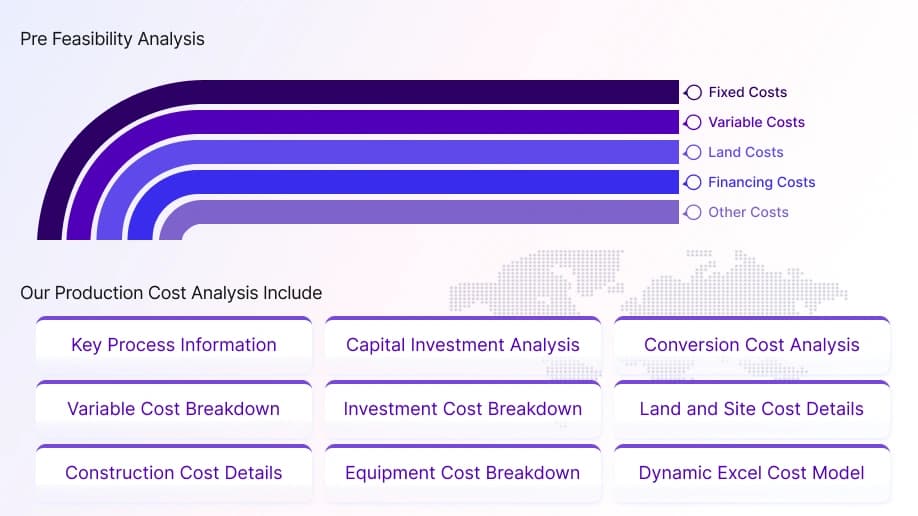
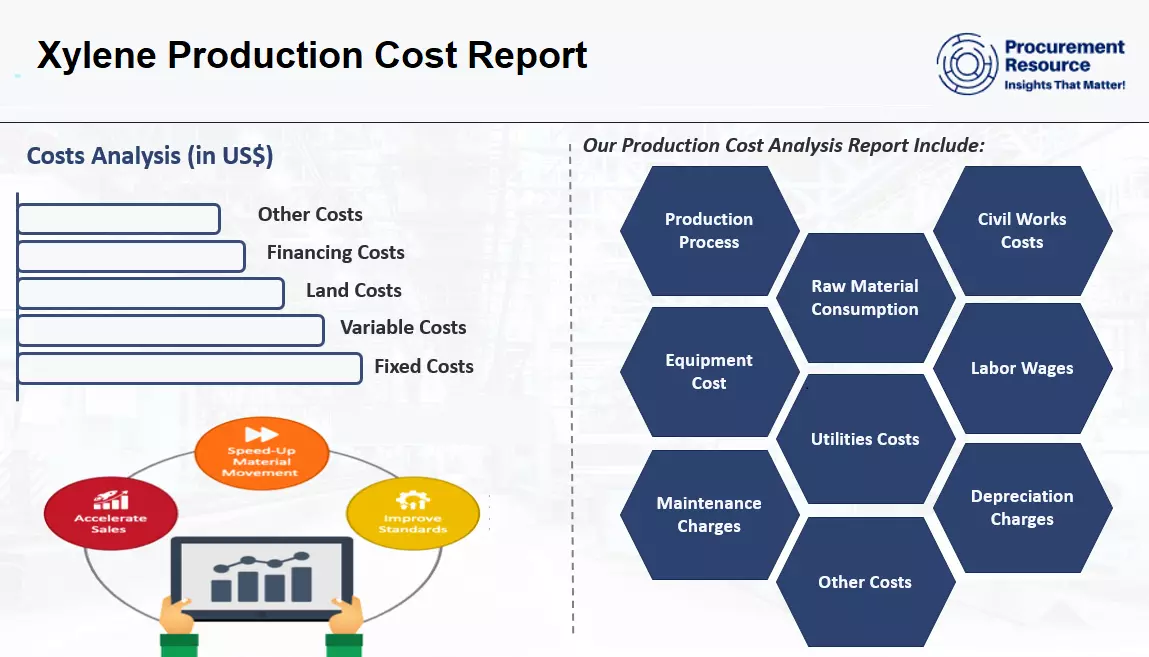
The report provides a detailed analysis essential for establishing a Xylene production plant. It encompasses all critical aspects necessary for Xylene production, including the cost of Xylene production, Xylene plant cost, Xylene production costs, and the overall Xylene production plant cost. Additionally, the study covers specific expenditures associated with setting up and operating a Xylene production plant. These encompass production processes, raw material requirements, utility requirements, infrastructure needs, machinery and technology requirements, manpower requirements, packaging requirements, transportation requirements, and more.
Xylene or xylol is an organic compound that serves as a common organic solvent used in a variety of industrial processes. It is widely used as a solvent in paints, coatings, varnishes and in production rubber products. It is also widely utilized in staining, tissue processing, and cover slipping in the microbiology and histology laboratory. It is also employed in the dissolution of various resins, binders, and pigments.
It is used as a raw ingredient in the manufacture of a variety of compounds, including polymers and synthetic fibers, such as polyester and nylon. Moreover, it is often used in the printing industry as a cleaning agent to remove ink and other residues from printing presses and equipment. It is also used as a solvent to extract fats and oils from hides and skins. It is added to petrol to increase its performance and stability. Additionally, it is also used as an inert ingredient in the manufacture of insecticides, herbicides, and residential pesticide products.
The market for xylene is majorly driven by its widespread applications as a solvent in paints & coatings, rubber, printing, and leather industries, which significantly promotes its market growth. Its extensive utilization in the medical and biotechnology industries for fixing tissue specimens and rinsing stains further strengthens its demand. Moreover, its applications in the textile industry for production polyester, nylon, etc., and in the agrochemical industry for production insecticides and herbicides primarily support its market growth. Additionally, it is often utilized for producing residential pesticide products, which amplifies its demand in the household & consumer goods industries. Furthermore, several factors influence industrial xylene procurement, such as the availability and cost of production of xylene’s feedstock (petroleum naphtha), xylene market prices, distribution (including trading and shipping), logistics, environmental regulations, safety standards, etc.
Raw Material for Xylene Production
According to the Xylene production plant project report, the major raw material for Xylene production includes Petroleum Naphtha.
Production Process of Xylene
The extensive Xylene production cost report consists of the following industrial production process:
- Production via Catalytic Reformation: This method of producing xylene involves contacting petroleum naphtha to hydrogenating and dehydrogenating catalysts, forming a reformate (mixture of paraffines). The reformate is then subjected to multiple distillation steps to separate into different streams of aromatic hydrocarbons. C8 aromatics are made from the toluene-rich fraction that remains after benzene has been separated, followed by their introduction into a xylene production loop, producing para-xylene via adsorption or crystallization. Then, para-xylenes are converted into xylenes as the product with the help of an isomerization catalyst.
Xylene is a colourless liquid with a faintly pleasant odour. The density of xylene is approximately 0.86 g/cm3. It has a boiling point between 138°C and 144°C. It has a melting point of roughly -47 °C. It is insoluble in water, but soluble in a variety of organic solvents such as alcohol, ether, and benzene.
Because xylene has a relatively high vapour pressure, it can quickly evaporate into the air. It has a low viscosity, which allows it to flow readily. It is a flammable liquid with a flash point between 25°C and 27°C. It can combine with air to generate explosive combinations. If consumed or inhaled in excessive quantities, it is poisonous and can cause headaches, dizziness, nausea, and respiratory issues.