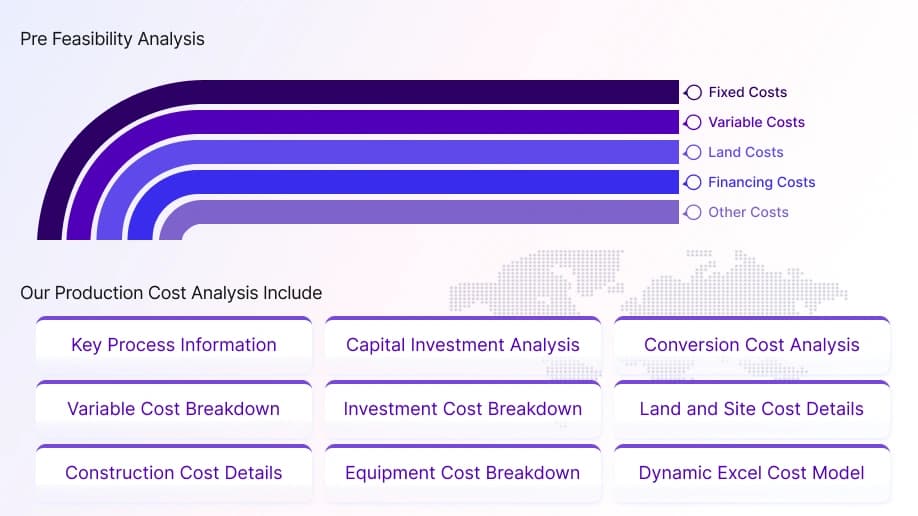
The report provides a detailed production cost analysis for yogurt. It encompasses all critical aspects necessary for yogurt production, including the cost of yogurt production, yogurt production cost model, and other extensive details. These encompass production processes, raw material requirements, utility requirements, infrastructure needs, machinery and technology requirements, manpower requirements, packaging requirements, transportation requirements, and more.
Yogurt is a milk-based product that is majorly processed and produced in the food industry. It is a fermented dairy product available in various flavors, including plain, sour, savory, and sweet notes. It can be consumed directly or can be taken with other delicacies.
It has a creamy texture and, hence, is used as a dressing or spread with other delicacies. It is good for gut health and is rich in nutrient content. It is a palate-friendly dairy product that can be taken to improve lactose digestion in individuals. The addition of yogurt to one’s diet if suffering from lactose intolerance can cover the required nutrients lacking before. Lactose, present in yogurt, can be digested more efficiently than the other dairy sources and, hence, is treated as one of the best dairy alternatives taken by lactose intolerants as well.
The market for yogurt is chiefly governed by the demand observed for dairy protein and nutrients among consumers. Its consumption as an easy-to-digest, flavourful dairy alternative boosts its demand in the food industry. Yogurt is a fermented milk-based product that can also be consumed by people suffering from lactose intolerance. Hence, its consumption among individuals increases, increasing its demand in the market. Industrial yogurt procurement is determined by various factors.
Factors including its demand in the food market as a dairy product, along with its production cost, availability of milk, and market prices, impact its procurement. The shifts in the demand from consumers for yogurt in the food industry, along with the changes in its prices and supply, have a crucial role and govern its procurement across the world.
Raw Material for Yogurt Production
According to the yogurt production cost report, the key raw material for yogurt production includes fresh milk.
Production Process of Yogurt
The extensive yogurt production cost report consists of the following industrial production process:
- From Fresh Milk: The production process of yogurt comprises multiple steps. Initially, fresh milk is processed through pasteurization, followed by refrigeration, filtration, homogenization, sterilization, and fermentations. The fresh milk begins being processed through these steps, yielding yogurt as the final product.
Yogurt is a dairy product obtained by processing fresh milk through pasteurization and fermentation. It is a milk product available in various tastes, including neutral, sweet, savory, and sour. It has a creamy texture and can be available in different flavors such as berries, mango, pain yogurts, and more.
It is basically composed of s 81% water, 9% protein, 5% fat, 4% carbohydrates, and 4% sugar. The moisture content of yogurt is 85.05 %. It contains 85.05 % total solids. The PH level of yogurt is 3.96, and its acidity is 0.75%. It is generally made by bacterial fermentation of milk. Yogurt cultures are the bacteria that are used to manufacture yogurt. Lactic acid, which is created when these bacteria ferment lactose, interacts with milk protein to give yogurt its distinct texture and acidic flavor.