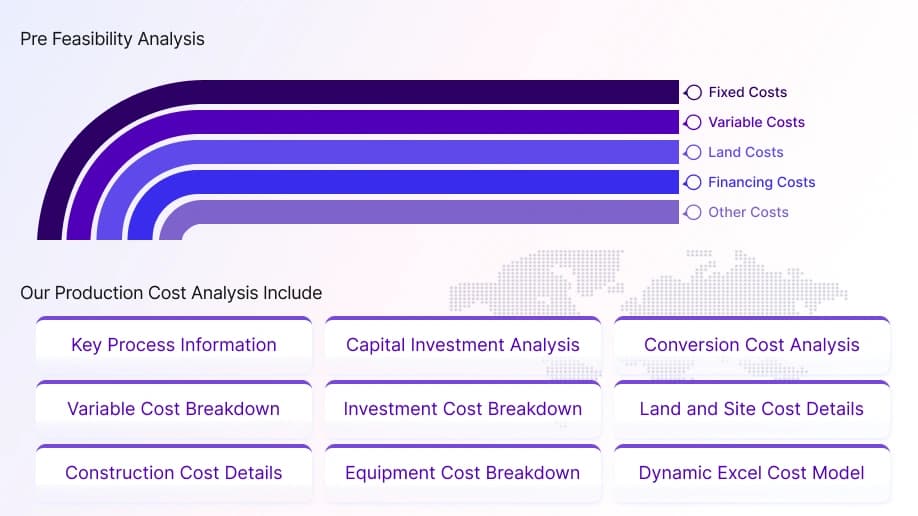
The report provides a detailed analysis essential for establishing a Yohimbine Hydrochloride production plant. It encompasses all critical aspects necessary for Yohimbine Hydrochloride production, including the cost of Yohimbine Hydrochloride production, Yohimbine Hydrochloride plant cost, Yohimbine Hydrochloride production costs, and the overall Yohimbine Hydrochloride production plant cost. Additionally, the study covers specific expenditures associated with setting up and operating a Yohimbine Hydrochloride production plant. These encompass production processes, raw material requirements, utility requirements, infrastructure needs, machinery and technology requirements, manpower requirements, packaging requirements, transportation requirements, and more.
Yohimbine hydrochloride is an indole alkaloid derived from the bark of Pausinystalia yohimbe and used as an adrenergic drug. It works by increasing blood flow by blocking certain receptors in the body that help in erectile dysfunction treatment. It is utilized in weight loss supplements for as it works as alpha2 adrenoreceptor blockade that mechanism leads to fat burning. Yohimbine hydrochloride is studied for its usage in treating post-traumatic stress disorder (PTSD), myocardial dysfunction, and inflammatory disorders. It is also employed as a veterinary medicine for sedation in animals. It may have some side effects that include anxiety, Increased heart rate, High blood pressure, and Gastrointestinal issues.
The market for Yohimbine Hydrochloride is driven by several factors. Its use as a natural and herbal medicine for the treatment of erectile dysfunction contributes to its demand. Its utilization in weight-loss formulations with potential health benefits and weight management makes it a popular product. Increasing awareness of mental wellness makes it a sought-after product as a natural. Overall, the industrial Yohimbine Hydrochloride procurement is influenced by its applications in treating erectile dysfunction, weight management, and mental wellness, alongside the increasing accessibility through online retail and drug stores, growing awareness of its health benefits, efficient supply chains, and ongoing research.
Raw Material for Yohimbine Hydrochloride Production
According to the Yohimbine Hydrochloride production plant project report, the key raw materials used in the production of Yohimbine Hydrochloride include Pausinystalia Yohimbe bark-Ethanol- Hydrochloric Acid.
Production Process of Yohimbine Hydrochloride
The extensive Yohimbine Hydrochloride production cost report consists of the following major industrial production process:
- From Pausinystalia Yohimbe bark, Ethanol, Hydrochloric Acid: The industrial production process for Yohimbine Hydrochloride involves several steps. First, the Pausinystalia Yohimbe tree’s bark is ground into a fine powder that is mixed with ethanol to extract yohimbine. After this, the crude extract goes through purification, followed by the addition of hydrochloric acid, forming yohimbine hydrochloride. The precipitate is filtered, washed, and dried to obtain pure Yohimbine Hydrochloride.
Yohimbine hydrochloride white to light yellow crystalline powder. Its molecular formula is C21H26N2O3·HCl, and it has a molecular weight of 390.90 g/mol. Its melting point is at 302 °C has a specific rotation of +100 to +105 degrees. It is soluble in water, chloroform, and ethanol but slightly soluble in ether. It has a neutral pH in aqueous solutions and a purity greater than 99.0%. It is kept in a dark place, below 15 ° to protect it from light and heat to maintain its stability. These physical and chemical properties that very important for its pharmaceutical applications.