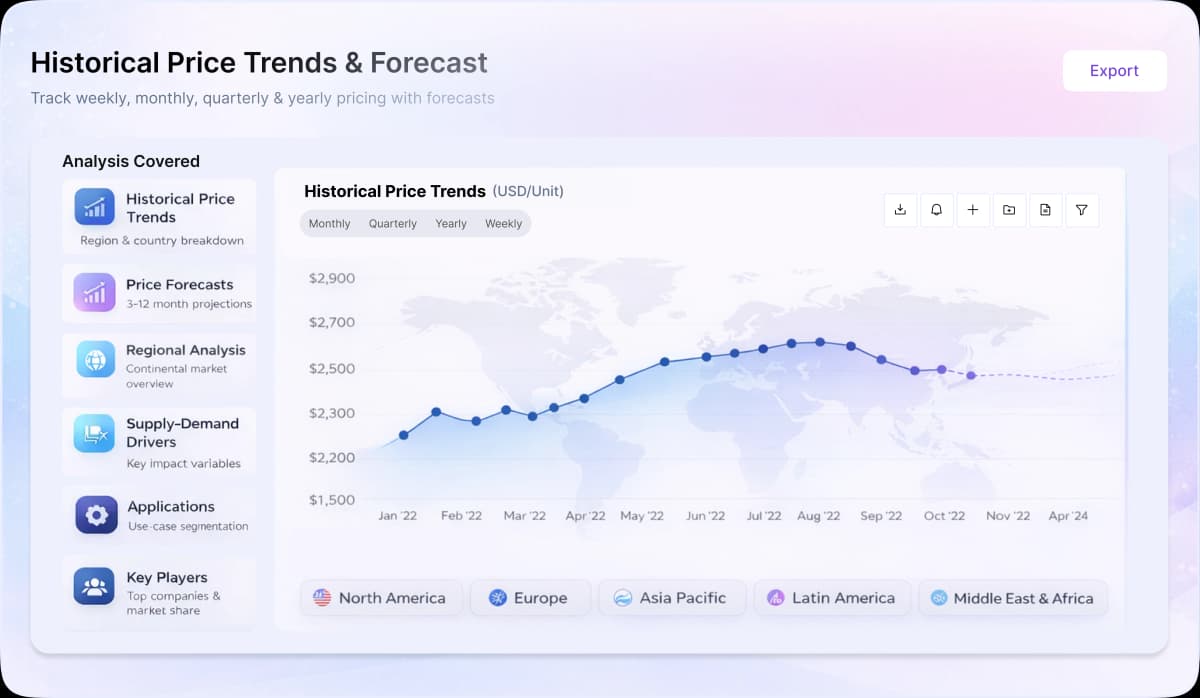
Need latest Fuel Mixtures prices?
Get real-time price assessments, periodic trends, forecasts and price driver insights across key global markets.
Unlock Price Insights NowOur Clients
Asia
In the first half of 2025, Asia experienced varying fuel mixture trends shaped by national energy policies and global market pressures. In Southeast Asia, countries like Cambodia started shifting towards liquified natural gas (LNG) for power generation. However, as a new entrant with limited leverage, Cambodia faced high LNG import costs. LNG-fired electricity remained significantly more expensive than solar or coal, impacting domestic energy pricing.
Meanwhile, Indonesia increased its biodiesel blending mandate, pushing more palm oil into fuel production. This boosted demand for biodiesel feedstock and added some upward pressure on biofuel-related prices. India’s growing ethanol blending ambitions, aiming for a 30% blend, added strain on sugar availability, pushing sugar and ethanol prices higher. These transitions reflected Asia’s ongoing shift toward cleaner fuels, but they also highlighted cost challenges tied to reliance on imports and agricultural inputs.
Europe
Europe’s fuel mixture prices remained relatively stable in early 2025, despite seasonal demand increases during the colder months. The EU’s gas and electricity markets proved resilient. Renewable energy, especially solar and hydro, reached record output levels and helped ease pressure on power prices. While gas demand rose in Q4’24, it plateaued in early 2025, stabilizing prices.
The region saw modest increases in LNG and pipeline imports, with prices rising slightly due to winter needs. Germany’s new coalition pact to add gas capacity aimed to stabilize electricity prices further, though the long-term impact remains to be seen. Overall, fuel mix prices in Europe were supported by integrated markets, strong renewables, and moderate fossil fuel use.
North America
In North America, Brazil took a major step by introducing a 30% ethanol blend (E30) in gasoline. This shift was intended to reduce fuel prices and dependency on imports. Early indicators in H1’25 suggested that the E30 blend helped bring down pump prices slightly, supported by strong local ethanol production.
The move also spurred investment in biofuel infrastructure and reduced volatility from international oil price swings. In the U.S., steady biofuel blending and strong domestic energy supply helped maintain relative price stability for mixed fuels, despite global fluctuations.
Get real-time price assessments, periodic trends, forecasts and price driver insights across key global markets.
Unlock Price Insights NowOur Clients

Turn price intelligence into action with the Procurement Resource Database. Log in or subscribe to unlock live price trends, historical charts, supplier databases, cost curves, and analyst-backed insights across chemicals, agriculture, energy, packaging, and more. Use these tools to benchmark your contracts, plan budgets with confidence, and stay ahead of market moves on every product you buy.

0
+Products
0
+Regions
0
+Subscriptions
Asia
Throughout 2024, fuel mixture prices in Asia experienced significant fluctuations, largely mirroring crude oil trends. The year began with rising prices as supply disruptions from Middle East conflicts and Red Sea piracy attacks created logistical challenges.
The previous advantage of discounted Russian oil had completely disappeared, putting additional pressure on markets. By mid-year, Chinese demand weakened considerably due to economic headwinds, growing EV adoption, and expansion of their high-speed rail network. This fundamental shift in Asian consumption patterns continued into the latter half of 2024, with fuel mixture prices showing persistent weakness despite occasional rebounds driven by geopolitical tensions.
Europe
European fuel mixture markets faced a tumultuous year in 2024. The first quarter saw escalating prices as Ukraine's drone attacks on Russian refineries disrupted regional supply chains. Despite these challenges, major European oil companies continued focusing on increasing production rather than shifting to renewable investments. By mid-year, prices stabilized somewhat but remained volatile due to ongoing Russia-Ukraine conflicts. The latter half of 2024 brought declining trends as oversupply concerns emerged, with Russian oil flooding markets at competitive rates. The European Central Bank's interest rate reductions helped ease inflation pressures but did little to boost fuel mixture demand in the region.
North America
North American fuel mixture markets displayed a rollercoaster pattern throughout 2024. The year began with rising prices amid global supply disruptions, but this trend shifted dramatically by mid-year. Record-breaking domestic oil production, particularly from the Permian Basin, created downward pressure on prices. While production efficiency improved, refiners struggled with weakening margins and unexpected increases in gasoline and distillate stockpiles. The Federal Reserve's cautious approach to interest rate cuts further contributed to price stabilization in the latter half of the year, creating a subdued market environment despite production strength.
Fuel Mixtures simply refer to a combination or a mix of different types of fuels. For instance, ethanol fuel mixtures, which are the blend of ethanol and other fuel-type, are widely used around the world. Anhydrous ethanol is generally mixed with gasoline for use in gasoline engines.

Internal combustion engines (ICEs), Automobiles, Light-duty trucks, Motorcycles, Machinery
Shell Corporation, Total S.A, Jesons Industries Limited, Kevin India Co
CurrencyUS$ (Data can also be provided in local currency)
Supplier Database AvailabilityYes
Customization ScopeThe report can be customized as per the requirements of the customer
Post-Sale Analyst Support360-degree analyst support after report delivery
Note: Our supplier search experts can assist your procurement teams in compiling and validating a list of suppliers indicating they have products, services, and capabilities that meet your company's needs.
Our Price Analysis Methodology

Experience how Procurement Resource transforms raw material price data into clear, decision ready intelligence. Optimise your performance with reliable, expert market data and analysis. Schedule your demo today to experience a live walk-through where our experts will showcase interactive price charts, forecasted prices, and insights driving the prices for your key commodities, tailored to your workflows. Contact us now!
Our Team will be happy to assist you
We are just a text away
Still Need Help ?
Unlock full access to Procurement Resource's price databases, interactive charts, and short-term forecasts for thousands of commodities. Elevate your sourcing decisions by comparing prices across regions, downloading historical data, and layering in analyst-backed insights, all with our flexible plans that scale as your portfolio grows.
Still have any Questions
Contact Us


Price Trend Dashboard - What's Included
Price trends across a diverse portfolio of categories and products, spanning board to niche chemicals
Coverage extendable to grade-specific chemicals based on procurement requirements
Regular price tracking supported by robust historical datasets
News, policy updates, and key market drivers impacting price movements
Short-term and long-term price outlooks and forecasts
Supply–demand dynamics and capacity-driven market analysis