Asia
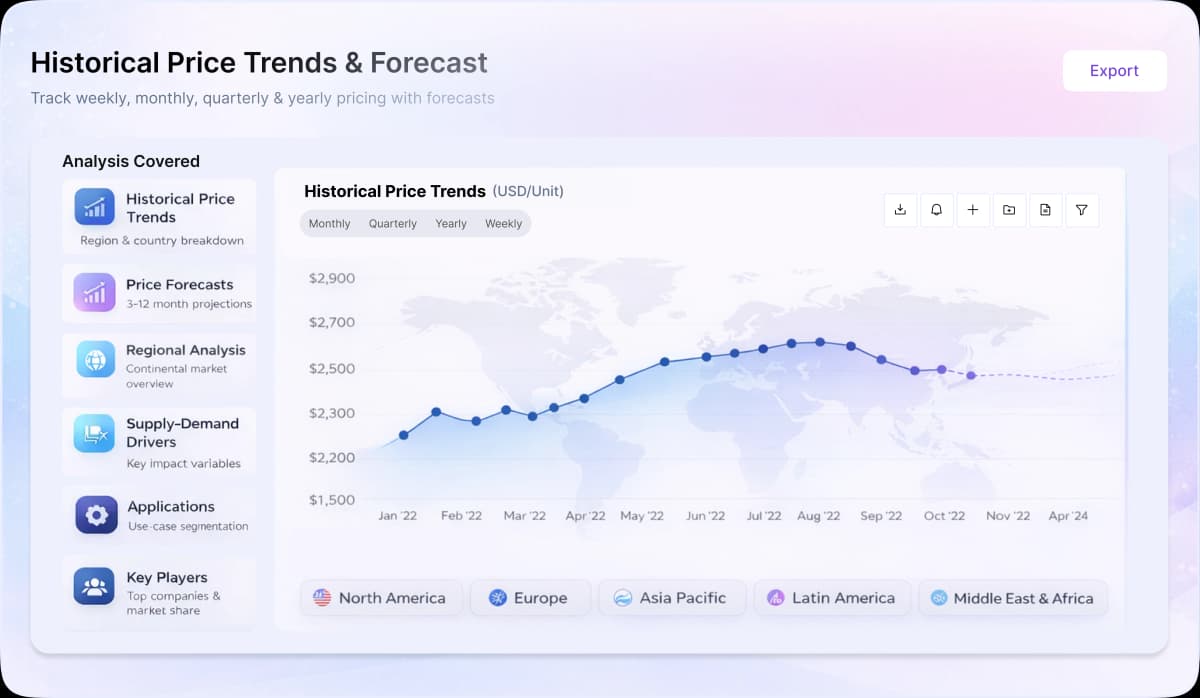
During the second half of 2024, the linear alkylbenzene sulfonate market in Asia showed mostly a weak price trend. Demand from the detergents and cleaning products sector slowed down after the summer season, which affected buying sentiment. Buyers remained cautious and preferred short-term purchases rather than building inventories. At the same time, supply in the region stayed sufficient, which further limited any upward movement in prices. Falling feedstock costs, supported by lower crude oil and LAB values, eased production costs for manufacturers. As a result, sellers lowered offers to stimulate demand, especially in China. Market activity stayed muted toward the year end, with seasonal slowdown and year-end destocking adding pressure to the market.
Europe
In Europe, linear alkylbenzene sulfonate prices followed a downward yet somewhat stable trend during H2’24. Demand from downstream surfactant and detergent industries weakened gradually, especially as the year moved closer to winter. Buyers reduced procurement volumes due to adequate inventories and uncertain consumption outlook. Declining feedstock costs helped producers manage margins, but intense competition and sufficient supply kept prices under pressure. Trade activities were also affected by broader economic concerns and cautious purchasing behaviour. Logistical challenges and geopolitical issues created some uncertainty, but they did not translate into strong price support.
North America
The North American linear alkylbenzene sulfonate market remained relatively more stable compared to other regions, though demand softened in the second half of 2024. Consumption declined but supply tightness and logistical disruptions supported market balance. Labor issues in Canada affected supply chains and added uncertainty to product availability, which helped prevent sharp price declines. Producers focused on managing inventories and adjusted export strategies due to strong international competition. Despite weaker demand, prices largely held steady as suppliers avoided aggressive discounts.