Lithium Carbonate Price Trend Analysis 2026: Price Drivers, Market Insights, Latest News, Supply Demand Analysis & Historical Prices

Udeesha Tomar profile photo
Written ByUdeesha Tomar

Procurement Resource Database

Laptop screen

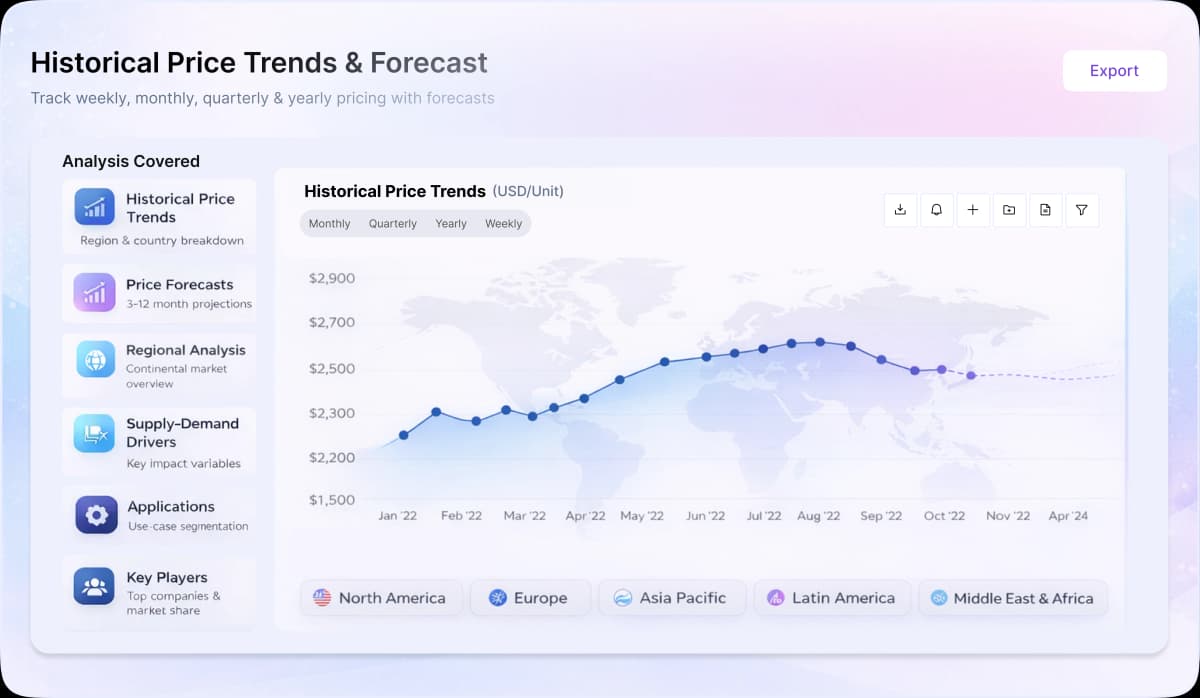
Turn price intelligence into action with the Procurement Resource Database. Log in or subscribe to unlock live price trends, historical charts, supplier databases, cost curves, and analyst-backed insights across chemicals, agriculture, energy, packaging, and more. Use these tools to benchmark your contracts, plan budgets with confidence, and stay ahead of market moves on every product you buy.

Lithium Carbonate Dashboard Inclusions

Lithium Carbonate Price Dasboard

0

+

Products

0

+

Regions

0

+

Subscriptions

Asia

The fourth quarter witnessed appreciation in Asian lithium carbonate markets, with Chinese pricing dynamics establishing the directional tone for the region. Supply constraints from mining license enforcement actions in Jiangxi province continued affecting availability, while the persistent closure of a major mining operation provided ongoing market support. Market intelligence indicated persistent shortages in key mining regions, with uncertainty surrounding near-term production restoration at suspended facilities, maintaining supply tightness.

Energy storage applications emerged as the principal demand driver, with order backlogs extending well into the following year and shipment volumes establishing new quarterly records. New energy vehicle production maintained steady growth trajectories, with penetration rates reaching historically elevated levels in major markets. The combination of strengthening demand fundamentals and constrained supply created conditions for progressive price gains throughout the period. Inventory reduction trends continued, with weekly drawdowns supporting price stability at elevated levels.

Battery material suppliers responded to rising input costs by announcing processing fee adjustments in response to market conditions. Futures market regulatory adjustments introduced temporary volatility during the period, though underlying supply tightness and strong downstream consumption prevented sustained retracement from elevated price levels.

Europe

European lithium carbonate markets tracked Asian pricing trends throughout the quarter, with import costs reflecting the progressive appreciation observed in primary producing regions. Demand from battery manufacturing facilities remained steady as electric vehicle production schedules maintained consistent consumption patterns. Supply availability followed patterns established by Asian production dynamics, with procurement lead times extending as global supply tightness became increasingly pronounced. Strategic inventory management by downstream consumers reflected expectations of continued market firmness, while sourcing strategies adapted to accommodate rising procurement costs and limited spot availability.

North America

North American markets mirrored Asian price movements, with procurement costs rising in line with global market developments. Sustained demand from domestic battery manufacturing operations and electric vehicle assembly facilities continued throughout the period, supported by ongoing capacity expansion initiatives. Supply availability remained constrained as global production limitations affected import flows, while battery material suppliers responded to rising input costs by announcing processing fee adjustments. Inventory drawdown trends observed globally were replicated in regional markets, contributing to sustained price support throughout the quarter.

About Lithium Carbonate

Lithium Carbonate is an inorganic salt heavily used in the production of metal oxides. It is a potent irritant when mixed with water. It is an essential medicine as it is used in the treatment of mood disorders. It is widely used in the manufacturing of lithium-ion batteries.

Lithium Carbonate Product Detail

Hs Code
283691
Chemical Formula

Li2CO3

Cas Number
554132
Molecular Weight
73.89 g/mol
Synonyms

Carbonic Acid lLithium Salt, Dilithium Carbonate

Supplier Database

Tianqi Lithium, Targray

Regional Coverage

Asia Pacific

China, India, Indonesia, Pakistan, Bangladesh, Japan, Philippines, Vietnam, Iran, Thailand, South Korea, Iraq, Saudi Arabia, Malaysia, Nepal, Taiwan, Sri Lanka, UAE, Israel, Hongkong, Singapore, Oman, Kuwait, Qatar, Australia, and New Zealand

Europe

Germany, France, United Kingdom, Italy,Spain, Russia, Turkey, Netherlands, Poland, Sweden, Belgium, Austria, Ireland Switzerland, Norway, Denmark, Romania, Finland, Czech Republic, Portugal and Greece

North America

United States and Canada

Latin America

Brazil, Mexico, Argentina, Columbia, Chile, Ecuador, and Peru

Africa

South Africa, Nigeria, Egypt, Algeria, Morocco

CurrencyUS$ (Data can also be provided in local currency)

Supplier Database AvailabilityYes

Customization ScopeThe report can be customized as per the requirements of the customer

Post-Sale Analyst Support360-degree analyst support after report delivery

Note: Our supplier search experts can assist your procurement teams in compiling and validating a list of suppliers indicating they have products, services, and capabilities that meet your company's needs.

Lithium Carbonate Production Process

Lithium carbonate is manufactured via brine. The impurities such as boron and magnesium is removed from the brine which is then precipitated by adding sodium carbonate. The precipitate obtained is subjected to purification process thereby giving lithium carbonate.

Frequently Asked Questions

During Q1 2026, lithium carbonate prices showed an upward trend across most tracked regions. In China, prices showed a 4.93% increase from January to March, while in India they witnessed a 4.66% increase, in the USA a 4.92% increase, in Germany a 4.72% increase, and in Australia a 4.63% increase. The rise was supported by battery-sector restocking, firmer EV demand expectations, and improved market sentiment after earlier oversupply pressure.
The lithium carbonate outlook for 2026 remains steady to firm, supported by demand from electric vehicles, grid-scale batteries, consumer electronics, ceramics, glass, and energy storage systems. Prices may remain volatile because supply growth from brine, hard-rock, and direct lithium extraction projects is still expanding. However, stronger battery demand and policy support for critical minerals may help absorb part of the additional supply.
The main factors affecting lithium carbonate prices in Q1 2026 were battery-sector demand, restocking by cathode producers, and supply discipline after weak prices in the previous period. EV and energy storage demand supported buying, while some producers remained cautious about output expansion. Feedstock availability from spodumene and brine operations also influenced production costs, especially in China and other battery-material processing hubs.
Major lithium-producing countries include Australia, China, Chile, Argentina, Zimbabwe, Brazil, Canada, Mali, and the United States. Australia leads hard-rock lithium supply, while Chile and Argentina remain important brine-based producers. Key companies include Albemarle, SQM, Ganfeng Lithium, Tianqi Lithium, Rio Tinto, Pilbara Minerals, Mineral Resources, Lithium Americas, Ioneer, and Arcadium Lithium assets now held by Rio Tinto.
In Texas, Select Water Solutions and LibertyStream planned a staged buildout of commercial lithium carbonate production units using produced water streams, with the first Howard County facility designed to produce up to 1,000 tonnes per year of battery-grade lithium carbonate. This supports U.S. supply diversification and reduces reliance on imported processed lithium materials.
Lithium carbonate is produced from lithium-rich brines, spodumene concentrates, clay deposits, and emerging oilfield or geothermal brines. The value chain includes resource extraction, concentration, conversion, purification, precipitation, drying, packaging, and distribution. Brine routes use evaporation or direct lithium extraction, while hard-rock routes involve spodumene mining, concentration, roasting, leaching, purification, and conversion into battery-grade or industrial-grade lithium carbonate.
Lithium carbonate is mainly sold as battery-grade and industrial-grade material. Battery-grade lithium carbonate has higher purity and stricter impurity limits because it is used in cathode materials for lithium-ion batteries. Industrial-grade lithium carbonate is used in ceramics, glass, lubricating greases, aluminum processing, and specialty chemicals. Price differences are often linked to purity, particle size, impurity profile, and qualification requirements from battery manufacturers.
Lithium carbonate demand is mainly driven by electric vehicles, lithium-ion batteries, grid storage, consumer electronics, ceramics, glass, lubricating greases, air treatment, medical uses, and specialty chemicals. Battery applications dominate consumption because lithium carbonate is used to make cathode materials such as lithium iron phosphate and other lithium-based compounds. Energy storage growth is also becoming an important demand driver.
A significant policy development affecting lithium markets in 2026 was the continued implementation of critical minerals strategies across major economies, including the United Kingdom’s Vision 2035 Critical Minerals Strategy. The framework identifies lithium as a strategically important mineral for electric vehicles, battery storage, and clean-energy technologies while supporting domestic processing, recycling, and supply-chain diversification. Such initiatives strengthened long-term demand expectations and investment confidence across the lithium value chain, although their direct impact on spot lithium carbonate prices remained limited in the near term.
Procurement Resource employs a structured methodology combining primary research, secondary market data, analytical models, and validation processes to assess lithium carbonate prices and trends. Price evaluations incorporate supply-demand dynamics, feedstock movements, trade flows, and value chain analysis, supported by continuous market monitoring to ensure accurate and reliable insights.

About the Author

Udeesha Tomar profile photo

Udeesha Tomar

AVP - Strategy and Solutions

Leading procurement research solutions across chemicals, materials, and food & beverages, with expertise in price forecasting and market analytics.

Our Price Analysis Methodology

Schedule Demo

Schedule a demo

Experience how Procurement Resource transforms raw material price data into clear, decision ready intelligence. Optimise your performance with reliable, expert market data and analysis. Schedule your demo today to experience a live walk-through where our experts will showcase interactive price charts, forecasted prices, and insights driving the prices for your key commodities, tailored to your workflows. Contact us now!

Our Team will be happy to assist you

We are just a text away

+1

Still Need Help?

Europe & Africa

+44 7573 171117

[email protected]

USA & Canada

+1 307 363 1045

[email protected]

APAC

+91 8850629517

[email protected]

Other Related Reports

Lithium Hydroxide Production via Lithium and Water

The study offers a detailed cost analysis of Lithium Hydroxide Production via Lithium and Water. In addition, the report incorporates the manufacturing process with detailed process and material flow, operating costs along with financial expenses and depreciation charges.

Lithium Carbonate Production from Alpha Spodumene

The study offers a detailed cost analysis of Lithium Carbonate Production from Alpha Spodumene. In addition, the report incorporates the manufacturing process with detailed process and material flow, operating costs along with financial expenses and depreciation charges.

Unlock full access to Procurement Resource's price databases, interactive charts, and short-term forecasts for thousands of commodities. Elevate your sourcing decisions by comparing prices across regions, downloading historical data, and layering in analyst-backed insights, all with our flexible plans that scale as your portfolio grows.

Still have any Questions

Contact Us
Mastercard
Wire
VISA
Stripe

Related News

View All

Why Procurement Database

Commodity Market Intelligence

Commodity Market Intelligence

Track prices, market movements, supply-demand dynamics, and industry developments across hundreds of commodities through a centralized intelligence platform built for informed procurement decisions.

Price Forecasts & Market Outlooks

Price Forecasts & Market Outlooks

Understand market fluctuations using analyst-backed forecasts, historical pricing patterns, and evolving industry trends to strengthen sourcing strategies and budget planning.

Cost & Procurement Optimization

Cost & Procurement Optimization

Leverage cost models, pricing benchmarks, and procurement insights to evaluate purchasing opportunities, improve negotiations, and enhance operational efficiency.

Global & Regional Market Insights

Global & Regional Market Insights

Access region-specific price trends, trade activities, capacity changes, and supply chain developments influencing commodity markets worldwide.

1/4