Methanol Price Trend Analysis 2026: Market Insights, Supply Demand Analysis, Price Drivers, Latest News & Historical Prices

Pragati Agarwal profile photo
Written ByPragati Agarwal

Procurement Resource Database

Laptop screen

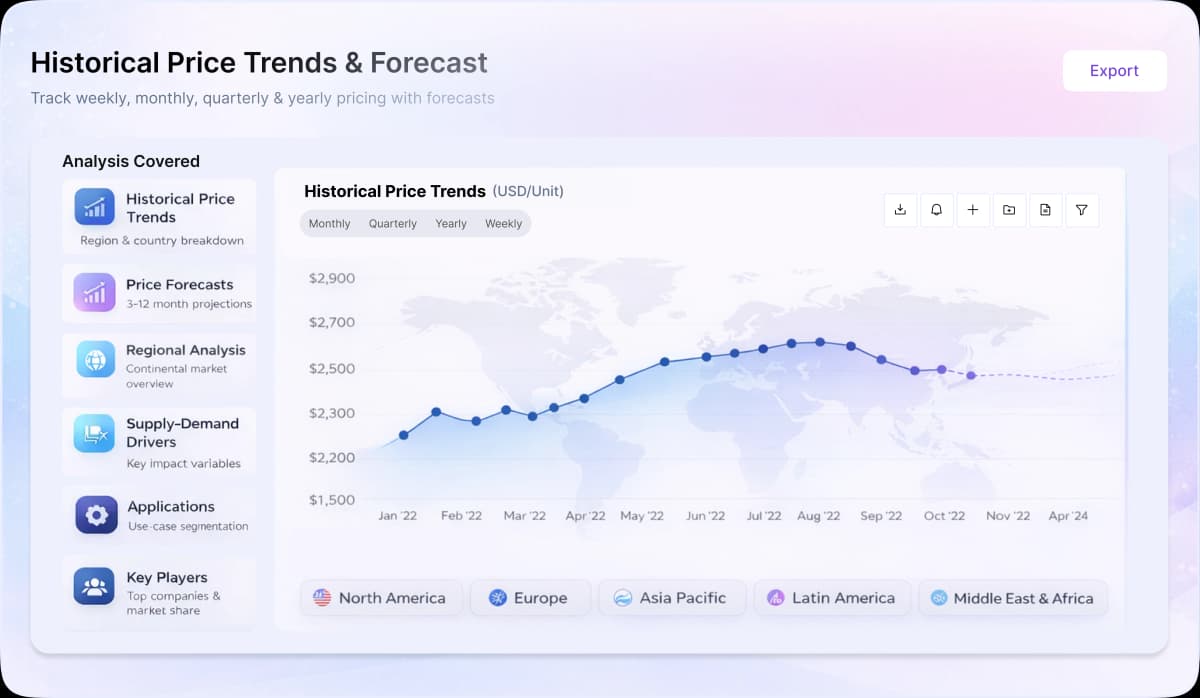
Turn price intelligence into action with the Procurement Resource Database. Log in or subscribe to unlock live price trends, historical charts, supplier databases, cost curves, and analyst-backed insights across chemicals, agriculture, energy, packaging, and more. Use these tools to benchmark your contracts, plan budgets with confidence, and stay ahead of market moves on every product you buy.

Methanol Dashboard Inclusions

Methanol Price Dasboard

0

+

Products

0

+

Regions

0

+

Subscriptions

  • Global methanol prices showed sharp volatility, with initial stability followed by a strong surge due to supply disruptions linked to the Iran war and Strait of Hormuz blockage, tightening global trade flows.
  • Feedstock conditions remained mixed, as stable coal costs in China were offset by sharp energy and logistics disruptions globally, raising production costs and limiting supply availability.
  • Downstream demand remained uneven, with weak margins in acetic acid and MTBE sectors early on, while later supply concerns and restocking supported consumption across olefins and chemical derivatives.

Asia

In Asia, methanol prices strengthened as supply concerns outweighed earlier weakness. In China, prices were about ~RMB 2.32/kg (Spot FD) in January and around ~RMB 2.75/kg in March, up by about 18.46%. Early in the quarter, East China port prices moved narrowly because foreign vessel unloading increased slightly, port inventories accumulated, and coastal trading weakened ahead of Spring Festival. Later, the market turned firm as the Iran war disrupted imports through the Strait of Hormuz. Iran is the world’s second-largest methanol producer and China is its primary buyer, so the threat to Iranian supply tightened port availability and supported a supply-driven rise. In India, prices were about ~INR 28.65/kg (Spot) in January and around ~INR 35.10/kg in March, up by about 22.48%. The increase was driven by uncertain arrivals from the Middle East and tighter spot availability, which pushed buyers to secure alternative cargoes. These disruptions also supported downstream olefins-linked sentiment.

Europe

In the European market, methanol prices rallied because of higher energy and logistics costs resulting from the Middle East crisis and reduced movement through the Strait of Hormuz. Higher costs of key raw materials and transport costs led to sharp rallies on the part of key producers, with buyers stepping up purchases. The volumes of trading increased significantly in March as traders rushed to hedge themselves against the coming rally.

North America

Prices in North America were largely sustained on account of reduced availability in the global markets rather than a supply shock in the local market. Disruptions at the Strait of Hormuz meant that there was lower trading capability in the global methanol market, which helped boost exports from the Atlantic Basin. Demand from derivatives remained mixed.

About Methanol

Methanol, a polar solvent, is a colourless, reasonably volatile liquid. It has a faintly sweet pungent odour like that of ethyl alcohol. It can be thoroughly dissolved in water. The vapours of Methanol are slightly heavier than air.

Methanol Product Detail

Chemical Formula

C10H20O

Molecular Weight
32.04 g/mol
Industrial Uses

Antifreeze agent, Solvent, Fuel, Denaturant for Ethanol, Biodiesel

Synonyms

67-56-1, Methyl alcohol, Methyl alcohol, Wood alcohol, Wood spirit 

Supplier Database

Zagros Petrochemical Co., Sichuan Lutianhua Co., Ltd., Methanex Corporation, Ar-Razi Saudi Methanol Co. (SABIC), Yankuang Group, Proman AG

Regional Coverage

Asia Pacific

China, India, Indonesia, Pakistan, Bangladesh, Japan, Philippines, Vietnam, Iran, Thailand, South Korea, Iraq, Saudi Arabia, Malaysia, Nepal, Taiwan, Sri Lanka, UAE, Israel, Hongkong, Singapore, Oman, Kuwait, Qatar, Australia, and New Zealand

Europe

Germany, France, United Kingdom, Italy,Spain, Russia, Turkey, Netherlands, Poland, Sweden, Belgium, Austria, Ireland Switzerland, Norway, Denmark, Romania, Finland, Czech Republic, Portugal and Greece

North America

United States and Canada

Latin America

Brazil, Mexico, Argentina, Columbia, Chile, Ecuador, and Peru

Africa

South Africa, Nigeria, Egypt, Algeria, Morocco

CurrencyUS$ (Data can also be provided in local currency)

Supplier Database AvailabilityYes

Customization ScopeThe report can be customized as per the requirements of the customer

Post-Sale Analyst Support360-degree analyst support after report delivery

Note: Our supplier search experts can assist your procurement teams in compiling and validating a list of suppliers indicating they have products, services, and capabilities that meet your company's needs.

Methanol Production Processes

  • Production of Methanol via Syn Gas; and via Natural Gas

The production process of Methanol starts from syn gas. The process requires proper conditions such as high pressure and moderate temperatures where carbon monoxide and hydrogen react over a catalyst such as a mixture of copper and zinc oxides to produce methanol.

Frequently Asked Questions

During Q1 2026, methanol prices increased sharply in both India and China. In India, methanol prices showed a ~22.4% increase from January to March 2026, while in China they witnessed a ~31.77% increase during the same period. The rise was driven by tighter Middle East supply, higher freight costs, disrupted import flows, and stronger restocking from downstream chemical buyers.
Quarter-on-quarter, the average methanol price in India recorded a ~1.9% increase in Q1 2026 compared with Q4 2025, while in China the average price witnessed a ~17.7% increase over the same period. The stronger Q-o-Q rise in China reflected tighter import availability, reduced port inventories, and stronger methanol-to-olefins buying compared with the previous quarter.
The methanol outlook for 2026 remains firm and volatile, with prices expected to stay sensitive to Middle East supply, Iranian cargo availability, natural gas costs, coal-based production economics, and shipping conditions. China’s MTO demand and India’s import dependence will remain important drivers. Prices may ease if logistics normalize, but supply risks and energy-cost pressure could keep the market elevated.

The main factors affecting methanol prices in Q1 2026 were disrupted import supply and higher energy-linked costs. Middle East shipping uncertainty tightened trade flows into Asia, while natural gas and coal-related production costs supported higher offers. Stronger restocking from MTO, formaldehyde, acetic acid, and MTBE buyers further lifted prices in India and China.

Major methanol markets include China, India, the United States, Saudi Arabia, Iran, Trinidad and Tobago, Malaysia, Oman, Qatar, Russia, and the Netherlands. China is the largest consuming market, while the Middle East remains a key export region. Major companies include Methanex, SABIC, Proman, Zagros Petrochemical, PETRONAS Chemicals, Celanese, Mitsubishi Gas Chemical, BASF, and Yankuang Energy.
In January 2026, Assam Petro-Chemicals Ltd signed an MoU with Deendayal Port Authority to establish a 150 TPD e-methanol facility at Kandla Port, Gujarat. The project supports India's green shipping ambitions and expands domestic low-carbon methanol production capacity. The development highlights growing investment in alternative marine fuels and emerging demand for renewable methanol in transportation and industrial applications.
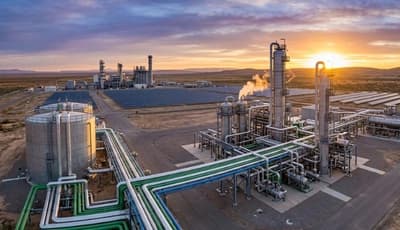
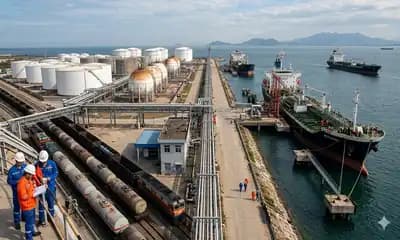
Methanol is mainly produced from natural gas, coal, or synthesis gas, while low-carbon routes use biomass, captured carbon dioxide, and green hydrogen. The value chain includes feedstock preparation, syngas generation, methanol synthesis, purification, storage, marine or rail transport, terminal distribution, and downstream conversion into formaldehyde, acetic acid, MTBE, MTO products, biodiesel, solvents, fuels, and olefins.
Methanol demand is mainly driven by formaldehyde, acetic acid, methanol-to-olefins, MTBE, dimethyl ether, biodiesel, solvents, plastics, paints, adhesives, construction materials, fuels, and marine fuel applications. In China, MTO demand is especially important because methanol is converted into ethylene and propylene. In India, formaldehyde, plywood, laminates, chemicals, and fuel blending support consumption.
A key 2026 policy development affecting methanol was India’s temporary full customs duty exemption on critical petrochemical products, including methanol, until June 30, 2026. The measure was introduced to ensure supply stability and shield domestic industries from West Asia-related supply disruptions. It supported Indian import availability, reduced landed cost pressure, and helped downstream users in chemicals, plastics, textiles, packaging, pharmaceuticals, and construction.
Procurement Resource employs a structured methodology combining primary research, secondary market data, analytical models, and validation processes to assess methanol prices and trends. Price evaluations incorporate supply-demand dynamics, feedstock movements, trade flows, and value chain analysis, supported by continuous market monitoring to ensure accurate and reliable insights.

About the Author

Pragati Agarwal profile photo

Pragati Agarwal

Senior Business Insights Analyst

Delivering price trend analysis and procurement market insights at Procurement Resource, with expertise in identifying commodity patterns, supporting purchasing strategies, and improving cost efficiency through actionable market intelligence.

Our Price Analysis Methodology

Schedule Demo

Schedule a demo

Experience how Procurement Resource transforms raw material price data into clear, decision ready intelligence. Optimise your performance with reliable, expert market data and analysis. Schedule your demo today to experience a live walk-through where our experts will showcase interactive price charts, forecasted prices, and insights driving the prices for your key commodities, tailored to your workflows. Contact us now!

Our Team will be happy to assist you

We are just a text away

+1

Still Need Help?

Europe & Africa

+44 7573 171117

[email protected]

USA & Canada

+1 307 363 1045

[email protected]

APAC

+91 8850629517

[email protected]

Other Related Reports

Vinegar Production from Methanol

This report provides the economy of producing Vinegar using a rhodium-catalysed carbonylation process. It is produced via methanol carbonylation using fossil-based CO.

Methanol Production from Syn gas

This process uses synthesis gas to produce methanol. The proper conditions required are high pressure and moderate temperature.

Acetic Acid Production from Methanol

The following report deals with the economics of the production of acetic acid via carbonylation of methanol using carbon monoxide as a source of carbonyl group.

Unlock full access to Procurement Resource's price databases, interactive charts, and short-term forecasts for thousands of commodities. Elevate your sourcing decisions by comparing prices across regions, downloading historical data, and layering in analyst-backed insights, all with our flexible plans that scale as your portfolio grows.

Still have any Questions

Contact Us
Mastercard
Wire
VISA
Stripe

Related News

View All

Why Procurement Database

Commodity Market Intelligence

Commodity Market Intelligence

Track prices, market movements, supply-demand dynamics, and industry developments across hundreds of commodities through a centralized intelligence platform built for informed procurement decisions.

Price Forecasts & Market Outlooks

Price Forecasts & Market Outlooks

Understand market fluctuations using analyst-backed forecasts, historical pricing patterns, and evolving industry trends to strengthen sourcing strategies and budget planning.

Cost & Procurement Optimization

Cost & Procurement Optimization

Leverage cost models, pricing benchmarks, and procurement insights to evaluate purchasing opportunities, improve negotiations, and enhance operational efficiency.

Global & Regional Market Insights

Global & Regional Market Insights

Access region-specific price trends, trade activities, capacity changes, and supply chain developments influencing commodity markets worldwide.

1/4