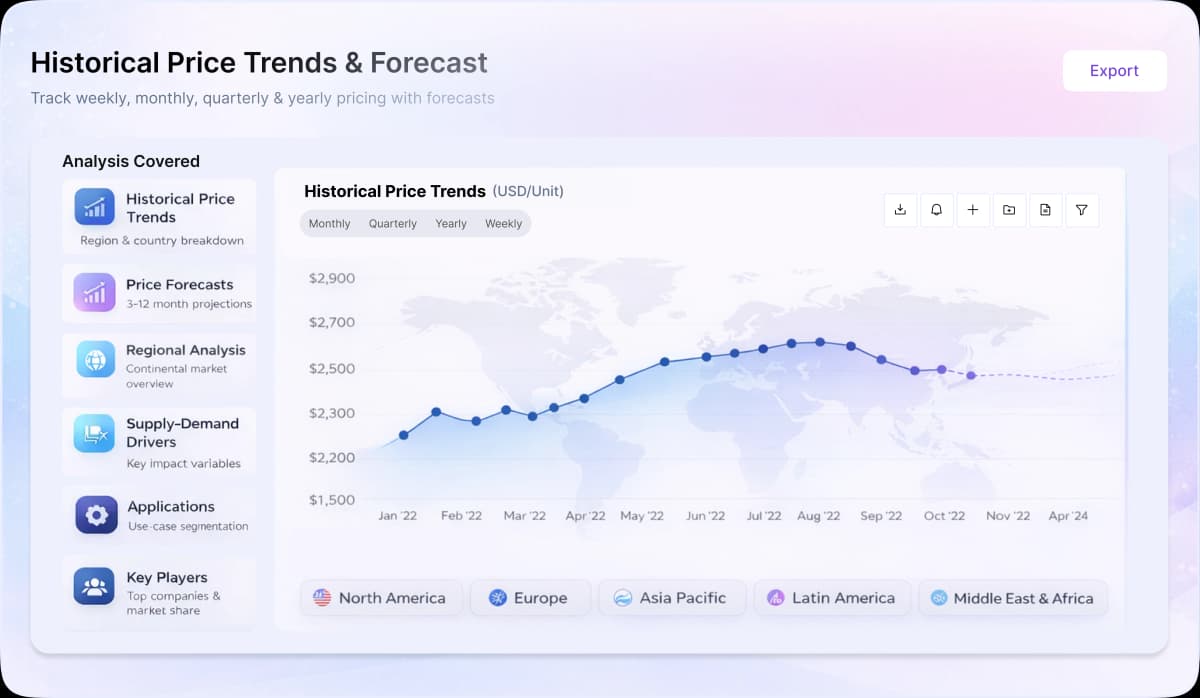
- Global neodymium pricing in Q2’26 showed a mild downward drift across major regions, driven by stable supply conditions and cautious procurement from magnet and EV-linked industries.
- Feedstock rare earth oxide availability remained steady, with consistent output from Chinese processing hubs keeping supply balanced and limiting upward pressure.
- Downstream demand from EV motors, wind turbines, and electronics remained stable but lacked strong expansion, leading to short-cycle buying and controlled inventories.
In the second quarter of 2026, the monthly average neodymium price in China was ~RMB 1,010.45/kg in April and ~RMB 992.14/kg in the subsequent month, showing a decrease of ~1.8%. Price movement remained slightly lower due to steady rare earth output and stable export flows from China, while magnet manufacturers maintained cautious procurement cycles amid balanced inventory levels. Meanwhile, the monthly average neodymium price in India was ~INR 14,187.30/kg in April and ~INR 13,931.98/kg in the subsequent month, showing a decrease of ~1.8%. Prices tracked global softness, with import parity easing due to steady availability from Asian suppliers and limited restocking from downstream magnet and electronics users. In North America, the monthly average neodymium price was ~USD 148,804.17/MT in April and ~USD 146,141.72/MT in the subsequent month, showing a decrease of ~1.8%. Stable imports and moderate demand from EV motor and renewable energy applications kept consumption steady without triggering supply tightness.