Potato retail prices ease in India
Government price monitoring data showed potato prices declined, indicating easing pressure for the commodity. The update covers essential food items tracked across multiple retail price monitoring stations.

Government price monitoring data showed potato prices declined, indicating easing pressure for the commodity. The update covers essential food items tracked across multiple retail price monitoring stations.
| Product | Region | Incoterm Basis | Price | Last Updated Month |
|---|---|---|---|---|
| Potato | China | FOB | USD 555.20/MT | August 2026 |
| Potato | India | FOB | USD 82.55/MT | August 2026 |
| Potato | USA | FOB | USD 221.43/MT | August 2026 |
| Potato | Brazil | FOB | USD 171.91/MT | August 2026 |
| Potato | Germany | FOB | USD 208.51/MT | August 2026 |
| Potato | China | FOB | USD 547.46/MT | July 2026 |
| Potato | India | FOB | USD 84.79/MT | July 2026 |
| Potato | USA | FOB | USD 219.23/MT | July 2026 |
| Potato | Brazil | FOB | USD 170.21/MT | July 2026 |
| Potato | Germany | FOB | USD 206.04/MT | July 2026 |
Stay updated with the latest Potato prices, historical data, and tailored regional analysis
In China, the average price of Potato rose slightly from ~USD 547.46/MT (FOB) in July to ~USD 555.20/MT in August, an increase of ~1.4%. In India, average prices fell about 2.6%, from ~USD 84.79/MT (FOB) to ~USD 82.55/MT in the first two of the third quarter. In China, prices held firm in July and August as the southwest crop entered its late selling phase and higher-priced processing potatoes arrived from the Central Plains. By late September, increased demand and sales in the southwest contributed to lowering the origin price, while cheaper imported starch weakened demand from starch makers. In India, a bumper harvest kept markets well supplied, and about 65% of stored potatoes in Agra were still in cold storage by late August, well behind normal withdrawal levels. Poor tuber quality reduced demand from processors, and higher transport costs linked to the Gulf conflict cut sales to other states and export markets.
Analyst Insight
According to Procurement Resource, in the near term, potato prices are likely to stay weak as large stocks and new-crop supply continue to weigh on the market.
Related Report
Need Latest Potato Prices?
Get real-time price assessments, periodic trends, forecasts and price driver insights across key global markets.
Our Clients


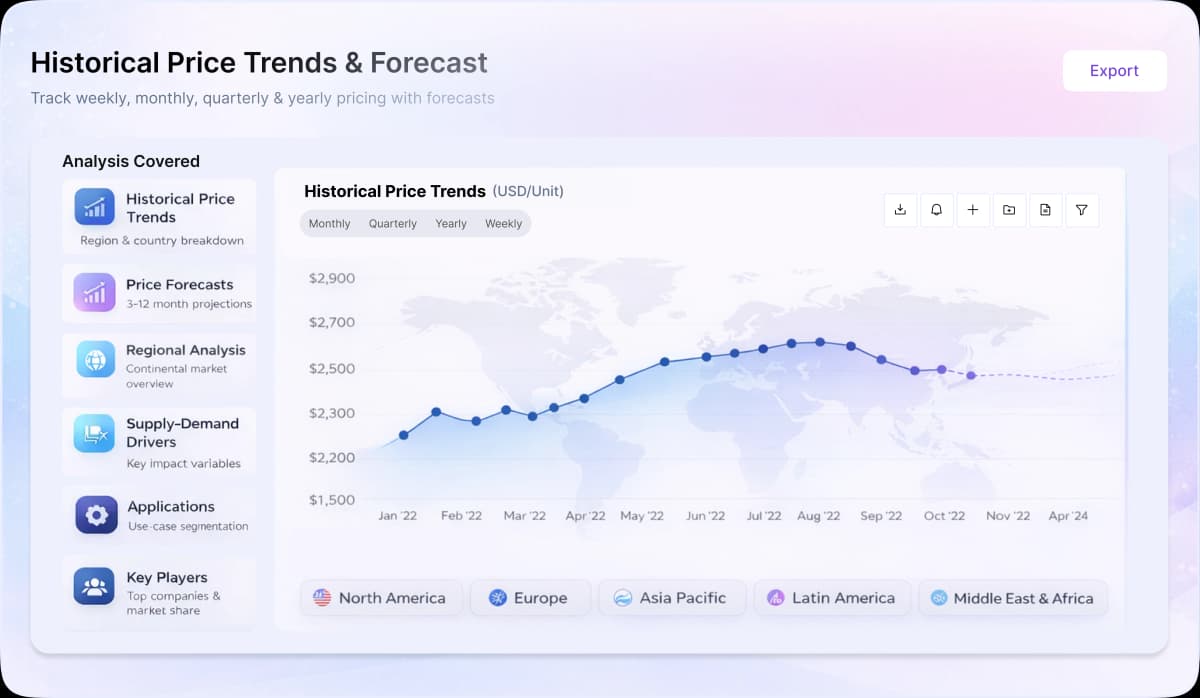
Turn price intelligence into action with the Procurement Resource Database. Log in or subscribe to unlock live price trends, historical charts, supplier databases, cost curves, and analyst-backed insights across chemicals, agriculture, energy, packaging, and more. Use these tools to benchmark your contracts, plan budgets with confidence, and stay ahead of market moves on every product you buy.
0
+Products
0
+Regions
0
+Subscriptions
In India, the monthly average Potato price was around INR 22.84/kg in April and around INR 24.11/kg in the subsequent month, showing an increase of ~5.6%. Similarly, in China, the monthly average Potato price was about RMB 1.62/kg in April and around RMB 1.69/kg in June, showing an increase of ~4.3%. Prices strengthened as arrivals remained steady, but quality variations from weather impacted marketable supply, while stable domestic consumption in fresh and processed segments supported firm buying activity. In the United States, the monthly average Potato price was around USD 239.85/MT in April and showed some positive movement supported by stability in processing requirements for frozen potatoes, whereas sufficient storage capacity ensured that prices did not show extreme volatility despite overall global supply variability. Meanwhile, in Germany, the monthly average Potato price was ~EUR 0.21/kg in April and around EUR 0.22/kg in the subsequent month, showing an increase of ~5.0%. Price increased as the European market was oversupplied structurally owing to larger plantings of EU-4 potatoes coupled with high contracted coverage levels.
Potato is basically a root vegetable native to America. It is a starchy tuber of the plant Solanum tuberosum, and the plant itself is known to belong to a perennial in the family Solanaceae. Potato plants are herbaceous perennials which can grow about 60 cm (24 in) high, depending on the variety.
Chips, Flakes, Burgers, Soups, Salads
PepsiCo, McCain Foods Limited, POTATOES USA
CurrencyUS$ (Data can also be provided in local currency)
Supplier Database AvailabilityYes
Customization ScopeThe report can be customized as per the requirements of the customer
Post-Sale Analyst Support360-degree analyst support after report delivery
Note: Our supplier search experts can assist your procurement teams in compiling and validating a list of suppliers indicating they have products, services, and capabilities that meet your company's needs.
Unlike other plants, potato is usually grown not from seed but from seed potatoes, that is, small or tiny tubers or pieces of tuber sown to a depth of 5cm to 10 cm. This crop demands cool weather and extensive ground preparation.
Our Price Analysis Methodology

Senior Business Insights Analyst
Delivering price trend analysis and procurement market insights at Procurement Resource, with expertise in identifying commodity patterns, supporting purchasing strategies, and improving cost efficiency through actionable market intelligence.

Experience how Procurement Resource transforms raw material price data into clear, decision ready intelligence. Optimise your performance with reliable, expert market data and analysis. Schedule your demo today to experience a live walk-through where our experts will showcase interactive price charts, forecasted prices, and insights driving the prices for your key commodities, tailored to your workflows. Contact us now!
Our Team will be happy to assist you
We are just a text away
Still Need Help?
This report presents a detailed cost analysis of biodiesel production from fat or vegetable oil using transesterification.
This report provides the cost structure of the production of frozen vegetables from the freezing process. Raw vegetables go through a quality check process where any bad quality vegetables are removed.
Unlock full access to Procurement Resource's price databases, interactive charts, and short-term forecasts for thousands of commodities. Elevate your sourcing decisions by comparing prices across regions, downloading historical data, and layering in analyst-backed insights, all with our flexible plans that scale as your portfolio grows.
Still have any Questions
Contact Us



Price Trend Dashboard - What's Included
Price trends across a diverse portfolio of categories and products, spanning board to niche chemicals
Coverage extendable to grade-specific chemicals based on procurement requirements
Regular price tracking supported by robust historical datasets
News, policy updates, and key market drivers impacting price movements
Short-term and long-term price outlooks and forecasts
Supply–demand dynamics and capacity-driven market analysis

Track prices, market movements, supply-demand dynamics, and industry developments across hundreds of commodities through a centralized intelligence platform built for informed procurement decisions.

Understand market fluctuations using analyst-backed forecasts, historical pricing patterns, and evolving industry trends to strengthen sourcing strategies and budget planning.

Leverage cost models, pricing benchmarks, and procurement insights to evaluate purchasing opportunities, improve negotiations, and enhance operational efficiency.
Access region-specific price trends, trade activities, capacity changes, and supply chain developments influencing commodity markets worldwide.

.webp&w=1080&q=75)