Udeesha Tomar
AVP - Strategy and Solutions
Leading procurement research solutions across chemicals, materials, and food & beverages, with expertise in price forecasting and market analytics.
In Q4’25, tin can prices remained firm due to tight supply from key producing countries. In Indonesia, the government actively reduced illegal mining and required miners to submit new annual work plans, which limited the available output. This created pressure on supply chains, as buyers competed to secure material for manufacturing and industrial use. At the same time, Myanmar’s Man Maw mine slowly restarted under controlled permits, but shipments were limited, keeping overall supply constrained.
In China, smelters faced a shortage of tin concentrate, which restricted local production. Industrial demand for tin in electronics, batteries, and renewable energy applications stayed steady, supporting the market. European and North American buyers were affected by supply delays from Southeast Asia, and they maintained active purchasing to ensure their stock levels. The combination of strong industrial demand and limited availability kept tin can prices elevated through the quarter.
Market participants remained cautious, with supply issues driving competition among smelters and distributors. Even small changes in production or shipment schedules led to visible price movements, highlighting the sensitivity of the market in this period.
Analyst Insight
According to Procurement Resource, Tin Can prices are expected to remain strong into early 2026, supported by ongoing supply constraints and steady demand from key industrial sectors.
Related Report
Get real-time price assessments, periodic trends, forecasts and price driver insights across key global markets.
Unlock Price Insights NowOur Clients

Turn price intelligence into action with the Procurement Resource Database. Log in or subscribe to unlock live price trends, historical charts, supplier databases, cost curves, and analyst-backed insights across chemicals, agriculture, energy, packaging, and more. Use these tools to benchmark your contracts, plan budgets with confidence, and stay ahead of market moves on every product you buy.

0
+Products
0
+Regions
0
+Subscriptions
During Q3’25, tin can prices followed the broader trends seen in the global tin market. In the early part of the quarter, prices dipped slightly as Myanmar resumed its tin exports, briefly improving global supply.
However, this impact was short-lived as inventories at major exchanges, especially the London Metal Exchange (LME), continued to fall, reaching their lowest in over two years. This ongoing supply tightness kept overall pressure on tin availability, pushing prices back up.
In Asia, the tin market remained active, with strong demand from manufacturing and packaging sectors. Futures prices rose steadily through the quarter, which likely raised production costs for tin cans. In Europe, where supply was even tighter, tin can producers faced higher input costs due to low inventories and strong market demand. Meanwhile, in North America, price increases were more moderate, though still influenced by global supply concerns and stable domestic demand.
A tin can is basically a container, that in appearance is usually cylindrical. It is made from sheet metal coated with tin. A tin can be widely utilised for n number of purposes, such as storing food or beverages. It is known to be highly versatile as it protects the content from moisture.
Beverages, Raw Materials, Snacks, Sweets, Oils, Chemicals
Crown Holdings, Inc, Zenith Tins Pvt. Ltd, Kaira Can Company Limited, Rolta Containers, Nikita Containers Private Limited, Hindustan Tin Works Ltd
CurrencyUS$ (Data can also be provided in local currency)
Supplier Database AvailabilityYes
Customization ScopeThe report can be customized as per the requirements of the customer
Post-Sale Analyst Support360-degree analyst support after report delivery
Note: Our supplier search experts can assist your procurement teams in compiling and validating a list of suppliers indicating they have products, services, and capabilities that meet your company's needs.
In the production of Tin Can through three-piece drawing process, the bottom of the can is welded separately and then the ears of the can are trimmed. It is then cleaned and imprinted, from where it goes for necking.


AVP - Strategy and Solutions
Leading procurement research solutions across chemicals, materials, and food & beverages, with expertise in price forecasting and market analytics.
Our Price Analysis Methodology

Experience how Procurement Resource transforms raw material price data into clear, decision ready intelligence. Optimise your performance with reliable, expert market data and analysis. Schedule your demo today to experience a live walk-through where our experts will showcase interactive price charts, forecasted prices, and insights driving the prices for your key commodities, tailored to your workflows. Contact us now!
Our Team will be happy to assist you
We are just a text away
Still Need Help?
This report provides the cost structure of tin can by two-piece or three-piece drawing process.
This report provides the cost structure of tinplate by strip mill process. In this process, the hot rolled steel sheets are pickled in acid to remove the iron oxide layer formed.
Unlock full access to Procurement Resource's price databases, interactive charts, and short-term forecasts for thousands of commodities. Elevate your sourcing decisions by comparing prices across regions, downloading historical data, and layering in analyst-backed insights, all with our flexible plans that scale as your portfolio grows.
Still have any Questions
Contact Us


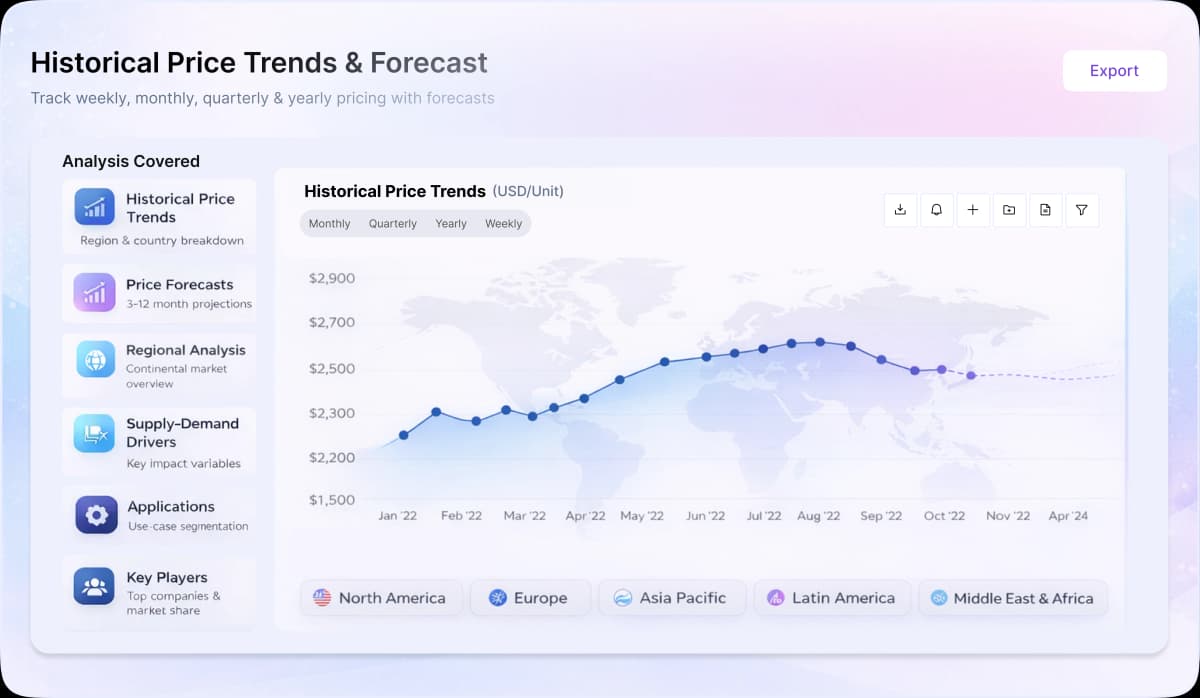
Price Trend Dashboard - What's Included
Price trends across a diverse portfolio of categories and products, spanning board to niche chemicals
Coverage extendable to grade-specific chemicals based on procurement requirements
Regular price tracking supported by robust historical datasets
News, policy updates, and key market drivers impacting price movements
Short-term and long-term price outlooks and forecasts
Supply-demand dynamics and capacity-driven market analysis