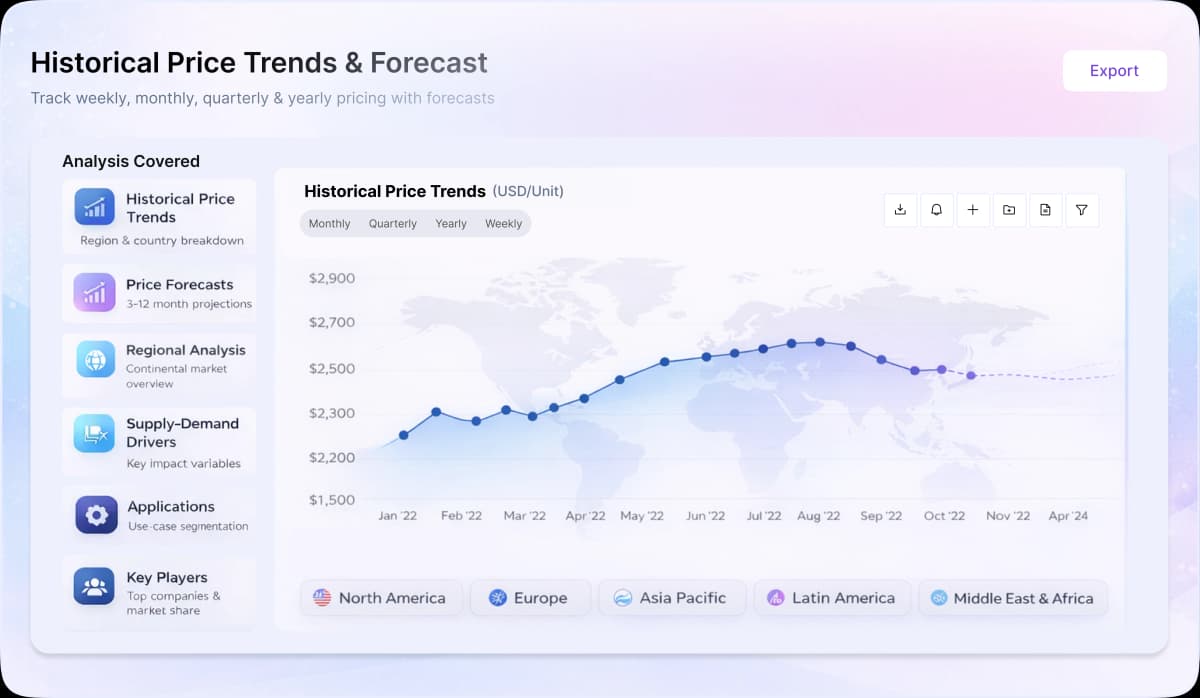
- Global Titanium prices moved higher during Q2 2026 as elevated production costs and resilient demand from high-value industrial sectors supported firm market conditions across major regions.
- Feedstock availability remained largely stable, while energy-intensive titanium sponge production and high processing costs continued to support producer pricing throughout the quarter.
- Aerospace remained the key demand driver, with additional consumption from defense, medical, marine, chemical processing, and power generation applications maintaining steady market fundamentals.
Asia
In China, the prices of Titanium were ~RMB 52.33/kg in April and ~RMB 54.29/kg in May, showing a ~3.7% increase. The market remained firm as elevated production costs associated with titanium sponge manufacturing, including higher energy, magnesium, and chlorine expenses, supported producer pricing. Stable availability of ilmenite and rutile ensured uninterrupted production, while steady demand from aerospace manufacturing, chemical processing equipment, marine engineering, and industrial fabrication sustained market sentiment. According to the USGS, global titanium mineral concentrate production reached 9.36 million metric tons in 2024, with China producing 3.30 million MT, supporting consistent regional feedstock availability.
Europe
In Germany, the prices of Titanium were ~EUR 6.64/kg in April and ~EUR 6.96/kg in May, showing a ~4.8% increase. High processing costs and resilient aerospace demand remained the primary pricing drivers. Aircraft manufacturing, defense programs, corrosion-resistant industrial equipment, and chemical processing applications continued to support consumption despite softer broader manufacturing activity. Reuters also reported continued supply chain tightness across several industrial metals during Q2, reinforcing positive sentiment for titanium producers.
North America
In the United States, the prices of Titanium were ~USD 7,751.66/MT in April and ~USD 8,143.06/MT in May, showing a ~5.0% increase. Firm demand from commercial aerospace, defense procurement, medical implants, and chemical processing industries supported regional pricing. Stable orders from these sectors offset cautious industrial purchasing, while elevated manufacturing costs associated with the energy-intensive titanium sponge production process continued to provide cost support.
Analyst Insight
According to Procurement Resource, Titanium prices are expected to remain firm in the near term, supported by sustained aerospace and industrial demand, while elevated production costs are likely to keep upward pressure on market prices.