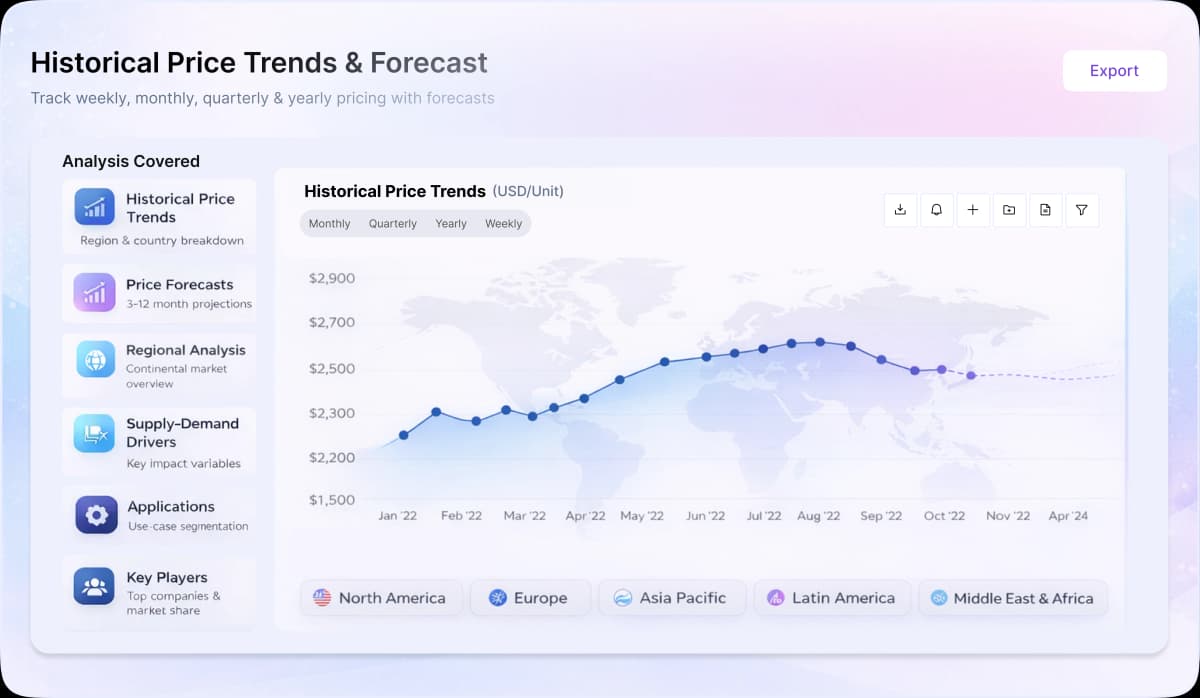
Butene Price Trend Q1 2025
Asia
In the first quarter of 2025, the butene market in Asia showed a downward trend, primarily resembling the price trend of its primary feedstock, ethylene. The upstream market witnessed an overall downward trajectory, pressuring the butene prices. Along with this, subdued demand from the major downstream industries such as automotive and textile remained weak.
Asian consumers, fearing further price reductions, purchased cautiously, adding to the downward trend. Despite some minor support from planned maintenance shutdowns at several regional ethylene plants, the overall market sentiment remained weak. With inventory levels staying high, the buying activity remained muted, preventing any notable price recovery. The bearish market trend persisted during the period with no real upturn.
Europe
In Europe, butene price curve also trended in a similar downward direction during Q1 2025. The region continued to be hit by oversupply due to excess production. Demand in major industrial segments such as packaging and construction continued to be rather flat, which kept the market dynamics subdued.
Although some scheduled maintenance across ethylene plants resulted in temporary disruptions, the oversupply situation was more in control, and butene prices continued to come under pressure. Moreover, low feedstock costs further undermined any hoped-for recovery, as numerous long-term contracts remained under renegotiation or were not being rolled over, which further depressed market activity.
North America
In North America, butene price trend followed a similar pattern as witnessed in other global markets during Q1 2025. Soft domestic demand combined with global oversupply pressured the prices, which eventually moved down. Weather disruptions in the early part of the year, mainly along the Gulf Coast, temporarily disrupted operations.
Production was resumed rapidly, though, and inventory levels were higher than normal. Meanwhile, the ethylene prices also started falling and with these downward fluctuations butene market remained comparatively weak. Similar to other regions, there was minimal spot purchasing, as downstream markets such as polyethylene and MEG exhibited softer demand. Also, the cautious behavior of buyers resulted in sustained pricing pressures during the quarter.
Analyst Insight
According to Procurement Resource, in the near future, slight improvements in demand from major segments can provide some relief to the butene market, and there can be a possibility of stabilization if the global supply situation evens out.
Related Report