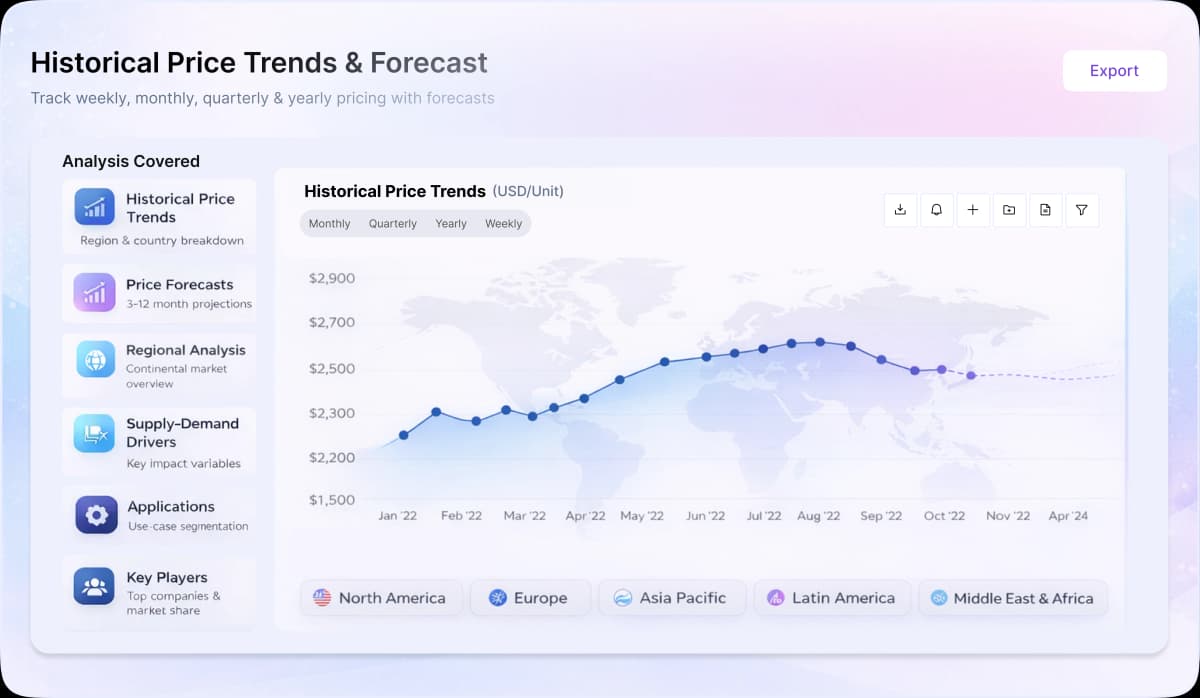
- Global hydrogen markets saw downward cost pressure on clean variants, driven by policy-backed tender mechanisms and falling renewable energy costs, while conventional hydrogen remains anchored to natural gas and oil price dynamics.
- Feedstock volatility, particularly from Middle East supply disruptions linked to the Iran conflict, is widening the cost gap between grey and green hydrogen, complicating investment decisions across all production pathways.
- Downstream demand remains nascent across most regions, with industrial offtake in refining and ammonia production leading uptake, while transport and steel applications lag behind targets.
Asia
In Q1’26, the hydrogen price curve showed regional variations in the Asian subcontinent. In India, tender-based competition drove production costs to lows in Q1, while waivers on transmission charges and production-linked incentives supported further declines in prices. Short-term offtake demand was stabilized by the demand tied to refineries, as demonstrated by a tender to supply to an Indian refinery in the northeastern part of the country, which attracted nine bids from producers. Grey hydrogen retained its pricing edge, thus limiting the penetration of green hydrogen to only channels mandated by the government. Meanwhile, China moved to combine direct financial support for hydrogen production with draft consumption mandates for industrial and transport sectors, signaling a more aggressive demand-side push.
Europe
Hydrogen markets in Europe faced challenges due to low demand and failure to meet their policy objectives during Q1. Security concerns emerged regarding potential imports from the Middle East, which involved export hubs along the Red Sea coast. The idea of relaxing regulations on aircraft fuel was gaining traction amid a weak regulatory push. High natural gas prices contributed to increased grey hydrogen production costs.
North America
The hydrogen market in North America continued to be dominated by grey hydrogen economics during Q1, as prices were responsive to changes in the natural gas price due to wider geopolitical issues. Investments for clean hydrogen were conservative, considering the uncertain environment amid the US-Iran war disruptions.