Need latest Paraformaldehyde prices?
Get real-time price assessments, periodic trends, forecasts and price driver insights across key global markets.
Unlock Price Insights NowOur Clients
Asia
In Asia, paraformaldehyde prices followed a mixed trajectory through the year, reflecting developments in the formaldehyde value chain and downstream consumption patterns. During the early part of the year, the market remained relatively stable with slight upward movement as demand from resin production, agrochemical formulations, and chemical intermediates supported regular procurement activity. As the market moved further into the year, improvements in industrial activity supported purchasing volumes from plywood, furniture, and adhesive manufacturers where paraformaldehyde is used as a solid formaldehyde source. However, during the later period, price momentum weakened due to volatile methanol feedstock costs and uneven demand from downstream sectors. Import availability across several Asian markets also prevented sustained price increases. Consequently, the regional market shifted toward stable to slightly softer pricing toward the end of the year as demand growth remained inconsistent across key manufacturing industries.
Europe
In Europe, paraformaldehyde prices displayed early firmness followed by stabilization and gradual softening during the year. At the beginning of the period, supply limitations and higher production costs influenced market sentiment. Methanol availability and energy costs affected production economics for formaldehyde and its derivatives, contributing to the initial upward movement in prices. As the year progressed, improvements in feedstock supply and easing logistical constraints increased product availability in the market. At the same time, construction-related industries across several European economies remained subdued, reducing demand for wood panels, furniture materials, and insulation products that rely on formaldehyde-based resins. As a result, the market gradually transitioned toward a stable to downward price direction during the latter portion of the year.
North America
In North America, paraformaldehyde prices initially moved upward before shifting to a softer trend later in the year. Early market conditions were shaped by supply constraints linked to temporary production disruptions and weather-related impacts on petrochemical operations. Limited availability supported price increases despite moderate fluctuations in methanol feedstock costs. In the later period, market conditions changed as feedstock availability improved and inventories increased due to higher import volumes. Demand from construction-linked industries weakened as buyers reduced procurement volumes and focused on destocking strategies.
Analyst Insight
According to Procurement Resource, paraformaldehyde prices are expected to remain stable with moderate fluctuations in the near term as feedstock supply and downstream demand remain balanced.
Get real-time price assessments, periodic trends, forecasts and price driver insights across key global markets.
Unlock Price Insights NowOur Clients

Turn price intelligence into action with the Procurement Resource Database. Log in or subscribe to unlock live price trends, historical charts, supplier databases, cost curves, and analyst-backed insights across chemicals, agriculture, energy, packaging, and more. Use these tools to benchmark your contracts, plan budgets with confidence, and stay ahead of market moves on every product you buy.

0
+Products
0
+Regions
0
+Subscriptions
Asia
In Q4’24, the Paraformaldehyde market in Asia saw relatively stable prices. The key factors driving this trend were steady demand from downstream industries and a consistent supply of raw materials, especially formaldehyde. In countries like China and India, where Paraformaldehyde production is significant, the supply of formaldehyde, the primary feedstock for Paraformaldehyde, remained stable.
However, production challenges related to logistical issues and fluctuating methanol prices did exert some upward pressure on Paraformaldehyde prices. Despite these challenges, demand from industries like agriculture, textiles, and electronics remained steady, preventing any significant price fluctuations. Overall, the market experienced only moderate price adjustments throughout the quarter.
Europe
In Europe, the Paraformaldehyde market faced mixed dynamics during Q4’24. The prices remained somewhat stable but were influenced by broader market trends in the formaldehyde sector, as formaldehyde is a key precursor for Paraformaldehyde. Increased demand for formaldehyde-based products, particularly from the construction and automotive sectors, indirectly supported Paraformaldehyde prices.
The raw material cost, including methanol, saw some fluctuations, contributing to minor price adjustments. However, supply chain disruptions, stemming from both regional economic shifts and geopolitical issues, affected the consistency of Paraformaldehyde supply. As a result, while demand remained stable, occasional supply interruptions led to slight price increases during the quarter.
North America
In North America, Paraformaldehyde prices followed a stable trend in Q4’24, mirroring the broader formaldehyde market dynamics. Prices were largely influenced by the availability of feedstocks such as formaldehyde and methanol. Despite some disruptions in methanol production, particularly following the sale of major methanol assets, the overall supply of Paraformaldehyde remained sufficient to meet the steady demand from sectors like agriculture, pharmaceuticals, and coatings. The automotive sector’s performance, which had a mixed outlook in late 2024, did not significantly affect Paraformaldehyde demand. Overall, prices saw minimal fluctuations, with the market maintaining stability due to balanced supply and demand conditions.
Paraformaldehyde is a formaldehyde polymer, white in colour, and has a light pungent odour. It shows slow dissolution in water and is flammable. It is used in the manufacturing of fungicides, bactericides and is used in the making of adhesives.

OH(CH2O)nH
Phenolic urea, melamine resins, disinfectant, fluorescent pigments, textile auxiliaries
Aldacide, paraform, polyformaldehyde
Ercros, Celanese, Merck, Chemanol
CurrencyUS$ (Data can also be provided in local currency)
Supplier Database AvailabilityYes
Customization ScopeThe report can be customized as per the requirements of the customer
Post-Sale Analyst Support360-degree analyst support after report delivery
Note: Our supplier search experts can assist your procurement teams in compiling and validating a list of suppliers indicating they have products, services, and capabilities that meet your company's needs.

The irradiation of the formaldehyde monomer obtains Paraformaldehyde. The formaldehyde is subjected to ionizing radiation in the presence of a moderating agent to give the polymer.
Our Price Analysis Methodology

Experience how Procurement Resource transforms raw material price data into clear, decision ready intelligence. Optimise your performance with reliable, expert market data and analysis. Schedule your demo today to experience a live walk-through where our experts will showcase interactive price charts, forecasted prices, and insights driving the prices for your key commodities, tailored to your workflows. Contact us now!
Our Team will be happy to assist you
We are just a text away
Still Need Help ?
Unlock full access to Procurement Resource's price databases, interactive charts, and short-term forecasts for thousands of commodities. Elevate your sourcing decisions by comparing prices across regions, downloading historical data, and layering in analyst-backed insights, all with our flexible plans that scale as your portfolio grows.
Still have any Questions
Contact Us


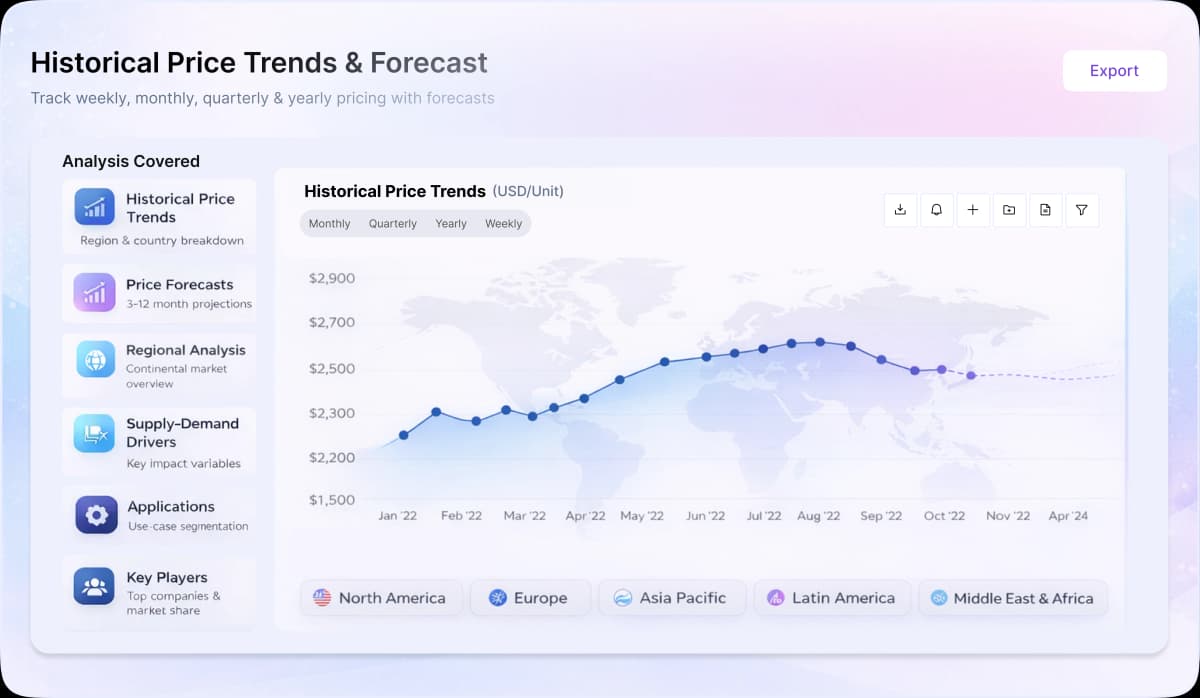
Price Trend Dashboard - What's Included
Price trends across a diverse portfolio of categories and products, spanning board to niche chemicals
Coverage extendable to grade-specific chemicals based on procurement requirements
Regular price tracking supported by robust historical datasets
News, policy updates, and key market drivers impacting price movements
Short-term and long-term price outlooks and forecasts
Supply–demand dynamics and capacity-driven market analysis