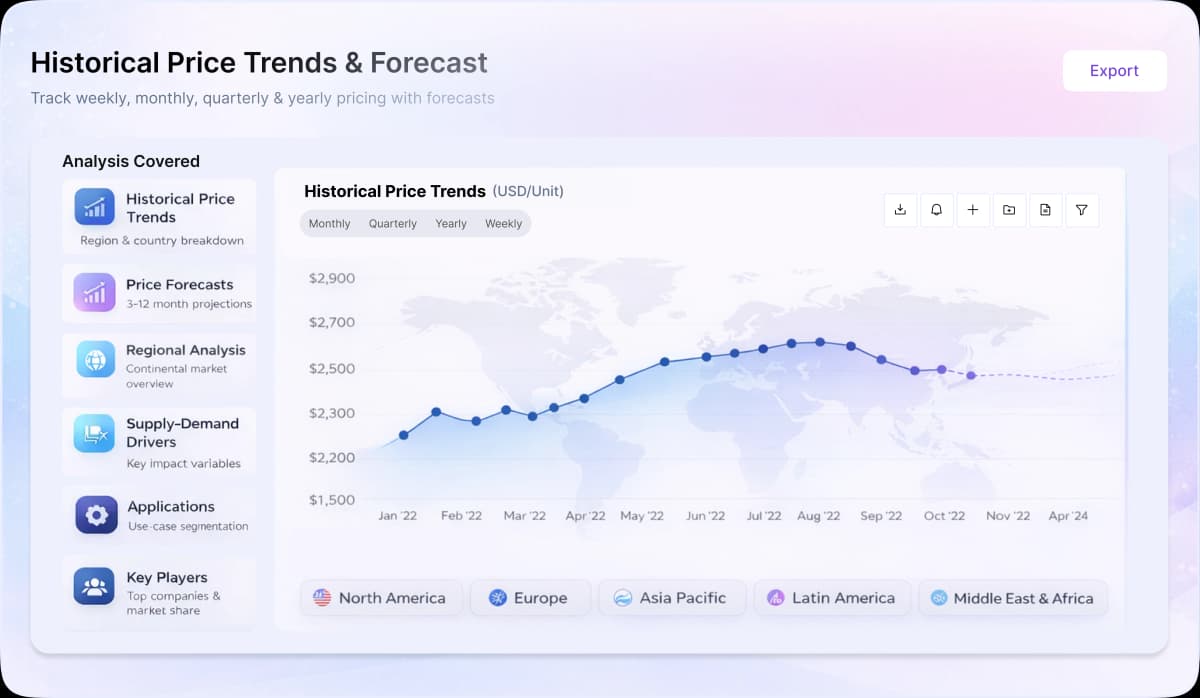
- The global sodium chlorate market displayed mixed pricing movements during Q1’26 as rising energy costs and freight disruptions were partially offset by moderate downstream procurement in some regions.
- Feedstock costs remained volatile during the quarter because sodium chlorate production relies heavily on electricity-intensive electrolysis of sodium chloride brine. Higher crude oil, LNG, natural gas, and coal prices increased industrial power tariffs and transportation expenses globally.
- Downstream demand from pulp and paper, tissue paper, and packaging sectors remained stable overall, supporting chlorine dioxide consumption and preventing sharper market declines despite uncertain macroeconomic conditions.
Asia
The Asian sodium chlorate market witnessed a mixed trend during Q1’26. Prices initially weakened amid sufficient product availability and cautious procurement from the paper and packaging sectors following the Lunar New Year slowdown. However, the market recovered later in the quarter as escalating Iran conflict concerns increased crude oil, LNG, and bunker fuel prices, raising electricity tariffs and freight costs across Asia. China’s coal-dependent power sector further elevated electrolysis production costs for sodium chlorate manufacturers. Stable demand from tissue paper, bleached pulp, and packaging board industries supported chlorine dioxide consumption and limited further market declines.
Europe
The European sodium chlorate market experienced fluctuating price movements during Q1’26 due to volatile energy markets and uneven downstream demand. Prices increased during periods of rising natural gas and electricity costs after disruptions near the Strait of Hormuz intensified concerns regarding LNG supply security and marine trade flows. However, weak industrial activity and moderate packaging paper demand restricted sustained bullish momentum.
North America
The North American sodium chlorate market followed an oscillating trend during Q1’26. Prices remained supported by rising global energy and logistics costs, although relatively stable domestic energy availability prevented sharper increases. Market sentiment strengthened periodically as rerouting of global energy cargoes increased freight expenses and tightened supply chain conditions. However, cautious purchasing activity from industrial paper sectors caused intermittent price corrections during the quarter.